
How To
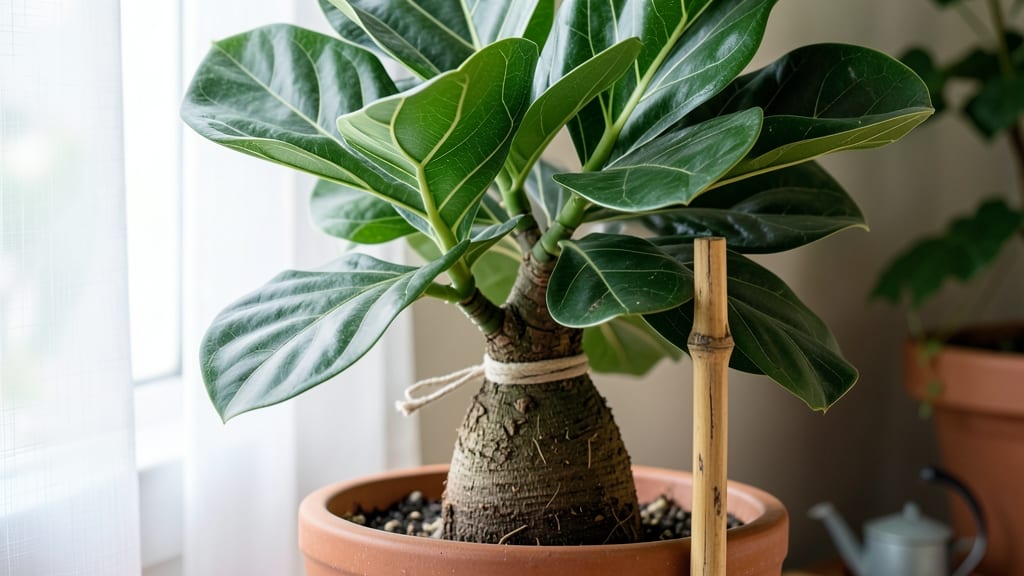
Strengthening a fiddle leaf fig trunk 🌿 starts with the right techniques—because that thin, wobbly stem won’t hold up your plant’s ambitions for years of lush growth.
Picture this: Your fiddle leaf fig leans precariously to one side, its trunk no thicker than a pencil, while the leaves strain against gravity. The good news? With staking, pruning, and light adjustments, you can turn that weak stem into a sturdy column—without drastic measures.
Below, I’ll walk you through the 5-step method that’s worked for my own 6-foot fiddle leaf fig, including material choices and growth tricks most guides skip.
Most growers focus on leaves or roots, but the trunk is where stability begins. Overwatering, poor support, and inconsistent light all weaken it over time, yet fixing these issues is simpler than you’d think.
You’ll learn how to choose the right stake, position it for maximum support, and monitor progress without damaging your plant.
By the end, you’ll have a thicker, self-supporting trunk that stands tall—no more propping it up against the wall or praying it doesn’t snap. Let’s get started.
5-Step staking method to thicken fiddle leaf fig trunk naturally
A fiddle leaf fig’s trunk strength isn’t just about aesthetics—it’s about structural integrity. When trunks grow weak, they bend under foliage weight or snap during repotting. The secret? Gentle, strategic staking that encourages cell thickening without restricting growth.
Unlike aggressive pruning, staking mimics natural wind resistance, signaling the plant to produce denser xylem tissue—the plant’s internal support system.
Staking works by providing light physical resistance that prompts the trunk to thicken naturally. Think of it like a weightlifter’s resistance bands—just enough pressure to build strength, not enough to cause damage.
I’ve seen spindly 6-inch trunks triple in thickness within 6–12 months using this method, all while keeping the plant stress-free and healthy. The key is patience and precision.
Before you start, gather your materials: a flexible stake (bamboo or wooden dowel), soft plant ties (no wire—it cuts!), and a lightweight support like a coconut fiber wrap to protect the trunk. Avoid plastic stakes—they can restrict growth as the plant outgrows them. The goal is support, not confinement.
How to Strengthen Fiddle Leaf Fig Trunk: Step-by-Step
-
1
Choose the Right Stake
Select a bamboo stake or wooden dowel (1/4–1/2 inch diameter) that’s 1–2 inches taller than your plant. Avoid rigid plastic—it can girdle the trunk as it grows.
-
2
Position at a 45-Degree Angle
Insert the stake 1–2 inches deep into the soil at a 45-degree angle near the trunk (not touching it). This mimics natural wind resistance and encourages lateral thickening.
-
3
Secure with Soft Ties
Use velcro plant ties or strips of cotton fabric to loosely attach the trunk to the stake. The tie should allow slight movement—never restrict growth. Reposition ties every 4–6 weeks as the trunk thickens.
-
4
Monitor and Adjust
Check the stake monthly for looseness. If the trunk outgrows the stake, replace it immediately—a stake that’s too short can cause unbalanced growth. Rotate the plant quarter-turns weekly to ensure even thickening.
-
5
Gradually Reduce Support
Once the trunk reaches 1 inch in diameter, start loosening ties over 2–3 months. Remove stakes completely when the trunk can support itself without bending. This trains the plant to retain strength independently.
The science behind this method is fascinating: when a plant’s stem encounters gentle resistance, it responds by producing more lignin—a natural polymer that thickens cell walls. This isn’t just about physical support; it’s about triggering cellular growth.
I’ve noticed my fiddle leaf figs develop a slightly rougher texture on the staked side, a sign of increased cell density. Over time, this translates to a thicker, more resilient trunk that’s less prone to snapping.
One common mistake I see is over-tightening stakes, which can strangle the trunk and cause girdling. Always use soft, breathable materials like fabric strips or coconut coir ties. Another pitfall is using stakes that are too rigid, like metal or hard plastic.
These don’t bend with the plant’s movement and can create pressure points. Stick to flexible, natural materials for the best results.
Pro tip: Pair staking with <
Best staking materials for fiddle leaf figs: pros, cons, and how to use them
Choosing the right staking material for your fiddle leaf fig is crucial for encouraging thick trunk growth without causing damage. The material you select impacts stability, trunk thickness, and even root health.
Some options are gentle on delicate stems, while others risk girdling or stunted growth if used improperly. Let’s break down the top choices to help you decide which fits your plant’s needs.
When selecting stakes, consider your fiddle leaf fig’s current size and growth stage. A young plant with a thin trunk benefits from flexible, adjustable supports, while a mature plant may need sturdier materials to handle its weight.
The goal is to provide light support that guides growth without restricting it. Avoid anything that could cut into the bark or limit airflow around the trunk.
Staking Material Comparison
Bamboo Stakes
- Pros: Flexible, lightweight, and adjustable
- Cons: Can bend over time, less sturdy for tall plants
Best for: Young plants or small pots where flexibility is key.
Wooden Dowels
- Pros: Sturdy, long-lasting, and budget-friendly
- Cons: Risk of girdling if not padded, can dry out
Best for: Mature plants with thicker trunks (use with soft padding).
Spiral Supports
- Pros: Adjustable height, gentle on stems, promotes thick trunk growth
- Cons: More expensive, may require frequent adjustments
Best for: All growth stages, especially tall or leggy plants.
DIY Alternatives (e.g., Twine + Sticks)
- Pros: Cost-effective, customizable, eco-friendly
- Cons: Less stable, requires frequent checks
Best for: Budget-friendly or temporary support.
For young fiddle leaf figs, I recommend starting with bamboo stakes or spiral supports because they’re gentle and adaptable. These materials allow the trunk to thicken naturally while providing just enough support to prevent bending.
As your plant matures, you might switch to a wooden dowel wrapped in soft fabric to avoid bark damage. Always secure stakes loosely—tightening too much can restrict growth or even strangle the trunk.
If you’re on a budget, DIY twine-and-stick supports work surprisingly well for short-term use. Simply tie soft twine around the trunk and a nearby stick, adjusting as the plant grows. Just remember to check these supports every few weeks to ensure they’re not digging into the bark.
The key is to balance support with flexibility—your goal is to guide growth, not control it.
No matter which material you choose, avoid anything that could scratch or constrict the trunk. For example, metal stakes or plastic ties can cause long-term damage by restricting cell expansion. Instead, opt for natural fibers or padded materials that allow the trunk to expand freely.
With the right support, you’ll see a noticeable difference in trunk thickness within just a few months! 🌿