
Pests and Diseases
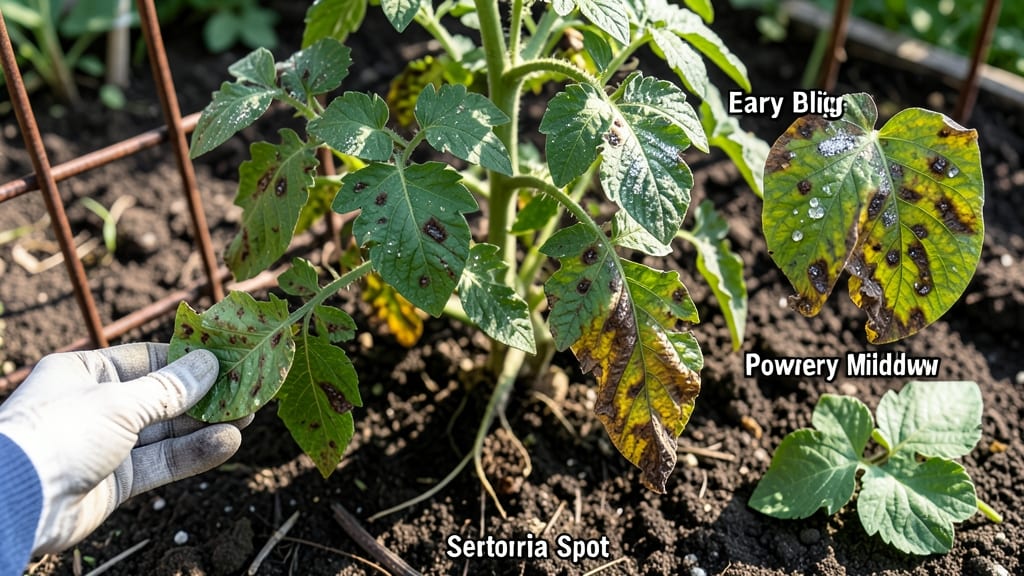
Spotting tomato leaf disease early with the right pictures saves your harvest—and your sanity. 🌱 I’ve lost entire plants to mysterious spots and yellowing, only to realize I was dealing with something treatable if caught soon enough.
This guide shows you exactly what to look for, from concentric rings to powdery white fuzz, so you can act before the damage spreads.
The most common culprits—early blight, late blight, and mosaic virus—each leave distinct clues. Early blight starts with brown spots that develop yellow halos, while late blight spreads rapidly with greasy-looking lesions.
Mosaic virus? Look for twisted, mottled leaves that stunt growth. Knowing the difference means you can target treatments like copper fungicide, neem oil, or even just better airflow.
With the right fixes, you’ll see healthy new leaves within weeks. Prune infected foliage, rotate crops, and water at the base to keep your plants thriving. The key is acting fast—once disease takes hold, it’s harder to reverse. Let’s get your tomatoes back on track.
This works for both garden beds and containers, no matter your experience level. Even if you’ve struggled before, these visual cues make diagnosis straightforward. Here’s how to spot the problem before it ruins your season.
Underlying Causes Of Leaf Issues
Tomato leaf diseases don’t just appear out of nowhere—they’re the result of a perfect storm of environmental stress, microbial invaders, or poor growing conditions. Understanding the root causes is key to prevention and treatment.
Below, we break down the most common triggers for tomato leaf problems, from fungal infections to nutrient deficiencies, with clear explanations of why they happen.
---
Fungal diseases thrive in warm, moist conditions and are the most common culprits behind tomato leaf discoloration, spots, or wilting. Here’s how they take hold:
- High Humidity & Poor Airflow Fungi like Phytophthora, Fusarium, and Alternaria spread via spores that float in damp air.
When tomato plants are crowded or shaded, airflow is restricted, creating the ideal breeding ground. Why it happens: Stagnant air traps moisture on leaves, allowing fungal spores to germinate and infect plant tissues.
- Overwatering or Wet Leaves Water sitting on leaves for prolonged periods (especially overnight) gives fungi like Septoria or Early Blight a direct entry point. Why it happens: Excess moisture softens leaf cuticles, making them vulnerable to fungal penetration. Pro tip: Water at the base of the plant in the morning to allow leaves to dry quickly. 💡
- Weakened Plant Defenses Stressed tomatoes (from drought, poor soil, or nutrient deficiencies) have weaker immune responses. Why it happens: Fungi exploit plants that are already struggling, as their natural defenses—like waxy leaf coatings—become compromised.
---
Bacterial infections often appear as water-soaked spots, yellowing, or oozing lesions. Unlike fungi, bacteria multiply rapidly and can spread through contaminated tools, water, or even insects.
- Contaminated Water or Tools Bacteria like Pseudomonas or Xanthomonas lurk in stagnant water, old mulch, or dirty pruners. Why it happens: Open wounds (from pruning or hail) or splashed water introduce bacteria directly into plant tissues, where they multiply uncontrollably.
- Warm, Rainy Weather Bacteria thrive in temperatures between 75–90°F (24–32°C) with high humidity. Why it happens: Raindrops act like tiny syringes, injecting bacteria into leaves through stomata (tiny pores). Pro tip: Use drip irrigation instead of overhead watering to minimize splash dispersal. ✨
- Poor Sanitation in the Garden Leftover plant debris (especially from previous tomato crops) harbors bacterial overwintering stages. Why it happens: Bacteria survive in organic matter and reinfect new plants when conditions are favorable.
---
Viruses are rarely soil-borne—they hitch rides on insects (like aphids or whiteflies) or contaminated hands/tools. Once inside a tomato plant, they disrupt cell function, leading to mosaic patterns, stunted growth, or leaf curling.
- Insect Vectors (Aphids, Whiteflies, Beetles) Viruses like Tomato Mosaic Virus (ToMV) or Tomato Yellow Leaf Curl Virus (TYLCV) are transmitted when infected insects feed on healthy plants. Why it happens: The virus particles are injected into plant sap, hijacking the plant’s DNA to replicate. Pro tip: Remove infected plants immediately and use row covers to block insects. 🎯
- Contaminated Grafting or Pruning Tools Viruses can survive on tools and transfer to healthy plants during propagation. Why it happens: Even microscopic wounds from pruning can serve as entry points for viral particles.
- Seed-Borne Viruses Some viruses (like Tomato Spotted Wilt Virus) can be carried in seeds or transplants. Why it happens: Infected seedlings grow into virus-carriers, spreading the disease as they mature.
---
Yellowing, curling, or brittle leaves often signal a lack of essential nutrients. Unlike diseases, these issues are correctable—but only if you identify the specific deficiency.
| Symptom | Likely Deficiency | Why It Happens | |---------------------------|----------------------|-----------------------------------------------------------------------------------| | Yellow lower leaves | Nitrogen (N) | Nitrogen is mobile in plants—when levels drop, older leaves lose chlorophyll first. | | Purple stems/leaves | Phosphorus (P) | Phosphorus aids energy transfer; stress (like drought) worsens deficiency signs. | | Yellow between veins | Magnesium (Mg) | Magnesium is central to chlorophyll; poor soil drainage or high pH locks it out. | | Brown leaf edges | Potassium (K) | Potassium regulates water and nutrient movement; deficiency causes cell death. | | Stunted growth | Micronutrients (Zn, Fe, Mn) | Cold soils or high pH reduce micronutrient availability, stalling plant growth. |
Why it happens: Overwatering leaches nutrients, compacted soil blocks root absorption, or poor-quality soil lacks essential minerals. Pro tip: Test your soil every 2–3 years to catch deficiencies early. 📊
--- Extreme heat, cold, or drought weaken tomatoes, making them susceptible to secondary infections or physiological disorders.
- Heat Stress (Above 90°F/32°C) High temperatures disrupt photosynthesis, causing sun scorch (white/yellow patches) or blossom drop. Why it happens: Heat dries out leaf surfaces, creating stress cracks where fungi or bacteria can enter.
- Cold Damage (Below 50°F/10°C) Chilly nights lead to blackened or curled leaves, as cell membranes rupture. Why it happens: Cold reduces water uptake, causing oxidative stress and tissue death.
- Drought or Overwatering Both extremes stress roots, limiting nutrient absorption. Why it happens: Drought triggers wilting, while overwatering suffocates roots, leading to root rot (a fungal entry point).
--- Scratches, tears, or insect bites create wounds that invite pathogens. Even "harmless" damage can turn deadly if hygiene isn’t maintained.
- Hail or Wind Damage Torn leaves provide direct access for fungi and bacteria. Why it happens: Physical trauma disrupts the leaf’s protective barrier, exposing inner tissues to invaders.
- Insect Feeding (Aphids, Spider Mites) These pests don’t just suck sap—they inject toxins and create wounds. Why it happens: Saliva from feeding introduces secondary infections, while chewing insects (like hornworms) leave large, infected holes.
- Poor Pruning Techniques Jagged cuts or over-pruning stress plants, slowing recovery. Why it happens: Improper pruning removes protective foliage, increasing exposure to sunlight (burn risk) or pathogens.
Fixing Tomato Leaf Issues Fast
Tomato plants are the heart of your garden, but when leaf diseases strike, they can turn your green bounty into a sad, spotted mess. 🌱😬 The good news? Most problems have simple, effective fixes—if you act quickly.
Below, we’ll break down the most common causes of tomato leaf diseases and give you step-by-step solutions to restore your plants to their healthy, productive selves.
---
Cause: Alternaria solani fungus thrives in warm, humid conditions, often starting on lower leaves.
How to Fix It: 1. 🍳 Prune & Remove Infected Leaves - Snip off yellow or brown leaves below the first flower cluster (sterilize scissors with rubbing alcohol between cuts). - Bag and compost them away from your garden—don’t toss them in your yard waste!
2. 👨🍳 Apply Fungicide Sprays - Preventative: Spray with a copper fungicide (like Copper Soap) every 7–10 days during wet seasons. - Organic Option: Mix 1 tbsp baking soda + 1 tsp dish soap + 1 gallon water and spray undersides of leaves.
3. 🌡️ Improve Airflow & Watering Habits - Space plants 18–24 inches apart to reduce humidity. - Water at the base (not overhead) in the morning so leaves dry quickly.
💡 Prevention Tip: Rotate crops yearly—don’t plant tomatoes or potatoes in the same spot for 3+ years.
---
Cause: Phytophthora infestans spreads fast in cool, wet weather (yes, it’s the same fungus that caused the Irish Potato Famine).
How to Fix It: 1. ⏰ Act FAST—Remove Entire Plants if Severe - If >50% of leaves are infected, dig up the plant and all roots to stop spread. Do not compost! Bag and trash it.
2. 🔪 Sterilize Tools & Soil - Clean pruners with bleach or 70% alcohol after each cut. - For containers, replace the top 2 inches of soil and repot.
3. 🌧️ Adjust Watering & Mulch - Water in the morning and avoid wetting foliage. - Use straw mulch (not plastic) to keep soil moist but reduce splashing.
💡 Prevention Tip: Plant blight-resistant varieties like ‘Mountain Merit’ or ‘Defiant PhR’ if your area is prone to outbreaks.
---
Cause: Erysiphe cichoracearum loves shady, crowded plants and thrives in 70–80°F temps.
How to Fix It: 1. 🌿 Increase Sunlight & Spacing - Move plants to full sun (6+ hours daily) and thin them out. - If growing in containers, rotate pots weekly for even light exposure.
2. 🍎 Homemade Sprays Work Wonders - Milk Spray: Mix 1 part milk + 9 parts water + 1 tsp soap, spray every 5–7 days. - Neem Oil: Apply weekly at dusk (follow label rates).
3. 🌱 Boost Plant Health - Fertilize lightly with low-nitrogen, high-phosphorus (like 5-10-10) to strengthen leaves. - Prune for airflow—remove suckers and inner leaves blocking circulation.
💡 Prevention Tip: Resistant varieties like ‘Celebrity’ or ‘Better Boy’ handle mildew better.
---
Cause: These sap-suckers weaken leaves, causing yellow stippling or sticky residue (aphids).
How to Fix It: 1. 🚿 Blast Them Off - Strong spray from hose (early morning) knocks them loose. - Repeat every 2–3 days for severe infestations.
2. 🐝 Encourage Natural Predators - Ladybugs, lacewings, and birds love mites! Plant dill, fennel, or marigolds nearby.
3. 🧴 Use Insecticidal Soap or Oil - Soap Spray: 2 tbsp castile soap + 1 quart water, spray undersides. - Neem Oil: Mix 1 tsp neem oil + 1 tsp soap + 1 quart water, spray at night.
💡 Prevention Tip: Mulch with reflective silver mulch to deter mites (they hate bright light).
---
- 🔄 Rotate crops every year to starve soil-borne pathogens. - 🌱 Strengthen plants with compost tea or fish emulsion for better disease resistance. - 📅 Monitor weekly—catch issues early when they’re easiest to treat!
--- Remember: The key to saving your tomato plants is speed + prevention. Once you spot the first signs of trouble, act fast—your future salads (and salsas!) will thank you. 🍅🔥
Frequently asked questions
How can I tell if my tomato leaves have a fungal disease vs. a bacterial infection?
Fungal diseases usually show up as dry, crusty spots with concentric rings (like early blight) or powdery white fuzz (powdery mildew). Bacterial infections, however, create water-soaked, oozing lesions that often have yellow halos. Check the edges: fungi spread slowly with defined borders, while bacteria spread faster with irregular, oily-looking edges.
Why do some tomato leaf diseases appear only on lower leaves?
Most fungal diseases (like early blight) start on lower leaves because they spread upward from soil-borne spores. The older leaves are closer to the ground where moisture and organic matter accumulate—perfect breeding grounds. Prune infected lower leaves early to prevent upward spread and improve airflow to upper foliage.
Can I still harvest tomatoes from plants with leaf diseases?
Yes, but only if the fruit itself is healthy—never harvest tomatoes from plants showing signs of late blight or bacterial wilt, as these spread through the plant. For fungal diseases like early blight, you can pick ripe tomatoes, but sterilize your hands/tools between plants to prevent cross-contamination. Always remove infected leaves first to reduce spore spread.
What's the fastest way to identify tomato leaf diseases without a lab test?
Use a magnifying glass to examine leaf patterns: look for spore structures (fungi often have tiny black dots), oozing lesions (bacteria), or mosaic patterns (viruses). Compare your findings with high-quality tomato disease pictures from trusted sources like the University of Minnesota Extension or Purdue Plant Pathology. A quick phone camera zoom can help capture key details!
Will copper spray kill my tomato plants if I use it too often?
No, when used correctly, copper fungicides are safe for tomatoes. However, apply them no more than every 7–10 days and always in the early morning to avoid leaf burn. Dilute properly (follow label instructions) and alternate with organic options like neem oil. Overuse can harm beneficial soil microbes, so rotate with other preventative measures like proper spacing and watering.