
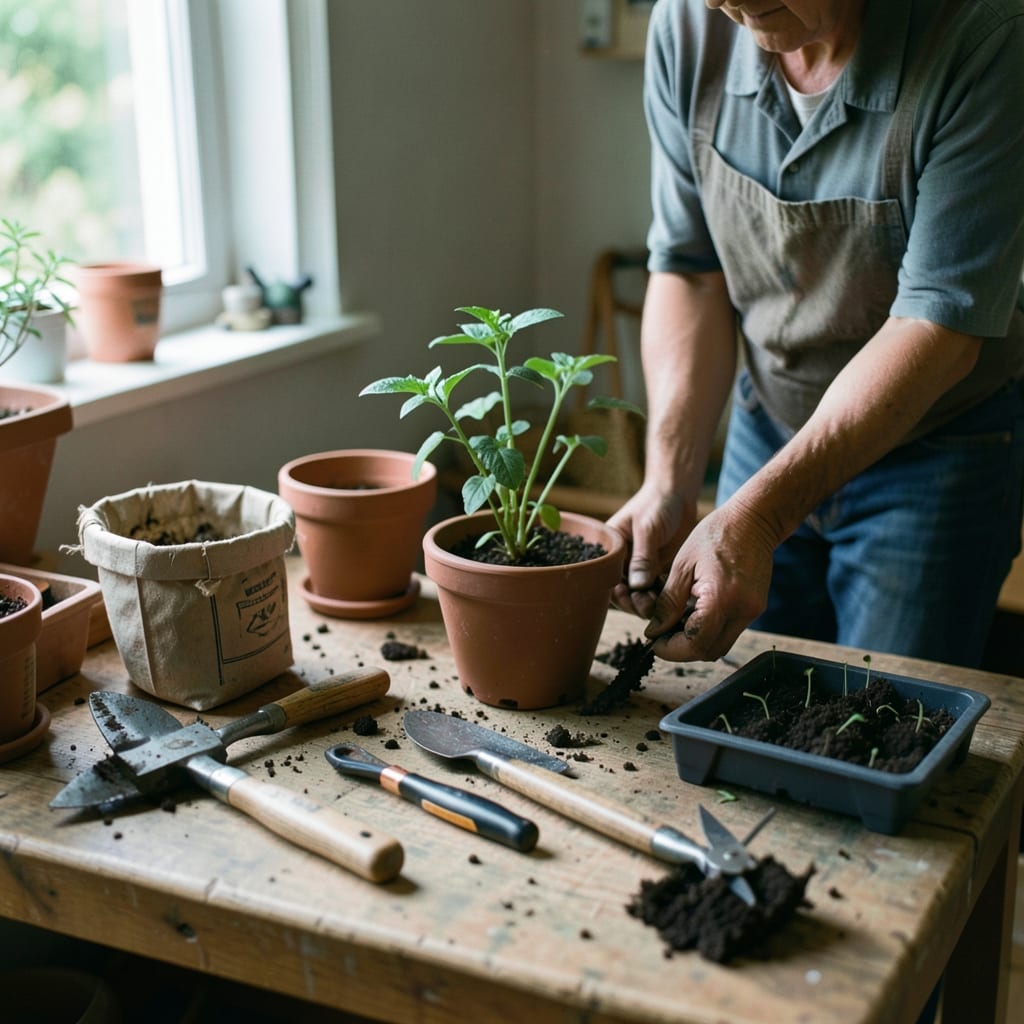
It started with one tomato plant that kept dying
It was 2017, and I’d planted my third cherry tomato in a row. The first had rotted at the base before flowering. The second had grown three perfect leaves before wilting overnight, its stems blackened like it had been struck by lightning.
Neither had a name—just ‘tomato,’ ‘tomato,’ ‘tomato’—but this third one was different. I’d bought the seedling from a nursery that swore by their ‘organic potting mix,’ and I’d sworn back by my grandmother’s rule: *‘No more than two plants in one pot, or the roots will strangle each other.’*
The first sign was the soil. It smelled wrong—not the rich, damp earth of her garden, but something sharp, like metal. The roots were tangled in a thick, gray sludge, and when I pried them loose, the stems split like overcooked pasta. The nursery had lied. The mix wasn’t organic.
It was peat-based, and the pH was off by two points. The plant had been starving for calcium, but by the time I realised, its leaves were curling inward, their edges crisping like burned paper.
I replanted it in composted leaves and wood ash, adjusted the watering to drip feed only, and crossed my fingers. For a week, it looked like it was recovering—new shoots, a single blossom. Then the blight came.
Not the powdery kind you can brush off, but a wet rot that turned the stems to mush in three days. I’d forgotten the rule about removing diseased foliage *before* it touched the soil. The cycle repeated: buy, plant, fail, learn, repeat.
Nine tries before it worked
The fourth attempt was a disaster. I’d read that tomatoes hate cold drafts, so I moved the pot indoors by the heater. The leaves turned yellow in a week, then brown.
The fifth time, I swore off peat entirely and built a raised bed with my hands—cedar slats, screened bottom, filled with equal parts sand, compost, and crushed eggshells. The plant grew three feet tall before the first fruit turned mealy inside.
The sixth failed when I overwatered it during a heatwave; the seventh when I underfed it during a drought. Each time, I adjusted one thing—the soil, the light, the pruning—but the plants kept dying in different ways.
The eighth attempt was the closest. I planted in late May, when the soil temperature hit 65°F, and used a drip irrigation line buried six inches deep. The plant thrived—until the squirrels dug it up overnight.
The ninth time, I caged it in wire, staked the stem, and tied the suckers back every Tuesday and Friday. The first tomato ripened in August, a deep red cherry that tasted like sunshine. But the real victory wasn’t the fruit.
It was the ledger I’d kept: a handwritten log of every failure, the conditions, and what I’d changed next time.
That ledger became the first draft of *Leaf Daily*. Not the articles, not the tips—just the raw data: *‘Day 42: Soil pH 5.8. Leaves yellowing. Added lime. Result: no change.’* It was ugly, but it was honest. And for the first time, I saw the pattern: tomatoes don’t just die.
They *tell you* why—if you’re listening.
The mind behind these pages

That ledger was Perry Trujillo’s first draft of *Leaf Daily*. He’s the one who kept replanting, who measured the soil pH with a cheap test kit and adjusted the watering schedule by the hour. His grandmother’s garden was where he learned that plants don’t just grow—they *negotiate*.
Give them the wrong conditions, and they’ll fight back: wilting, rotting, or simply refusing to fruit. His habit of writing down every failure didn’t start with tomatoes. It started with stolen seeds and tin-can windowsill gardens, where he’d record which varieties sprouted fastest and which ones never broke soil.
Perry’s not a botanist, but he is what his grandmother called a *‘fixer’*—the kind of person who sees a problem and doesn’t stop tinkering until it’s solved.
It’s a habit that costs time (most of his weekends) and patience (he once let a batch of cuttings root for six weeks before giving up), but it’s also what makes *Leaf Daily* work. The site isn’t about perfect gardens.
It’s about the ledger: the mess, the missteps, and the small wins that come after.
He collects odd things now—old seed catalogues, a rusted trowel from his great-uncle’s toolbox, the exact shade of green his first successful tomato turned. None of it has to do with gardening. It’s just proof that some things, once you’ve seen them grow, stick with you.
That first cherry tomato is still on the vine in his ledger. Not as a success story, but as a reminder: the soil remembers. And so do we.
Everything here is written the way that plant was
Every article on *Leaf Daily* starts as a ledger entry. Not a polished draft, not a ‘how-to’—just the raw notes from the garden: *‘June 12: Basil bolting after two weeks. Suspect overwatering. Adjusted to misting only. Result: new leaves by June 18.’* The difference between that and a recipe site?
Here, the ‘recipe’ isn’t for a dish. It’s for a *plant*. And like that tomato, it takes multiple tries to get it right.
The method is simple: plant, observe, fail, adjust, repeat. The ‘final’ version of any guide isn’t the tenth try—it’s the one where the reader can see the scars. The wilting leaves, the split stems, the times it almost didn’t work. Because those are the parts that teach you something.
A page about pruning roses doesn’t just say *‘cut here.’* It says *‘We tried it wrong three times before we got the shape right.’*
Months later, those ledger entries become the articles you read. But the thread never breaks. The same rules apply: if a tip doesn’t work in your climate, send us the details. We’ll add it to the ledger—and maybe, one day, it’ll become part of the next guide. The soil remembers.
And so do we.
What that means for you
You’ll find no ‘foolproof’ advice here. Only what worked, what didn’t, and why. Every page is built on the same principle: if Perry Trujillo had to replant nine times to get that tomato right, the guide will tell you which attempts failed and what he changed. The result?
Tips that fit your garden, not someone else’s perfect rows.
You won’t find photos of spotless raised beds or ‘before-and-after’ transformations. You’ll find the mess—the split stems, the yellowing leaves, the times the soil just *wouldn’t cooperate*. Because those are the parts that matter. They’re proof that gardening isn’t about perfection. It’s about paying attention.
Send us the details—the symptoms, your soil type, what you’ve tried—and we’ll add it to the ledger. Your failure might be someone else’s breakthrough.
The guides are grouped by category: Advice, Aphids, Blooming, Companion Plants, Container Gardens and Leaf Blower.