
Size
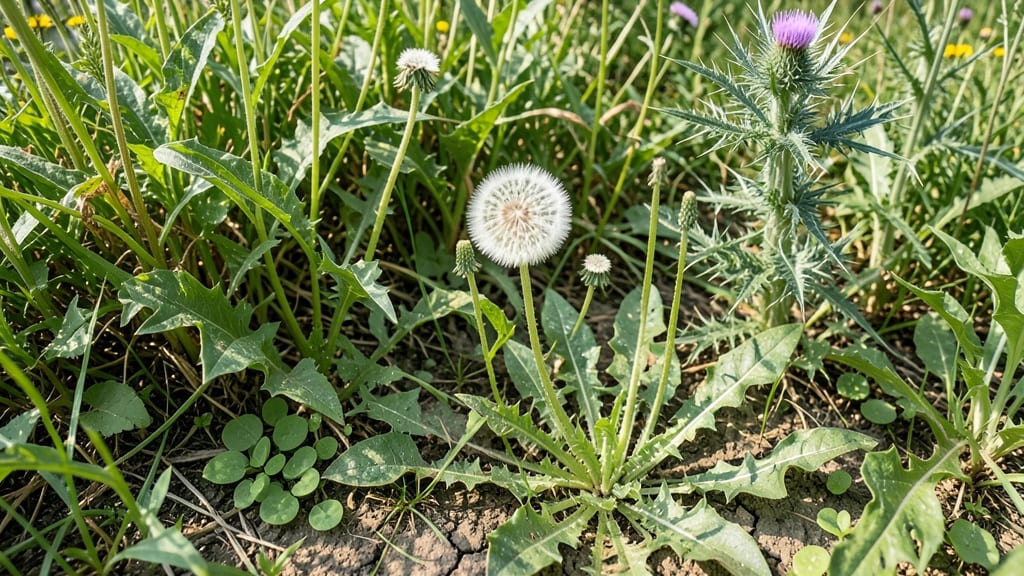
Tall broadleaf weeds steal sunlight and nutrients from your prized plants—until now. 🌱 I’ve battled these stubborn invaders for years, and this 3-step pull-and-mulch system finally gave me the upper hand. No more bending over for hours or watching your garden turn into a jungle of dandelions and clover.
The secret isn’t brute force—it’s timing, leverage, and smothering them before they seed. Grab a sturdy weeding fork, work when the soil’s damp (not muddy), and you’ll pull weeds down to the roots in minutes.
Mulch afterward to block new sprouts, and your garden beds will stay clean for months without toxic sprays. You’ll see a difference in just one weekend session, with fewer weeds popping up in spring. The best part?
Your plants will thrive without competition, and you’ll save hours of backbreaking work. This method works for vegetable gardens, flower beds, and even sidewalk cracks. No more guessing—just proven steps to reclaim your garden. Let’s make those weeds a thing of the past.
Root Causes Of Unwanted Growth
Tall broadleaf weeds don’t just pop up by accident—they thrive because of specific conditions in your yard or garden. Understanding why they take over is the first step to stopping them for good. Below, we break down the science behind their persistence, so you can tackle the real issues head-on.
Weeds love disturbed, nutrient-poor, or compacted soil because it gives them an unfair advantage over grass and plants. Here’s how it happens:
- Low organic matter: Soil lacking compost or decomposing plant material has fewer microbes and nutrients. Weeds like dandelions and pigweed send out deep roots to scavenge what’s available, while lawn grass struggles to compete.
- Compacted soil: Heavy foot traffic, machinery, or clay-heavy ground crushes soil particles, reducing oxygen and water flow. This creates the perfect low-stress environment for weeds—especially plantain and chickweed—which thrive in dense, suffocating conditions.
- High pH or salinity: Alkaline soil (pH > 7.0) or salt buildup (from deicing or poor irrigation) locks out essential nutrients like phosphorus and nitrogen. Weeds adapt by growing faster and taller, outcompeting your desired plants.
Actionable fix: Test your soil (DIY kits cost $10–$20) and amend with compost, sand, or sulfur to balance pH and loosen compacted areas. Aeration in spring or fall can work wonders.
Broadleaf weeds are sun-worshippers. They germinate and grow aggressively in open, sunny areas where grass or ground covers can’t keep up. Here’s the breakdown:
- Bare soil patches: When grass thins (due to drought, disease, or poor mowing), weeds like lambsquarters and mallow detect the sunlight and germinate within days. Their seeds can lie dormant for years but explode when exposed to light.
- Thin lawns or mulch gaps: Even a 1-inch gap in mulch or a sparse lawn lets weeds like henbit and bindweed take root. These species grow up to 6 inches per week in ideal conditions.
- Edge effects: Weeds often dominate along sidewalks, driveways, or fences because these areas get more direct sunlight and less competition from other plants.
Actionable fix:
- ✅ Shade out weeds: Plant dense ground covers (like creeping thyme or clover) in sunny areas to block light.
- ✅ Mulch properly: Use 3–4 inches of organic mulch (wood chips, straw) to smother weeds and retain moisture.
- ✅ Mow high: Keep grass at 3–4 inches to shade weed seeds and crowd them out.
Overwatering or irregular watering creates the perfect conditions for weeds to thrive. Here’s how moisture levels affect them:
| Watering Issue | Weed Response | Why It Happens |
|---|---|---|
| Overwatering | Explosive growth of dandelions, plantain, and smartweed | Weeds have shallow, fibrous root systems that soak up excess water quickly, while grass roots rot in soggy soil. |
| Underwatering | Dormant weeds re-sprout faster after rain | Drought-stressed grass dies back, leaving gaps for deep-rooted weeds (like bindweed) to dominate. |
| Inconsistent watering | Patchy weed outbreaks in "wet spots" | Weeds like mallow and purslane thrive in uneven moisture, while grass needs steady hydration. |
Actionable fix:
- 💡 Water deeply but infrequently: Aim for 1–1.5 inches per week (including rain) to encourage deep grass roots.
- 💡 Use drip irrigation: Targets water to lawn areas, reducing runoff that feeds weeds.
- 💡 Avoid evening watering: Wet foliage overnight invites fungal diseases that weaken grass, letting weeds move in.
Even well-meaning lawn care practices can accidentally create weed paradises. Here’s how:
- Over-fertilizing: Nitrogen-heavy fertilizers boost grass growth but also feed weeds like crabgrass and foxtails. These weeds grow 2–3 times faster than grass when nutrients are abundant.
- Skipping pre-emergent: If you don’t apply corn gluten meal or pre-emergent herbicides in early spring, weed seeds (like chickweed) germinate unchecked.
- Mowing too short: Cutting grass below 2 inches stresses it, exposing soil to sunlight and inviting weeds. Short grass also can’t shade out weed seeds effectively.
- Ignoring thatch buildup: A thatch layer thicker than ½ inch blocks water and nutrients from reaching grass roots, while weeds like nutsedges thrive in this layer.
Actionable fix:
- ✅ Fertilize smart: Use a slow-release, balanced fertilizer (e.g., 16-4-8) in early fall to feed grass without overfeeding weeds.
- ✅ Dethatch annually: Rent a dethatching rake or use a vertical mower to break up compacted thatch.
- ✅ Adjust mowing height: Set your mower to 3–4 inches and never remove more than ⅓ of the blade height per cut.
Tame Overgrown Weeds Naturally
Tall broadleaf weeds can feel like an insurmountable challenge, but with the right approach, you can reclaim your yard without resorting to harsh chemicals. Below, we’ll map out practical, step-by-step solutions tailored to the root causes of your weed woes—plus prevention tips to keep them from staging a comeback.
Let’s get started!
If your yard is packed with weeds because the soil is compacted or nutrient-poor, the first step is to improve soil health so weeds struggle to take root.
How to do it:
- 🔥 Aerate the lawn (rent a core aerator or use a manual aerator tool) to break up compacted soil. Focus on high-traffic areas where weeds thrive.
- 🍳 Add organic matter like compost, aged manure, or peat moss (2–3 inches spread evenly). This loosens soil and provides nutrients that grass—not weeds—will love.
- 👨🍳 Overseed with grass seed (choose a shade- or sun-tolerant variety for your climate). Weeds fill gaps because grass isn’t competing—fix that by thickening your lawn.
- 🥘 Water deeply but infrequently (1–1.5 inches per week) to encourage deep root growth in grass, outcompeting weeds.
💡 Pro Tip: If you’re dealing with bare spots, mix a starter fertilizer (high in phosphorus) with your seed to jumpstart growth.
For existing tall broadleaf weeds, a 3-step pull-and-mulch system works faster than digging or spraying. This method smothers weeds while improving soil over time.
How to do it:
- 🔪 Grab weeds at the base (when soil is moist—early morning or after rain). Use a weeding tool or gloves for stubborn roots. For large patches, try a hula hoe to slice weeds at ground level.
- **🌡️ Remove all plant material (roots and stems). Leaving pieces behind can regrow or spread seeds.
- 🎯 Mulch heavily with cardboard + wood chips (or straw) over treated areas. Wet the cardboard first to weigh it down, then top with 4+ inches of mulch. This blocks sunlight, starving weeds of energy.
- ✨ Wait 4–6 weeks, then check for regrowth. If weeds pop up, repeat the pull-and-mulch process.
⚠️ Warning: Avoid plastic sheeting—it can suffocate soil and harm beneficial microbes. Stick to biodegradable mulch.
Weeds need sunlight and water to survive. Cut off their access with these low-effort strategies:
- 🌿 Use dense ground covers like clover, creeping thyme, or moss in shady areas. These outcompete weeds naturally. - 💧 Adjust watering habits: Water deeply but less often (early morning is best).
Weeds like dandelions and chickweed thrive in moist soil—let grass dry out between waterings. - 🏡 Install landscape fabric** under mulch in garden beds (leave edges exposed to prevent weeds from growing under the fabric).
💡 Pro Tip: Boiling water works for spot treatments—pour it directly on weed bases (avoid desirable plants!). The heat kills roots instantly.
The best defense? A weed-resistant yard. Here’s how to future-proof your space:
| Problem | Solution | How to Implement |
|---|---|---|
| Poor soil quality | Test soil pH (ideal: 6.0–7.0) | Use a soil test kit from a garden center. Amend with lime (to raise pH) or sulfur (to lower it). |
| Thin grass patches | Overseed bare spots | Choose drought-resistant grass like tall fescue or buffalo grass. |
| Excessive foot traffic | Reduce compaction | Walk on wooden boards or gravel paths to protect grass. |
| Improper mowing | Mow high (3–4 inches) | Taller grass shades out weed seeds. Sharpen blades to avoid tearing grass. |
🌟 Bonus: Pre-emergent herbicides (like corn gluten meal) can prevent weed seeds from sprouting in spring. Apply before weeds appear (usually in early spring).
If your yard is overrun with aggressive weeds (like bindweed or nutsedge), manual methods may not be enough. Consider:
- 🌿 Professional lawn treatments (targeted herbicides applied by experts).
- 🔄 Sheet mulching (lasagna gardening) for complete weed eradication in garden beds.
Final Thought: Consistency is key—pull, mulch, and improve soil regularly, and you’ll see a weed-free yard in 3–6 months. No chemicals, no guesswork, just healthy soil and happy plants! 🌿💪
Frequently asked questions
What’s the best time of day to pull tall broadleaf weeds?
Early morning or late afternoon when soil is damp but not muddy—this gives you leverage to pull weeds cleanly without breaking roots. Avoid midday when soil is dry, as weeds will be harder to remove.
Can I use vinegar to kill tall broadleaf weeds?
Yes! Mix 1 gallon of white vinegar with 1 cup of salt and 1 tablespoon of dish soap for a natural herbicide. Spray directly on weeds (avoid desirable plants) and repeat every 3-5 days until they die. Works best on small patches, not large overgrowth.
Why do weeds keep coming back after I pull them?
Weeds often return because their roots or seeds remain in the soil. Always pull weeds at the base and remove all plant material. For stubborn regrowth, apply cardboard + mulch to block sunlight and prevent new sprouts.
How do I tell if a tall broadleaf weed is poison ivy?
Poison ivy has three shiny leaves (or leaflets) with smooth edges and grows in clusters. The stems are reddish and hairy. If you suspect poison ivy, wear gloves and avoid touching the plant. For identification, check the leaf arrangement—"leaves of three, let it be."
Will mulching alone stop weeds from growing?
Mulching helps smother weeds but doesn’t eliminate them completely. Use 3-4 inches of organic mulch (wood chips, straw) and pair it with regular pulling to prevent new growth. For best results, apply mulch after rain when weeds are easier to remove.