
Pests and Diseases
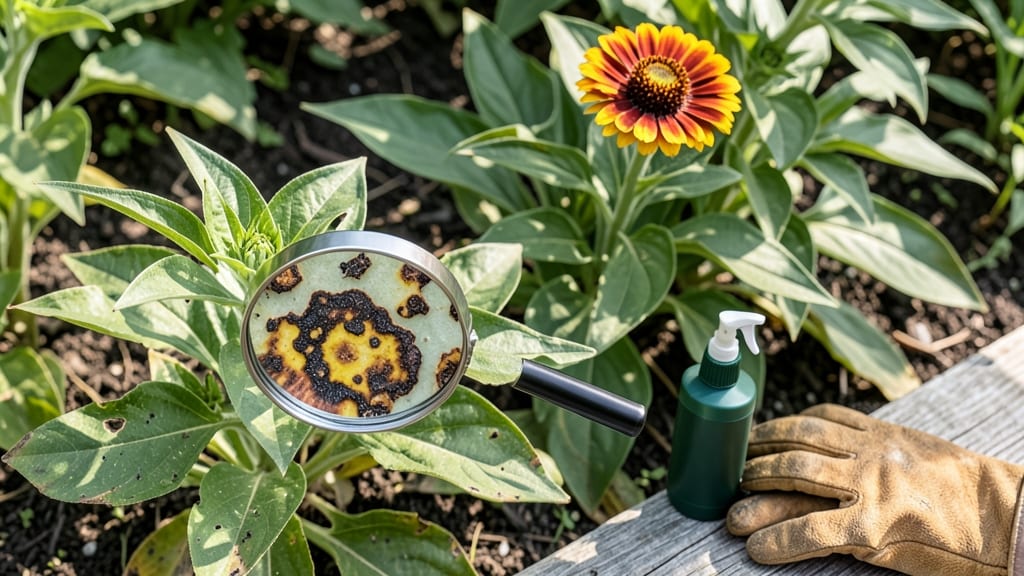
Those dark, greasy spots on your zinnias aren’t just ugly—they’re a bacterial leaf spot outbreak waiting to spread. 🌱 I’ve battled this exact problem in my summer garden, and copper spray isn’t just a cure—it’s a 3-day turnaround for saving your plants before they’re lost.
The moment you see tiny, water-soaked spots that grow into larger, yellow-edged lesions, you’re dealing with Xanthomonas or Pseudomonas—bacteria that thrive in damp, crowded conditions. Overwatering and poor airflow make zinnias prime targets, but the good news? Copper fungicide disrupts bacterial cell walls, stopping the spread fast.
Start by pruning infected leaves immediately (don’t compost them!) and apply copper spray at dusk to avoid leaf burn. Within 72 hours, new growth should stay spot-free, and existing damage will stop worsening. The key is consistency—repeat every 7-10 days until the season ends.
For next year, space plants 12-18 inches apart, avoid overhead watering, and choose resistant varieties like ‘Benary’s Giant’ or ‘Profusion.’ This isn’t just damage control—it’s a long-term strategy to keep your zinnias thriving.
Root Causes of Fungal Leaf Spots
Zinnia bacterial leaf spot isn’t just a random fluke—it’s the result of a perfect storm of environmental and microbial factors. Understanding why this disease strikes your zinnias is the first step in stopping it before it spreads. Let’s break down the key culprits, from sneaky pathogens to careless gardening habits.
The primary villain behind bacterial leaf spot is Xanthomonas campestris pv. zinniae, a bacteria that thrives in warm, humid conditions. Here’s how it takes hold:
- Survival in Soil & Debris: The bacteria can linger in infected plant debris, soil, or even on garden tools for years. If you’ve grown zinnias in the same spot before, the pathogen may already be waiting.
- Waterborne Spread: Rain, overhead irrigation, or even morning dew can splash bacteria from infected leaves onto healthy ones. One infected plant can contaminate an entire bed in days.
- Wound Entry Points: Pruning cuts, insect damage (like aphids or thrips), or even rough handling during transplanting create tiny openings for bacteria to slip inside.
💡 Pro Tip: If you suspect last year’s zinnias had leaf spot, rotate crops and sterilize tools with a 10% bleach solution (1 part bleach to 9 parts water) to kill lingering pathogens.
Bacterial leaf spot doesn’t just appear—it needs the right conditions to explode. These environmental factors create the ideal breeding ground:
| Factor | Why It Matters | Danger Zone |
|---|---|---|
| Temperature | The bacteria Xanthomonas thrives between 77–86°F (25–30°C), slowing down in cooler weather but persisting. | Above 80°F (27°C) with high humidity = outbreak risk |
| Humidity | Moisture on leaves for 6+ hours (from rain, fog, or poor airflow) allows bacteria to multiply rapidly. | Nighttime humidity >80% = high infection risk |
| Rainfall | Heavy or frequent rain splashes bacteria onto leaves, while light drizzle keeps foliage damp longer. | 1+ inch of rain in 24 hours = spread acceleration |
🌡️ Heat Wave Warning: If your area is forecasted for three consecutive days above 85°F (29°C) with high humidity, proactively treat zinnias with copper spray to prevent outbreaks.
Even the hardiest zinnias can fall victim to leaf spot if basic care is neglected. These common mistakes create the perfect conditions for bacteria:
- Overcrowded Plants: Zinnias need 12–18 inches of spacing for airflow. Packed beds trap moisture, giving bacteria a foothold.
- Wet Foliar Habits: Watering leaves (instead of soil) or using sprinklers keeps foliage damp, feeding the bacteria.
- Ignoring Mulch: While mulch helps retain moisture, organic mulch (like straw) can harbor pathogens if not fresh. Inoculated mulch = a bacterial buffet.
- Skipping Sanitation: Leaving infected leaves or stems in the garden recycles the disease for next season.
🔥 Quick Fix: If your zinnias are already crowded, thin them immediately and space them to improve airflow. Prevention is easier than cure!
Now that you know why bacterial leaf spot strikes, the next step is how to stop it in its tracks—starting with copper spray and smart cultural fixes. Stay tuned!
Fixing Fungal Foliage Fast
Bacterial leaf spot on zinnias can feel like a losing battle—until you take the right steps. The good news? With quick action, you can stop the spread and nurse your plants back to health.
Below, we’ve mapped out practical fixes based on the root causes (overwatering, poor airflow, or contaminated tools), plus prevention tips to keep your zinnias thriving.
Why it works: Bacterial leaf spot thrives on decaying plant matter. The faster you remove affected leaves, the slower the disease spreads.
How to do it:
- 🍳 Snip with sterilized pruners – Dip scissors in a 1:10 bleach-water mix (or 70% isopropyl alcohol) before cutting.
- 👨🍳 Toss in the trash (don’t compost!) – Bacterial spores can survive in compost piles. Seal infected leaves in a plastic bag first.
- 🥘 Focus on new growth – Check stems and lower leaves daily for early signs (yellow halos, water-soaked spots).
Pro tip: 💡 If more than 30% of the plant is infected, consider removing the entire zinnia to prevent cross-contamination.
Why it works: Copper-based fungicides (like copper hydroxide or copper sulfate) disrupt bacterial cell walls. For zinnias, a 3-day spray schedule breaks the infection cycle.
How to do it:
| Day | Action | Product/Tool Needed |
|---|---|---|
| 1 | First spray – Apply at dawn/dusk | Copper fungicide (e.g., Copper Soap or Bonide Copper Fungicide) |
| 2 | Prune & water deeply | Pruners (sterilized), hose |
| 3 | Second spray – Reapply | Same copper solution |
🎯 Dosage: Mix 1 tbsp copper fungicide per gallon of water. Spray until leaves glisten (undersides too!). Avoid spraying in direct sunlight (can burn foliage).
Pro tip: ✨ Add 1 tsp baking soda + a few drops of dish soap to your spray mix for extra bacterial suppression (test on a small leaf first).
Why it works: Bacterial leaf spot loves humidity and stagnant air. Improving circulation dries leaves faster, making it harder for spores to latch on.
How to do it:
- 🔪 Thin out crowded plants – Space zinnias 12–18 inches apart for better airflow.
- 🌞 Move to sunnier spots – Zinnias need 6+ hours of sunlight daily. Partial shade invites fungal growth.
- ⏰ Water in the morning – Wet leaves dry faster, reducing moisture traps. Use drip irrigation or water at the base (avoid overhead sprinklers).
Pro tip: 🌡️ If humidity is extreme (e.g., greenhouse or rainy season), run a small fan on low near plants for 1–2 hours daily.
Why it works: Contaminated tools or soil can reintroduce bacteria. A deep clean breaks the infection chain.
How to do it:
- 🔪 Tools: Soak pruners/shears in bleach water (1 part bleach to 9 parts water) for 10 minutes, then rinse and dry.
- 🏡 Pots/containers: Scrub with soapy water, then disinfect with hydrogen peroxide (3%) or vinegar solution (1:1 with water).
- 🌱 Soil: For potted zinnias, replace the top 2 inches of soil with fresh, sterile potting mix. Add compost tea (1 tbsp worm castings per gallon of water) to boost beneficial microbes.
Pro tip: 🔥 Prevent future issues by storing tools in a dry, ventilated toolbox with silica gel packets to absorb moisture.
Once your zinnias recover, keep these habits to avoid reinfection:
- 🌱 Rotate crops – Don’t plant zinnias (or other susceptible plants like impatiens) in the same spot next year.
- 💡 Use resistant varieties – Try ‘Benary’s Giant’ or ‘Crystal’ zinnias, which tolerate disease better.
- 🍄 Feed with neem oil – Spray neem oil (2 tsp per gallon of water) every 2 weeks as a preventive fungicide.
- 🌡️ Monitor weather alerts – Heavy rain? Cover plants with row fabric for 24–48 hours to reduce leaf wetness.
Final thought: Bacterial leaf spot is beatable—act fast, stay consistent, and your zinnias will bounce back brighter than ever. 🌸💪
Frequently asked questions about zinnia bacterial leaf spot
What do early signs of bacterial leaf spot look like on zinnias?
Start with tiny, water-soaked spots (1/16-inch wide) that turn dark brown or black with yellow halos. These spots often appear on lower leaves first and grow into larger, irregular patches with greasy-looking edges. Check undersides too—bacteria love hiding there!
Can I save zinnias with severe bacterial leaf spot?
If more than 50% of the plant is infected, it’s best to remove it immediately to prevent spread. For less severe cases, prune infected leaves, apply copper spray, and improve airflow. Severe infections can weaken the plant permanently, even with treatment.
How often should I apply copper spray for prevention?
Every 7-10 days during warm, humid weather is ideal for prevention. If your area has frequent rain or high humidity, extend to 5-7 days. Always apply at dawn or dusk to avoid leaf burn from sunlight.
Will neem oil work as a substitute for copper spray?
Neem oil helps prevent bacterial leaf spot by strengthening plant defenses, but it’s not a cure for active infections. Use it as a 2-weekly preventive spray (2 tsp per gallon of water) alongside copper treatments for existing outbreaks.
Can I reuse potting soil from infected zinnias?
No—bacterial spores survive in soil for years. Replace the top 2-3 inches of soil with fresh, sterile potting mix. For container gardens, consider repotting entirely to eliminate pathogens.