
Pests and Diseases
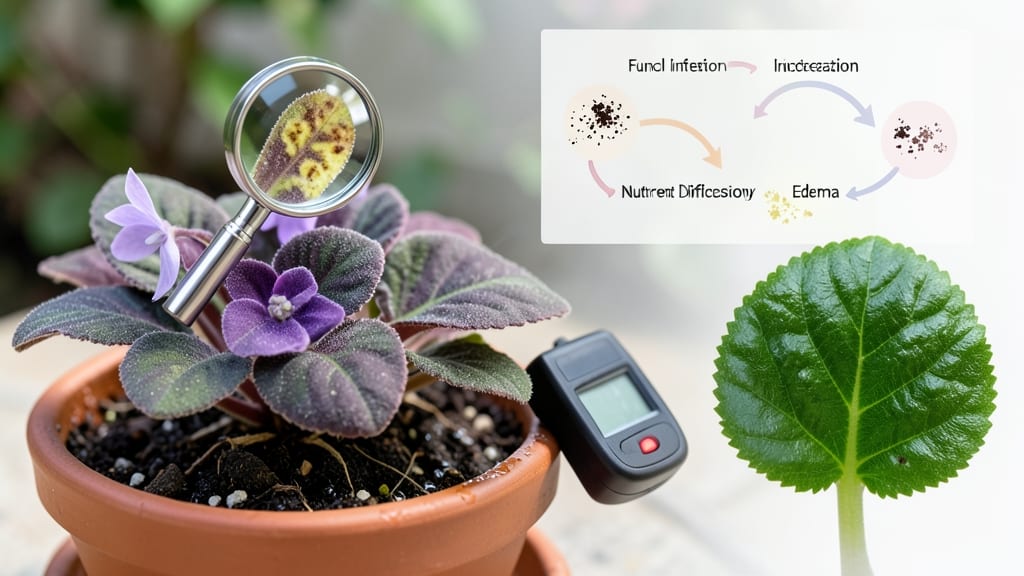
African violet leaf discoloration is often a silent SOS from your plant—yellowing edges or brown spots mean something’s off, but fixing it doesn’t have to take weeks. 💚 I’ve nursed back more than a dozen struggling violets by addressing the real culprits: overwatering, pests, or hidden infections.
The key is acting fast before the damage spreads.
Most problems start with care habits—too much water, drafty spots, or dusty leaves block light. Yellowing often signals overwatering, while crispy brown edges mean underwatering or low humidity.
Pests like spider mites leave speckled damage, and fungal spots appear as fuzzy patches. The good news? Each issue has a targeted fix.
You’ll prune away damaged leaves, adjust your watering schedule, and treat pests with neem oil or insecticidal soap. Within 2-3 weeks, new growth emerges vibrant and healthy. The secret is consistency—violets thrive when their environment mimics their natural tropical home.
Prevention is easier than cleanup: use well-draining soil, avoid cold drafts, and wipe leaves monthly. These small tweaks keep your violets blooming for years without discoloration drama. Let’s get those leaves looking fresh again!
Root Causes Of Leaf Discoloration
African violet leaf discoloration isn’t just an eyesore—it’s often a cry for help from your plant. Understanding the science behind these color changes helps you diagnose the issue faster and save your beloved violets. Below, we break down the most common culprits, complete with actionable insights to address them.
---
African violets thrive in consistently moist (not soggy) soil, but too much water triggers anaerobic conditions in the roots.
When roots suffocate, they can’t absorb nutrients efficiently, leading to: - Yellowing leaves (chlorosis) from nutrient starvation - Brown, mushy edges (cell death due to oxygen deprivation) - Blackened stems (root rot spreading upward)
Why it happens: - Compacted or non-porous soil holds excess water, suffocating roots. - Overzealous watering (especially from above) drenches leaves, promoting fungal growth. - Lack of drainage holes in pots traps water, mimicking a swampy environment.
💡 Pro Tip: Use a moisture meter or the "finger test" (insert your finger 1 inch deep—if damp, wait to water). Repot in well-draining African violet mix with perlite or orchid bark.
---
African violets are light-sensitive—their leaves change color as a stress response to improper lighting.
| Light Issue | Symptoms | Scientific Reason | |-----------------------|---------------------------------------|--------------------------------------------------------------------------------------| | Low light | Pale, yellowing leaves (etiolation) | Chlorophyll production slows; leaves stretch toward light, losing pigment. | | Direct sunlight | Brown, crispy patches (sunburn) | UV radiation denatures proteins in leaf cells, causing oxidative damage. | | Harsh artificial light | Reddish-purple undersides | Blue light deficiency disrupts anthocyanin (pigment) balance in leaves. |
🌿 Fix It: Place violets in bright, indirect light (east or north-facing windows). For artificial light, use cool-white LED grow bulbs 6–12 inches away for 12–14 hours/day.
---
Discoloration can be a sign of microbial invaders thriving in moist conditions. Common offenders include: - Botrytis blight (grayish-brown spots with fuzzy edges) - Leaf spot diseases (dark, water-soaked lesions) - Pythium root rot (yellowing followed by sudden wilting)
Why it happens: - High humidity + poor airflow creates the perfect fungal buffet. - Splashing water during overhead irrigation spreads spores like wildfire. - Weakened plants (from overwatering or nutrient deficiency) are easier targets.
🔥 Emergency Action: - Remove infected leaves with sterilized scissors. - Apply neem oil or copper fungicide (follow label rates). - Space plants apart to improve airflow and reduce humidity.
---
Tiny critters like spider mites, aphids, or mealybugs don’t just suck sap—they inject toxins and disrupt nutrient flow, leading to: - Yellowing between veins (aphids block phloem transport) - Stippled or white speckled leaves (spider mite feeding scars) - Sticky residue (honeydew) attracting sooty mold (black fungal growth)
🕵️♂️ How to Spot Them: Check leaf undersides and stems with a magnifying glass. Look for: - Webbing (spider mites) - Cottony tufts (mealybugs) - Tiny black dots (aphids)
💪 Treatment: - Isolate the plant to prevent spread. - Wipe leaves with 70% isopropyl alcohol or insecticidal soap. - Release predatory mites (like Phytoseiulus persimilis) for organic control.
--- African violets are light feeders, but imbalances cause tell-tale discoloration: - Yellowing between veins → Nitrogen deficiency (chlorophyll can’t form). - Purple stems/undersides → Phosphorus deficiency (stress response). - Brown, curled leaves → Over-fertilization (salt buildup burns roots).
📊 Soil Test Tip: Use a DIY soil test kit to check pH (ideal: 6.0–6.5) and nutrient levels. African violets prefer balanced, low-salt fertilizers (e.g., 10-10-10 diluted to half-strength).
--- African violets hate extremes: - Below 60°F (15°C) → Slow metabolism → Yellowing, weak growth. - Above 80°F (27°C) → Leaf scorch (transpiration outpaces water uptake). - Low humidity (<40%) → Edge browning (cells lose moisture too fast).
🌡️ Ideal Conditions: - Daytime temps: 65–75°F (18–24°C) - Nighttime temps: 60–68°F (15–20°C) - Humidity: 50–60% (use a pebble tray or humidifier if needed).
--- Household chemicals like fluoride in tap water, bleach residues, or harsh soaps can accumulate in soil and cause: - Brown, necrotic patches (cell membrane damage). - Stunted growth (toxic buildup inhibits root function).
🚫 Prevention: - Use filtered or distilled water (fluoride-free). - Avoid leaf shine sprays (can clog stomata). - Flush soil every 2 months with plain water to leach salts.
Fix Your African Violet’s Faded Leaves
African violets are delicate beauties, and when their leaves start showing discoloration—whether yellowing, browning, or patchy spots—it’s a clear sign they need a little TLC. The good news? Most issues are fixable with simple adjustments.
Below, we’ll break down practical solutions for the most common causes of leaf discoloration, along with prevention tips to keep your violets thriving.
---
If your African violet’s leaves are yellowing at the edges or feel mushy, overwatering (or soggy soil) is likely the culprit. Roots need air, not a swamp!
How to Fix It: 🔥 Stop Watering Immediately – Let the top inch of soil dry out completely before watering again. 🍳 Repot in Well-Draining Soil – Use a mix designed for African violets (or amend regular potting soil with perlite or orchid bark). 👨🍳 Check the Pot – Ensure it has drainage holes (no exceptions!). If not, transfer to one that does. 🥘 Water from Below – Place the pot in a saucer of water for 10–15 minutes, then let it drain. This prevents root rot. ⏰ Adjust Your Routine – Water only when the soil is dry to the touch (usually once a week in warm weather, less in cooler months).
💡 Pro Tip: If roots are already rotting, trim away the black, mushy parts with sterilized scissors and repot in fresh soil.
---
Brown, crispy spots or bleached-looking leaves? Your African violet is sunburned—these plants prefer bright, indirect light, not harsh afternoon rays.
How to Fix It: 🔥 Move It to a Brighter Spot (But Indirect) – East or north-facing windows are ideal. Avoid south or west windows unless filtered. 🍳 Use a Sheer Curtain – If natural light is too intense, diffuse it with a lightweight curtain. 👨🍳 Rotate the Pot Weekly – Ensures even growth and prevents one-sided sun damage. 🥘 Supplement with Grow Lights – If natural light is insufficient, a full-spectrum LED grow light (12–14 hours/day) works wonders.
💡 Pro Tip: If leaves are already damaged, trim them off at the base—the plant will grow fresh, healthy foliage.
---
Tiny yellow or brown speckles, webbing, or sticky residue? Pests like spider mites, aphids, or mealybugs are likely sucking the life out of your violets.
How to Fix It: 🔥 Isolate the Plant – Prevent pests from spreading to other houseplants. 🍳 Wipe Leaves with Soapy Water – Mix 1 tsp mild dish soap in a quart of water, then gently dab affected areas with a soft cloth. 👨🍳 Spray with Neem Oil – Mix 1 tsp neem oil + 1 tsp mild soap in 1 quart of water, spray thoroughly (avoid flowers), and repeat weekly. 🥘 Introduce Beneficial Insects – Ladybugs or lacewings eat aphids naturally (available at garden centers). ⏰ Check the Soil – Sometimes pests hide in the roots. Repot if needed, treating the soil with neem oil too.
💡 Pro Tip: Quarantine new plants for 2–3 weeks before introducing them to your collection.
---
African violets hate drafts, cold floors, or dry air—sudden changes cause brown edges or wilting.
How to Fix It: 🔥 Keep Them Warm (But Not Hot) – Ideal temps: 65–75°F (18–24°C). Avoid placing near AC vents, heaters, or windows that get too cold. 🍳 Boost Humidity – Place the pot on a pebble tray with water or use a humidifier nearby. 👨🍳 Avoid Drafts – Keep away from doors, windows, or fans that create sudden air currents. 🥘 Use a Terrarium or Clear Dome – A simple plastic cover can help maintain moisture around the plant.
💡 Pro Tip: Mist leaves lightly in the morning (avoid evening misting to prevent fungal issues).
--- Pale, yellowing leaves with visible veins? Your plant may be nutrient-deficient, especially if it’s been in the same soil for over a year.
How to Fix It: 🔥 Fertilize Monthly (But Lightly!) – Use a balanced, water-soluble fertilizer (like 20-20-20) diluted to half-strength. 🍳 Try a Slow-Release Pellet – Mix African violet-specific fertilizer pellets into the soil for steady nutrition. 👨🍳 Flush the Soil – Every few months, water the plant with plain water for 10 minutes to remove excess salts. 🥘 Repot Annually – Refresh the soil to prevent nutrient depletion.
💡 Pro Tip: Never fertilize a sick plant—wait until it’s recovered to avoid burning roots.
--- Once you’ve fixed the issue, keep these habits to prevent future discoloration: ✅ Water wisely – Always check soil moisture before watering. ✅ Monitor light – Adjust placement as seasons change. ✅ Inspect regularly – Catch pests early with weekly leaf checks. ✅ Maintain humidity – Especially in dry winter months. ✅ Rotate the pot – Ensures even growth and light exposure.
--- With these targeted fixes, your African violet’s leaves should bounce back in 2–4 weeks. The key is observation and consistency—your plant will thank you with vibrant, spot-free foliage! 🌸
Frequently asked questions
Why do my African violet leaves turn yellow first at the edges?
Edge yellowing usually signals underwatering or low humidity. African violets thrive in 50-60% humidity, and dry air causes cells to lose moisture too quickly. Check if the soil is bone-dry or if your home has dry air from heating systems. A pebble tray or humidifier nearby can help restore moisture balance.
What's the difference between brown spots from pests vs. fungal infections?
Pest damage (like spider mites) creates tiny speckles or webbing between leaf veins, while fungal spots appear as fuzzy gray patches with defined edges. Check leaf undersides with a magnifying glass—pests leave visible critters, while fungi create a powdery texture. Treat pests with neem oil and fungi with copper fungicide.
Can I save my African violet if the discoloration has spread to most leaves?
Yes, but act fast! Prune away 75% of damaged leaves at the base to redirect energy to healthy growth. Repot in fresh, well-draining soil and adjust care (watering, light, humidity). With proper treatment, new leaves should emerge within 2-3 weeks. The key is stopping the root cause—whether it's overwatering, pests, or poor light.
How often should I fertilize my African violet after fixing discoloration?
Wait 4-6 weeks after repotting or treating issues before fertilizing. Then use a balanced, water-soluble fertilizer (like 20-20-20) diluted to half-strength every 4-6 weeks during growing season (spring-fall). Avoid fertilizing in winter when growth slows. Always water thoroughly before applying fertilizer to prevent root burn.
Is it safe to use tap water on my African violet?
Only if it's fluoride-free and not hard water. Fluoride and chlorine can accumulate in soil, causing brown leaf tips and stunted growth. Use filtered, distilled, or rainwater instead. If you must use tap water, let it sit out 24 hours before watering to allow chlorine to evaporate. Test soil periodically for salt buildup.