
Trees
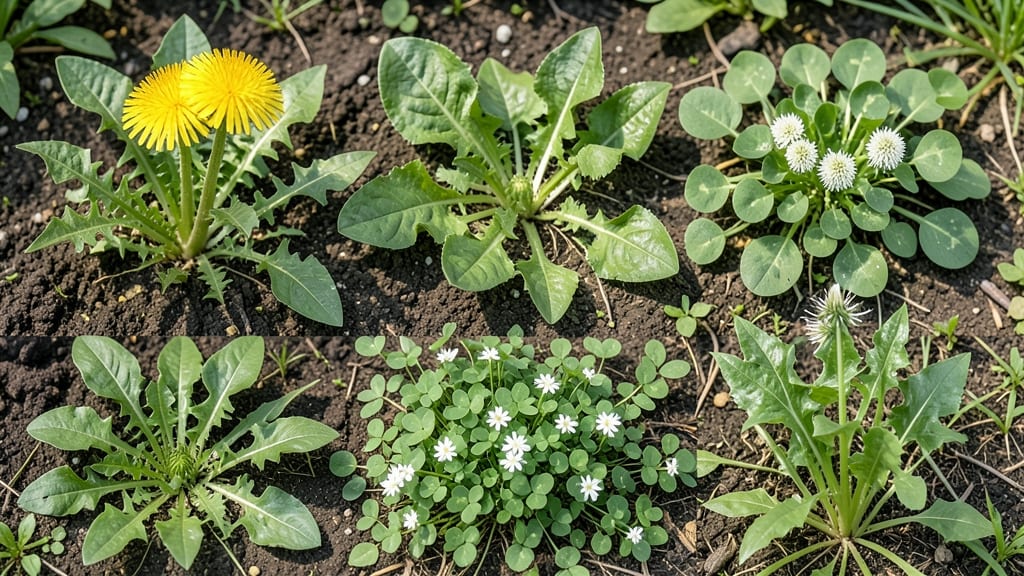
Spotting broadleaf weeds pictures of dandelions, chickweed, or clover before they take over your garden is half the battle won. 🌱 The moment you recognize that familiar dandelion rosette or the delicate clover clusters, you’ve already gained the upper hand—because identification is the first step to reclaiming your garden from these persistent invaders.
Most home gardeners struggle with the same three culprits: dandelions, chickweed, and clover. These weeds don’t just compete for nutrients—they spread aggressively, choking out your prized plants. The good news?
A sharp eye and a little know-how can turn your garden back into a thriving, weed-free sanctuary in just a few weeks. You’ll learn to pull them at the right time (before they seed), use targeted organic sprays, and even prevent them from returning next season.
No more guessing which plant to yank—just clear, labeled pictures and step-by-step removal techniques that actually work. From lawns to vegetable beds, this guide covers the most common offenders and the most effective solutions. Let’s get your garden back under control—without breaking a sweat.
Root Causes Of Broadleaf Spread
Broadleaf weeds—those pesky plants with wide, flat leaves—don’t just pop up by accident. Their persistence is the result of a mix of environmental factors, human habits, and even plant biology.
Understanding why they thrive in your garden or landscape is the first step to stopping them. Let’s break down the science behind their stubborn survival.
Broadleaf weeds often dominate because they’re opportunistic. When your soil lacks nutrients, structure, or healthy microbial life, weeds fill the gap like uninvited guests at a party. Here’s how it happens:
- Compacted Soil: Heavy foot traffic, machinery, or clay-heavy soil crushes soil particles, reducing aeration and water drainage. Weeds like dandelions and chickweed thrive in these conditions because their roots can push through tight spaces easily.
- Low Organic Matter: Soil rich in organic material (like compost) supports beneficial fungi and bacteria that outcompete weeds. Without it, broadleaf weeds exploit the lack of competition for sunlight and water.
- Imbalanced pH: Most broadleaf weeds prefer slightly acidic to neutral soil (pH 6.0–7.0). If your soil is too alkaline (high pH) or acidic (low pH), desirable plants struggle, leaving room for weeds like plantain and purslane to take over.
Actionable Fix: Test your soil’s pH and nutrient levels (a simple DIY kit or lab test works). Amend compacted soil with compost or gypsum, and mulch heavily to block weed seeds from germinating.
Water is the lifeblood of broadleaf weeds, and inconsistent moisture patterns give them the upper hand. Here’s why:
- Excess Water: Overwatering washes away nutrients and creates soggy soil, which weeds like creeping Charlie (Glechoma hederacea) and henbit love. Their shallow roots absorb moisture quickly, while deeper-rooted plants (like grasses) suffer.
- Drought Followed by Flood: Weeds are masters of seed dormancy. A dry spell triggers buried seeds to germinate when rain returns, giving them a head start over slower-growing plants.
- Poor Drainage: Areas with standing water (like low spots in lawns) become breeding grounds for moisture-loving weeds like yellow nutsedge (technically a sedge but often mistaken for broadleaf).
Actionable Fix:
- Water deeply but infrequently (1–1.5 inches per week) to encourage deep root growth in desired plants.
- Install swales or French drains to redirect excess water in problem areas.
- Use drip irrigation to target water directly to plants, not the soil surface where weed seeds lurk.
Broadleaf weeds are dormant seed machines. A single dandelion can produce 200+ seeds per plant, and these seeds can lie dormant in the soil for years—waiting for the perfect moment to sprout. Disturbing the soil is that moment.
- Tilling or Digging: Turning over soil buries weed seeds at the ideal depth (usually ¼–½ inch) for germination. Even light raking can expose buried seeds to sunlight and moisture.
- Construction or Landscaping: Newly disturbed soil (like after building a patio or planting trees) is a goldmine for weed seeds. They hitchhike in on tools, wind, or even animal fur.
- Erosion Control Failure: Bare, exposed soil (from washed-out areas or poor mulching) lets wind-blown seeds take root quickly.
Actionable Fix:
- Avoid tilling—use sheet mulching or no-dig gardening to smother weeds instead.
- Apply a thick layer of mulch (3–4 inches) after planting to block light and suppress germination.
- Solarize disturbed soil in summer by covering it with clear plastic for 4–6 weeks to kill dormant seeds.
While some plants wilt in full sun, broadleaf weeds like clover and mallow thrive in it. Here’s why sunlight fuels their dominance:
- Fast Photosynthesis: Weeds have high photosynthetic efficiency, meaning they convert sunlight into energy faster than many cultivated plants. In shady spots, they still outcompete slow-growing ground covers.
- Seed Germination Triggers: Many broadleaf weed seeds need light exposure to germinate. A bare, sunny patch is an open invitation.
- Shade Avoidance: Some weeds (like bindweed) grow taller and more aggressive in sunny areas to outcompete neighbors for light.
Actionable Fix:
- Plant dense ground covers (like creeping thyme or clover) to shade out weeds naturally.
- Use living mulches (fast-growing plants that suppress weeds) in sunny beds.
- Prune trees/shrubs to reduce gaps where weeds get direct sunlight.
Sometimes, broadleaf weeds win because the natural predators or competitors in your ecosystem are missing. Here’s how imbalances play a role:
- Overuse of Broadleaf Herbicides: While herbicides target weeds, they can also kill beneficial insects (like ladybugs and lacewings) that eat weed seeds and larvae. This creates a vacuum where weeds regrow unchecked.
- Monoculture Landscaping: Planting the same species (e.g., a lawn of only Kentucky bluegrass) reduces biodiversity. Weeds fill niches left by lack of plant diversity.
- Fungal or Bacterial Deficiencies: Healthy soil fungi (like mycorrhizae) help plants absorb nutrients. When these are missing, weeds exploit the weak soil structure.
Actionable Fix:
- Introduce pollinator-friendly plants to attract beneficial insects naturally.
- Use selective herbicides (like vinegar-based sprays) sparingly to avoid disrupting the ecosystem.
- Add compost tea or mycorrhizal fungi to soil to boost natural weed suppression.
Effective Ways To Remove Broadleaf Weeds
Broadleaf weeds can transform a well-maintained garden into a battleground of stubborn invaders, but the good news is that targeted solutions exist for every scenario. Below, we’ve mapped out practical, step-by-step fixes based on the root causes—whether it’s poor soil health, overwatering, or lack of competition from desirable plants.
Each method balances effectiveness with eco-friendliness, so you can reclaim your garden without harming the environment.
Best for: Small patches, ornamental gardens, or organic-focused spaces.
How to do it:
- 🌱 Wait for the right time – Pull weeds when the soil is moist (after rain or watering) to loosen roots easily.
- 👩🌾 Grab the right tools – Use a weeding knife for deep roots or a hand trowel for precision. For large areas, a broadfork (a garden fork) helps aerate soil while uprooting weeds.
- 🔪 Dig deep – Aim for the root crown (where the stem meets the soil). If you leave even a tiny piece, the weed will regrow.
- 🗑️ Dispose properly – Bag weeds and compost them only if they’re seed-free (or risk spreading them!). For weeds like dandelions or chickweed, burn or trash them to prevent reseeding.
💡 Pro Tip: Schedule a "weed day" every 1–2 weeks during peak growing seasons (spring and fall) to stay ahead.
Best for: Large infestations, driveways, or areas where manual removal is impractical.
How to do it:
- 📊 Choose the right herbicide –
- Selective herbicides (e.g., 2,4-D) kill broadleaf weeds without harming grasses (ideal for lawns).
- Non-selective herbicides (e.g., glyphosate) wipe out all plants—use only on bare soil or mulched areas.
- 🌡️ Apply on a calm, dry day – Avoid windy conditions to prevent drift onto desired plants.
- 💦 Follow label instructions – Most herbicides require even coverage and proper dilution. Reapply if rain is forecasted within 24 hours.
- 🛡️ Safety first – Wear gloves, long sleeves, and a mask. Keep pets and kids away until the area is dry.
⚠️ Warning: Overuse of chemicals can harm beneficial insects and soil microbes. Reserve this method for last-resort situations.
Best for: Long-term weed suppression in eco-friendly gardens.
🌿 Mulching: The Weed Barrier
- 🍂 Use organic mulch (wood chips, straw, or grass clippings) 3–4 inches deep to block sunlight and smother weeds.
- 💡 Pro Tip: Refresh mulch annually to maintain effectiveness.
🌱 Competitive Planting: Let Your Garden Fight Back
- 🌿 Plant densely – Crowd out weeds with ground covers (e.g., creeping thyme, clover) or fast-growing plants (e.g., marigolds, basil).
- 🌱 Choose deep-rooted perennials – Plants like lavender, hostas, or daylilies shade the soil and outcompete weeds.
🔥 Vinegar Spray: A Natural Burn
- 🍶 Mix 1 gallon of white vinegar + 1 oz. dish soap + 1 cup salt in a spray bottle.
- 💦 Spray directly on weeds (avoid desired plants—it’s non-selective).
- ⏰ Reapply every 2–3 days until weeds die (usually 1–2 weeks).
🌱 Soil Health: Starve Weeds of Nutrients
- 🔄 Improve soil with compost – Healthy soil = stronger plants that outcompete weeds.
- 💧 Water deeply but less often – Weeds thrive in shallow, frequent watering. Use drip irrigation or soaker hoses to target plant roots.
| Action | How to Do It | Why It Works |
|---|---|---|
| 🌱 Plant ground covers | Install clover, creeping thyme, or pachysandra. | Blocks sunlight and reduces bare soil. |
| 🌿 Use landscape fabric | Lay under mulch in high-weed areas. | Physical barrier slows weed growth. |
| 🌱 Solarize soil | Cover bare soil with clear plastic for 4–6 weeks in summer. | Kills weed seeds with heat. |
| 🌱 Regular mowing | Keep lawn at 3–4 inches tall. | Prevents weed seeds from reaching sunlight. |
Final Thought: The key to winning the weed war is consistency. Combine manual removal for visible weeds, preventive mulching, and soil enrichment for a garden that stays lush—and weed-free—with minimal effort. 🚀
Frequently asked questions
How can I tell the difference between a broadleaf weed and a young vegetable plant?
Look at the leaf shape and growth pattern: broadleaf weeds like dandelions have jagged, lobed leaves, while young vegetable plants often have smoother edges. Check the stem—weeds usually grow in clusters or spread horizontally, whereas vegetables typically grow upright. If you're unsure, wait 24 hours: weeds grow faster and develop more distinct features.
Are there any broadleaf weeds that are actually beneficial to my garden?
Yes! Clover is a nitrogen-fixing broadleaf that improves soil health, while chickweed attracts beneficial insects. Some gardeners even tolerate small patches of these weeds. However, most common broadleaf weeds (like dandelions or plantain) compete aggressively with your plants, so removal is still recommended for a balanced garden.
What's the best time of day to pull weeds for maximum effectiveness?
Early morning is ideal—soil is moist from dew, making roots easier to remove. Avoid midday when soil is dry or evening when you might miss some weeds. For stubborn weeds, pull them after rain when the ground is softest. Always aim to remove the entire root to prevent regrowth.
Can I use household vinegar to kill broadleaf weeds, and will it harm my plants?
Yes, but be very careful! Mix 1 gallon white vinegar + 1 cup salt + 1 tbsp dish soap and spray directly on weeds. This works best on small patches—it's non-selective, so avoid spraying near any plants you want to keep. Test a small area first, and reapply every 2-3 days until weeds die (usually 1-2 weeks).
Why do some broadleaf weeds keep coming back even after I pull them?
Weeds often have deep root systems or produce thousands of seeds that lie dormant in soil for years. Even a small root fragment left behind can regrow. For persistent weeds, try solarizing the area (covering with clear plastic for 4-6 weeks) or applying corn gluten meal in fall to prevent new seeds from germinating.