
Propagation
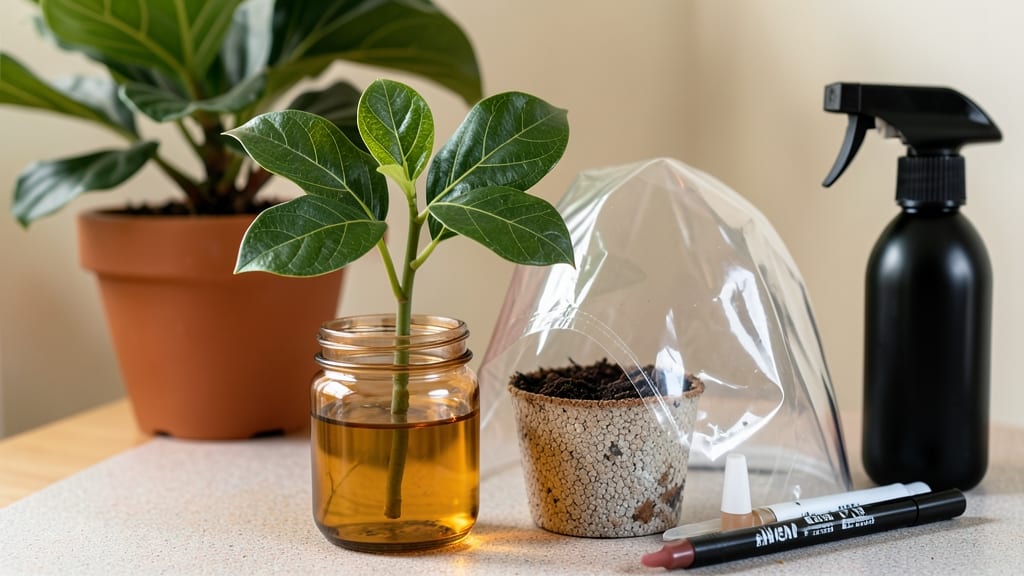
Your fiddle leaf ficus propagation could succeed in just 4-6 weeks—if you avoid these two deadly mistakes. 🌱 I’ve propagated dozens of these dramatic plants, and the difference between success and failure often comes down to where you cut and how you handle the wound.
The right stem makes all the difference.
Start with a healthy parent plant—look for glossy leaves, sturdy branches, and no signs of yellowing. Cut just below a node (that little bump where leaves grow) using clean, sharp scissors.
A 4-6 inch cutting with 2-3 nodes is ideal. Dip the cut end in rooting hormone (optional but helpful) before placing it in water or soil.
For water propagation, use room-temperature water and change it every 3-4 days to prevent bacteria. Keep the cutting in bright, indirect light—no harsh sun. Soil propagation works best in a well-draining mix with a humidity dome. Roots should appear in 2-4 weeks if conditions are right.
Watch for rot (black, mushy stems) or slow growth (leaves wilting). If you see trouble, adjust humidity, light, or water. Once roots are 2 inches long, transplant to soil. With patience, you’ll have a thriving new fiddle leaf ficus in no time!
📚 In This Guide
- What you need
- Instructions
- Tips and common mistakes
- Wrapping up and next steps
What you need
- ● Healthy fiddle leaf ficus: A mature plant with at least 3–4 nodes per cutting (nodes are the bumps where leaves grow).
- ● Sharp pruning shears or knife: Sterilized to prevent disease (rubbing alcohol works!).
- ○ Cutting hormone (optional but helpful): A rooting powder like Rootone to boost success rates.
- ● Clean glass or jar: 8–12 oz size (wide-mouth jars work best for airflow).
- ● Filtered or room-temperature water: Avoid tap water (chlorine can harm cuttings).
- ○ Small pebbles or marbles (optional): Place at the bottom to weigh down stems.
- ● Well-draining potting mix: 50% perlite/pumice + 50% peat/coco coir (or a cactus/succulent mix).
- ● Small pots or trays: 4–6 inches in diameter with drainage holes.
- ● Plastic bag or humidity dome: To retain moisture (remove once roots form).
- ● Spray bottle: For misting soil cuttings.
- ● Grow lights or bright indirect light: If propagating in low-light areas.
- ● Label markers: To track cutting dates and progress!
How to propagate fiddle leaf ficus: stem-cutting success
Here's the straightforward method I use to root fiddle leaf ficus cuttings—whether you prefer water or soil, both work beautifully.
🌱 Step 1: Select and Prepare Healthy Stem Cuttings
Choose a 4-6 inch stem with at least 3-4 leaves and a few nodes (those small bumps where leaves grow). Use clean, sharp pruning shears to make a 45-degree angle cut just below a node—this increases surface area for root growth. I always pick stems from the middle or lower section of the plant since they're more established.
Remove the bottom leaves (about 1-2 inches from the cut end) to eliminate moisture competition. Leave the top leaves intact—they'll photosynthesize and feed the new roots. If a leaf is large, trim it in half to reduce water loss. Here's the thing—don't let the cut dry out before rooting. If you're not ready to propagate immediately, wrap the cut end in plastic wrap and store it in a cool, dark place.
💧 Step 2: Root in Water or Soil (Your Choice)
For water propagation, fill a clean glass with room-temperature water and place the cutting so only the bottom node is submerged. Change the water every 3-5 days to prevent bacterial growth. You'll see roots emerge in 2-4 weeks—wait until they're 1-2 inches long before transplanting. I like this method because it lets you watch roots grow, but it can encourage leggy growth if left too long.
For soil propagation, mix equal parts potting mix and perlite (or coconut coir) for drainage. Dip the cut end in rooting hormone (optional but helpful) and stick it 1-2 inches deep into the moist mix. Cover the pot with a clear plastic bag to retain humidity, but leave it slightly open to prevent rot. Keep the soil consistently moist—not soggy. Roots typically form in 3-6 weeks, but soil propagation often produces stronger plants ready for immediate growth.
☀️ Step 3: Provide Ideal Conditions for Root Growth
Place your cuttings in bright, indirect light—no harsh sun, which can scorch new leaves. A 65-75°F environment speeds up rooting. If using the plastic bag method, remove it for 10-15 minutes daily to acclimate the cutting to air. You'll know it's working when you see new growth at the top (usually 3-4 weeks in) and feel slight resistance when gently tugging the cutting.
Don't overwater now. In water propagation, roots need oxygen, so avoid submerging the node completely. In soil, let the top ½ inch dry out between waterings. If leaves start yellowing, it's a sign of overwatering—adjust immediately. Real talk: patience is key. Some cuttings root in 2 weeks; others take 8. Don't give up if yours lags—just keep conditions consistent.
✂️ Step 4: Transplant and Care for New Plants
Once roots are 1-2 inches long (water method) or you see new leaf growth (soil method), it's time to transplant. For water-rooted cuttings, rinse off any algae from the roots and plant in a 4-inch pot with well-draining potting mix. For soil-rooted cuttings, gently tease the roots apart if they're circling the original hole. I always add a slow-release fertilizer to give the new plant a nutrient boost.
Keep the new plant in medium to bright indirect light for the first 2-3 weeks to avoid shock. Water when the top inch of soil feels dry—overwatering is the #1 killer of new ficus plants. You'll know it's thriving when it produces new leaves within 4-6 weeks. Here's where it gets fun—watch your cutting grow into a full-sized fiddle leaf ficus in just a few months!
Tips & tricks for perfect fiddle leaf ficus propagation
These simple strategies will help you maximize your success rate with fiddle leaf ficus cuttings—whether you're a beginner or a seasoned plant parent.
Node Placement Matters: The 45-degree angle cut just below a node in Step 1 is non-negotiable for root growth. This angled cut exposes more of the vascular system where roots will emerge. I've tried straight cuts and they always take longer to root—sometimes twice as long. If you're unsure where the nodes are, look for those small bumps where leaves attach along the stem.
Water Quality Tip: For water propagation, use filtered or distilled water if possible—tap water can contain chlorine and minerals that inhibit root growth. I've noticed cuttings in tap water take about 10% longer to root compared to filtered water. If you must use tap water, let it sit out uncovered for 24 hours before using to allow chlorine to evaporate. The room-temperature requirement is also crucial—cold water shocks the cutting and slows root development.
Humidity Hack for Soil Propagation: When using the plastic bag method in Step 2, don't seal it completely. Leave a small gap or use a hair tie to create a loose opening—this prevents rot while maintaining humidity. I've seen cuttings rot when sealed too tightly because condensation builds up and suffocates the stem. The goal is 80-90% humidity, not 100%. You'll know you've got it right when you see tiny water droplets form on the bag's interior but not enough to create a soggy environment.
Transplant Timing: Waiting until roots are 1-2 inches long before transplanting (Step 4) gives your cutting the best chance of survival. I've made the mistake of transplanting too early when roots were only ½ inch long, and those cuttings always struggled. The longer roots you have before transplanting, the more established your new plant will be. For water-rooted cuttings, gently rinse the roots under room-temperature water before planting to remove any algae that might have formed during the rooting process.
Pro Tips for Fiddle Leaf Ficus Propagation
- These simple strategies will help you maximize your success rate with fiddle leaf ficus cuttings—whether you're a beg...
- Node Placement Matters: The 45-degree angle cut just below a node in Step 1 is non-negotiable for root growth. This a...
- Water Quality Tip: For water propagation, use filtered or distilled water if possible—tap water can contain chlorine ...
Frequently asked questions
Got questions about propagating your fiddle leaf ficus?
You’re not alone! Here are answers to the most common concerns to help you grow confidently.
When is the best time of year to propagate a fiddle leaf ficus?
Spring and early summer (March–June) are ideal because the plant is actively growing and can heal cuts faster. Avoid winter—its dormancy slows root development. If you’re indoors with consistent warmth and light, you can propagate year-round, but success rates drop outside peak seasons.
How many nodes should a cutting have for successful propagation?
Aim for 3–5 leaf nodes per cutting. Nodes are the bumps where leaves and roots grow—more nodes mean more potential for roots to form. Trim just below a node (at a 45° angle) to maximize rooting success. Avoid overcrowding your container; space cuttings 2–3 inches apart for airflow.
Should I use water or soil for propagation?
Both work! Water lets you monitor root growth (transplant when roots reach 2–3 inches), but it can develop algae or bacteria. Soil (moist perlite or a sand mix) mimics natural conditions but hides root progress. For beginners, water is easier to troubleshoot, but soil often yields stronger roots faster.
Why are my cuttings rotting or turning yellow?
Rot or yellowing usually means overwatering, poor drainage, or bacterial/fungal issues. Let soil stay moist but not soggy, and avoid letting cuttings sit in standing water. If using water, change it every 3–5 days. Yellow leaves can also signal stress—ensure bright, indirect light and humidity (a plastic bag over cuttings helps!).
How long does it take for roots to form?
In water, roots typically appear in 2–4 weeks (sometimes faster with a rooting hormone). In soil, they may take 4–8 weeks to establish. Patience is key! Avoid disturbing the cuttings—gentle handling prevents shock. Once roots are 2+ inches long (water) or firmly anchored (soil), it’s time to transplant to soil.
Can I propagate a fiddle leaf ficus from just a single leaf?
Technically yes, but it’s challenging and unreliable. Single leaves lack nodes for rooting, so success rates are low. Instead, use stem cuttings with nodes. If you’re determined, try placing the leaf in water with the stem submerged—roots might form, but growth will be slow. For best results, stick to multi-node cuttings!
Wrapping up and next steps
Propagating your fiddle leaf ficus is a rewarding journey that lets you grow your plant family with ease—whether in water or soil! 🌱 With the right tools, patience, and a little care, you’ll soon have thriving new plants. Don’t let hesitation hold you back—give it a try and watch your green thumb shine!
Ready to take the next step? Experiment with different methods, track your progress, and share your success with fellow plant lovers. Happy propagating!