
Pests and Diseases
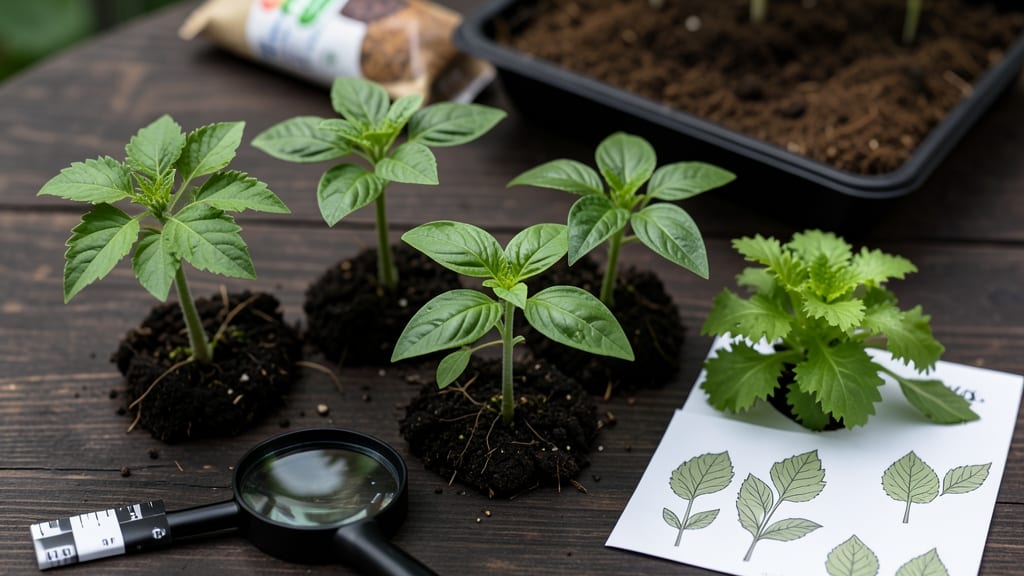
Leaf shape seedling identification saved me from accidentally yanking out my future zucchini plants last spring. 🌱 That first glimpse of a tiny leaf can tell you everything—whether it’s a delicate parsley or a bold basil—if you know what to look for.
The secret lies in three key details: leaf edges (smooth, jagged, or lobed), the vein patterns (net-like or feathered), and the overall shape (long and narrow or broad and rounded).
A simple magnifying glass helps spot these clues, and once you recognize them, you’ll never confuse a tomato seedling for a weed again.
With this skill, you’ll transplant with confidence, pull weeds without hesitation, and even troubleshoot problems faster. Imagine knowing exactly which seedling needs more sun—or which one’s struggling before it’s too late.
Works for any garden, from raised beds to containers, and scales from a single seedling to a full nursery tray. Let’s decode those leaf patterns together!
Genetic and Environmental Triggers
Leaf shape in seedlings isn’t just a random quirk—it’s a fascinating interplay between genetics and environmental factors. Understanding these triggers helps gardeners and botanists predict growth patterns, troubleshoot issues, and even identify plant species early.
Let’s break down the key causes behind why seedlings develop the leaf shapes they do.
Every plant species carries a genetic code that dictates its leaf morphology—think of it as a seed’s built-in instruction manual. For example:
- Monocots (like grasses) typically produce long, narrow leaves due to their parallel venation and tightly packed vascular bundles.
- Dicots (like tomatoes or beans) often sprout broad, lobed, or serrated leaves because their reticulate venation (net-like veins) supports complex shapes.
- Epiphytes (e.g., orchids) may have thin, leathery leaves adapted for water retention in humid climates.
Even within a species, cultivar variations (like heirloom vs. hybrid tomatoes) can result in drastically different seedling leaves. Pro Tip: If you’re growing from saved seeds, expect some leaf-shape surprises—genetic recombination is wild! 🌱
Extreme temperatures can warp leaf development before a seedling even unfurls properly. Here’s how:
| Condition | Effect on Leaf Shape | Example |
|---|---|---|
| Cold Stress (<40°F/4°C) | Leaves may emerge smaller, thicker, or curled to conserve moisture and energy. Cell division slows, leading to stunted growth. | Peppers or basil seedlings in a chilly greenhouse. |
| Heat Stress (>90°F/32°C) | Leaves can become elongated, pale, or wilted as enzymes involved in growth (like auxins) degrade faster. Some species develop heat-induced serrations. | Cucumber seedlings in a south-facing tray without shade. |
Actionable Fix: Use heat mats for cold snaps or provide shade cloth (30–50%) to protect seedlings from midday sun. 🌡️ Pro Tip: Ideal germination temps vary—check your seed packet!
Water is the universal solvent of plant growth, and its imbalance directly alters leaf shape:
- Underwatering:
- Leaves turn crispy, cupped, or pointed (e.g., drought-adapted seedlings like succulents).
- Cells plasmolyze (shrink), causing edges to curl inward.
- Example: A tomato seedling’s first true leaves may look needle-like if stressed.
- Overwatering:
- Leaves become soft, pale, or lobed due to oxygen deprivation in soggy soil.
- Excess water dilutes nutrients, leading to irregular cell expansion (e.g., puffy, translucent leaves).
- Example: Basil seedlings in a waterlogged tray may sprout broad, wavy leaves.
💡 Solution: Use moisture meters or the finger test—top 1 inch of soil should feel like a wrung-out sponge. For seedlings, bottom-watering (placing trays in shallow water) encourages even hydration.
Light isn’t just about photosynthesis—it’s a morphological trigger. Seedlings respond to light intensity and spectrum with dramatic leaf-shape shifts:
- Low Light (e.g., under dense canopy or artificial grow lights too far):
- Leaves grow larger, thinner, and lighter green (a trait called etiolation) to maximize light absorption.
- Stems elongate and weaken (“leggy” seedlings), while leaves may develop irregular lobes.
- Example: Spinach seedlings in dim light may sprout broad, almost heart-shaped cotyledons.
- Direct Sunlight (or High-Intensity Grow Lights):
- Leaves become smaller, thicker, and darker green to reduce water loss and protect chlorophyll.
- Some species develop serrations or waxy coatings (e.g., sun-adapted parsley leaves).
- Example: Arugula seedlings in full sun may have ruffled, jagged edges.
✨ Hack: Start seedlings under 12–16 hours of grow lights (LED or fluorescent) 6–12 inches away, then harden off gradually to avoid shock. Rotate trays weekly for even growth!
Poor soil quality or nutrient imbalances can stunt or distort leaf development:
- Nitrogen Deficiency (Pale, Small Leaves):
- Leaves may appear yellow (chlorotic) with pointed tips as the plant prioritizes root growth over foliage.
- Example: Pepper seedlings in sterile potting mix without fertilizer.
- Phosphorus Deficiency (Dark, Purple-Streaked Leaves):
- Leaves can develop deep veins and irregular shapes as the plant struggles to produce energy.
- Example: Tomato seedlings in alkaline soil (pH >7.0).
- Micronutrient Toxicity (e.g., Excess Iron or Manganese):
- Leaves may crinkle or develop necrotic spots between veins.
- Example: Lettuce seedlings in reused soil with old compost.
📊 Fix: Test soil pH (ideal: 6.0–7.0 for most seedlings) and amend with compost or balanced fertilizer (e.g., 5-5-5). For hydroponics, use calcium nitrate to prevent tip burn.
Quick Fixes for Leaf Shape Confusion
Identifying seedlings by leaf shape doesn’t have to be a guessing game—especially when you’re staring at a tiny sprout with no clear clues. Below are practical, step-by-step solutions tailored to common challenges, from misidentification to environmental stress. Each fix includes prevention tips to keep your young plants thriving.
---
Problem: Multiple seedlings resemble each other, making it hard to distinguish species.
How to Solve It: 🔥 Compare with a Reference Chart Start by downloading a leaf shape identification app (like PictureThis or PlantNet) or print a visual guide of common seedlings (e.g., oak, maple, pine). Hold your seedling next to the chart—lighting matters! Use natural daylight to avoid color distortion.
🍳 Observe Growth Patterns Over Time - First leaves (cotyledons): Broad and simple (e.g., beans, peas) vs. needle-like (pines). - True leaves (after germination): Check veins (parallel vs. netted) and edges (lobed, serrated, smooth). - 👨🍳 Pro Tip: Take weekly photos of 3–5 seedlings side by side. Small differences become obvious over time.
✨ Prevention: - Label seedlings immediately with toothpicks and masking tape (write the date and species guess). - Grow a "control group"—plant known species nearby for comparison.
---
Problem: Environmental factors (overwatering, pests, disease) warp leaf shapes, making ID impossible.
How to Solve It: 🔪 Isolate and Inspect 1. Check for pests: Look under leaves for aphids, spider mites, or slug trails. Use a magnifying glass. 2. Test soil moisture: Stick your finger 1 inch deep—soggy soil = root rot risk; dry soil = underwatering. 3. 🥘 Adjust care immediately: - Overwatered? Move to a well-draining pot and water only when the topsoil is dry. - Underwatered? Mist leaves lightly and place in indirect sunlight for 24 hours. - Pests present? Spray with neem oil (1 tsp per quart of water) or introduce beneficial insects (ladybugs).
💡 Prevention: - Use a moisture meter for seedlings in trays. - Quarantine new seedlings for 1 week before mixing with others. - Rotate pots weekly to ensure even light exposure.
---
Problem: Seedlings lack distinctive flowers, buds, or stems, leaving only leaves to work with.
How to Solve It: 🎯 Focus on Leaf Arrangement and Texture Create a quick ID checklist for your seedlings: | Feature | Oak Seedling | Maple Seedling | Pine Seedling | |----------------------|------------------------|-------------------------|--------------------------| | Leaf Shape | Lobed, jagged edges | Palmate (5–7 lobes) | Needle clusters (fascicles) | | Leaf Arrangement | Alternate | Opposite | Whorled or spiral | | Stem | Hairy, reddish | Smooth, green | Woody, scaly |
🔥 Use a "Process of Elimination" - Rule out monocots (grasses, lilies) if leaves are long and strap-like. - Check for compound leaves (e.g., clover = 3 leaflets; walnut = 11+). - 👨🍳 Pro Tip: Press a few leaves between parchment paper and scan them—digital copies make comparison easier.
✨ Prevention: - Plant a diverse "test batch" of 5–10 known species to train your eye. - Keep a seedling journal with sketches of leaf details.
--- 💡 Bonus: If all else fails, DNA testing kits (like Backyard Basecamp) can confirm species—but they’re a last resort for stubborn cases! For most gardeners, a magnifying glass and patience are all you need.
Frequently asked questions
What’s the fastest way to tell a tomato seedling from a pepper seedling?
Check the leaf shape and stem hairiness. Tomato seedlings have broad, jagged leaves with hairy stems, while pepper seedlings grow smooth, slightly lobed leaves on smooth stems. A magnifying glass helps spot these differences clearly.
Can I use leaf shape to identify weeds in my seedling trays?
Weeds like crabgrass (long, narrow leaves with a boat shape) or purslane (succulent, rounded leaves) stand out from your seedlings. Compare with a weed ID guide—many weeds have parallel veins (like grasses) while most veggies have netted veins.
Why do my basil seedlings have weird, curled leaves?
Curled leaves usually mean heat stress or overwatering. Basil thrives at 60–75°F—if it’s hotter, provide shade cloth. For water, let the top 1 inch of soil dry between waterings. A fan on low can also help prevent curling from humidity.
How do I know if a seedling’s leaf shape is normal or a sign of disease?
Normal variations are species-specific (e.g., oak leaves are lobed, maple leaves are palmate). Disease signs include yellow spots, blackened edges, or puffy growths. Compare with healthy seedlings—if yours look warped, discolored, or sticky, isolate it and check for pests.
What’s the best tool for beginners to practice leaf shape identification?
Start with a seedling ID app like PictureThis or a printed guide of common plants. Grow 3–5 known species side by side (e.g., basil, parsley, tomato) to train your eye. A magnifying glass (10x) reveals key details like vein patterns and leaf edges.