
Watering
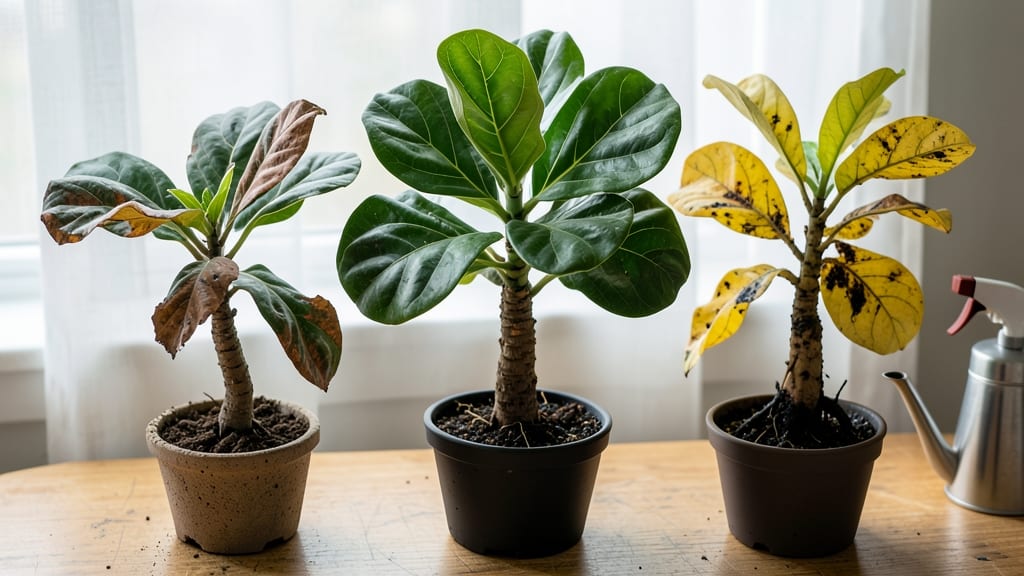
Those leaf spots on your fiddle leaf fig are a clear sign of the underwatered vs overwatered battle raging in its roots—one that’s either begging for hydration or drowning in too much. 🌿 I’ve seen both sides, and the difference between crispy edges and mushy roots comes down to understanding the subtle signals your plant gives.
The key is learning to read those signals before they become irreversible damage.
Underwatered leaves start with crispy brown edges that curl inward like a parchment scroll, while overwatered ones turn yellow and feel soft to the touch—almost like a soggy paper towel.
The soil tells the real story: dry as dust for thirsty plants, or heavy and clinging for those drowning in moisture. My rule? Stick your finger in the top inch—if it’s bone-dry, water; if it’s still damp after a week, hold off.
You’ll get to a place where your fiddle leaf fig thrives with perfect balance—no more guessing games. The trick is adjusting your watering schedule to match your home’s humidity and seasonal changes. Most people overcorrect after a mistake, so I’ll show you how to fine-tune it gradually, leaf by leaf.
We’ll also cover the sneaky signs of root rot, because sometimes the problem runs deeper than just water. Trust me, once you master this, your fiddle leaf fig will reward you with glossy, vibrant leaves that’ll make every other houseplant jealous.
The first product explained
Meet your new plant BFF: the Fiddle Leaf Fig Hydration Monitor! 🌿💧 This clever gadget is designed to take the guesswork out of watering your fiddle leaf fig, ensuring you never accidentally turn your leafy friend into a sad, crispy snack for the underwatered or overwatered club. Whether you're a plant parent with a busy schedule or just someone who wants to master the art of fiddle leaf fig care, this tool is your secret weapon.
📏 Specs & Features
This sleek, compact device is packed with features to help you nail the perfect watering routine:
- Moisture Sensor: A precise probe that measures soil moisture levels in real-time, giving you an instant readout of whether your plant is thirsty or drowning.
- LED Indicator Lights: Color-coded lights (green = happy, yellow = thirsty, red = SOS!) make it super easy to check your plant’s hydration status at a glance.
- Smartphone App Integration: Sync the monitor with the FigFriend app to track watering history, set reminders, and get personalized tips tailored to your plant’s needs.
- Durable & Reusable: Made from BPA-free, plant-safe materials with a long-lasting battery (up to 6 months on a single charge).
- Compact Design: Fits snugly into most pots, so it won’t take up extra space on your plant shelf.
🎯 Target Users
This product is perfect for:
- Busy professionals who want to keep their fiddle leaf fig thriving without daily check-ins.
- Plant beginners who are eager to learn the ropes but don’t want to risk killing their first fig.
- Plant enthusiasts who love data and want to fine-tune their care routine for optimal growth.
- Anyone tired of the leaf spot lottery—because let’s be real, nobody wants to play that game.
💰 Price Point & Value
The Fiddle Leaf Fig Hydration Monitor retails for $29.99, making it an affordable investment for a healthier, happier plant. Compared to the cost of replacing a neglected fiddle leaf fig (or the emotional toll of watching it suffer), this little gadget is a no-brainer.
Plus, it pays for itself in peace of mind and lush, vibrant leaves!
Pro Tip: 💡 Use the app’s "Watering Journal" to log notes on your plant’s environment (light, humidity, etc.)—this helps you spot patterns and adjust care over time!
The second product explained
Meet your new plant BFF: the LustLeaf Fiddle Leaf Fig Self-Watering Planter! 🌿✨ This sleek, modern planter is designed to take the guesswork out of watering—because nobody wants to play "Is my fiddle leaf fig thirsty or just being dramatic?" anymore.
Perfect for both plant parents and newbies, this product is all about balance, just like your favorite yoga class (but for plants).
📏 Specs & Features
Let’s dive into the details:
- Capacity: 1.5-gallon pot (fits a standard 6-8" fiddle leaf fig).
- Material: Eco-friendly, food-grade plastic with a breathable design to prevent root rot.
- Self-Watering System: Includes a built-in reservoir and moisture sensor to alert you when it’s time to refill—no more soggy roots or parched leaves!
- Drainage: Bottom drainage holes + a removable saucer to catch excess water (because nobody likes a swampy plant).
- Aesthetic: Minimalist, modern design with a sleek black or terracotta finish to match any vibe.
- Portability: Lightweight and comes with a handle for easy moving (because your plant deserves a vacation too).
🎯 Target Users
This planter is a dream come true for:
- Busy professionals who want a low-maintenance plant that still looks chic.
- Plant enthusiasts tired of the "leaf spot roulette" with traditional pots.
- First-time plant owners who need a little extra guidance (and forgiveness).
- Small-space dwellers—it fits seamlessly on desks, shelves, or countertops.
💰 Price Point
The LustLeaf Self-Watering Planter retails for $49.99, which might seem like a splurge, but think of it as an investment in plant peace of mind. Compared to the cost of replacing a fiddle leaf fig (or your sanity after another round of leaf spots), it’s a no-brainer.
Plus, it’s reusable, so you’ll save money long-term on repotting and watering mishaps.
💡 Pro Tip: Pair this planter with the LustLeaf app (free!) for personalized watering reminders and plant care tips. Your fiddle leaf fig will thank you with lush, spot-free leaves in no time.
Head-to-head comparison
Now that we’ve explored the telltale signs of underwatered and overwatered fiddle leaf figs, let’s dive into a side-by-side comparison to help you diagnose your plant’s hydration status like a pro! 🌿💧 Whether you’re a seasoned plant parent or just starting your green journey, this breakdown will make it easy to spot the differences—and fix them fast.
🌱 Visual Symptoms: The First Clues
Your fiddle leaf fig’s leaves are like a billboard for its watering needs. Here’s how to read them:
| Symptom | Underwatered | Overwatered |
|---|---|---|
| Leaf Color | Dull, yellowing edges (often starting at the tips), or crispy brown patches. | Yellowing leaves (especially lower ones), soggy or mushy texture, or pale green. |
| Leaf Droop | Leaves feel paper-thin or brittle; may droop slightly but bounce back when hydrated. | Leaves droop heavily and stay floppy even after watering; may feel waterlogged. |
| Leaf Spots | Brown, crispy spots (like sunburn) from dehydration stress. | Dark, water-soaked spots (often with a foul smell) from root rot. |
| Stem & Soil | Soil pulls away from the pot; stem may shrink slightly. | Soil stays clumpy and wet; stem may feel soft or mushy. |
💧 Root Health: The Hidden Story
Peeking at the roots (gently!) is the ultimate way to confirm your fiddle leaf fig’s hydration status. Here’s what to look for:
- Underwatered Roots:
- Dry, brittle, or pulled away from the pot.
- Light brown or white in color.
- May shrink when dehydrated.
- Overwatered Roots:
- Mushy, black, or rotten-smelling.
- Easily crush between fingers (like overcooked pasta!).
- May peel away from the stem.
Pro Tip: 💡 If you’re unsure, do the finger test—stick your finger 1-2 inches into the soil. If it’s dry, water; if it’s damp, wait. Soggy? That’s a red flag!
📊 Growth & Recovery: Can It Bounce Back?
How your fiddle leaf fig reacts to your care says a lot about its health. Compare these recovery signs:
| Factor | Underwatered | Overwatered |
|---|---|---|
| New Growth | Slow or stunted; new leaves may be smaller than usual. | May stop growing entirely; new leaves could be yellow or deformed. |
| Response to Water | Leaves perk up quickly after watering; may even unfurl if severely dehydrated. | Leaves may stay droopy or wilt further if roots are rotting. |
| Long-Term Damage | Can recover with proper watering and pruning dead leaves. | May permanently damage roots, leading to irreversible decline if not treated ASAP. |
🌡️ Environmental Impact: How Your Space Affects Watering
Your home’s microclimate plays a huge role in whether your fiddle leaf fig is thirsty or drowning. Here’s how to adjust:
- Underwatered Risk:
- Low humidity (e.g., near a heater or AC).
- Direct sunlight (dries out soil faster).
- Small pots (soil dries out too quickly).
- Overwatered Risk:
- High humidity (e.g., bathroom or kitchen).
- Poor drainage (e.g., no drainage holes or compacted soil).
- Overpotting (too much soil holds excess moisture).
Pro Tip: ✨ Use a moisture meter or terracotta pot (dries out faster) to control watering. Grouping plants together also boosts humidity naturally!
💰 Cost of Correction: Fixing the Problem
Let’s talk real talk—how much will it cost to save your fiddle leaf fig? Here’s the breakdown:
| Issue | Underwatered Fix | Overwatered Fix |
|---|---|---|
| Immediate Action | Water deeply ($0) + mist leaves ($0). | Stop watering ($0) + repot in fresh soil ($5–$15). |
| Tools Needed | Humidifier ($20–$50), pebble tray ($10–$20). | Well-draining soil ($5–$10), fungicide ($10–$20), new pot ($10–$30). |
| Long-Term Prevention | Self-watering pot ($30–$80), moisture meter ($10–$20). | Perlite/pumice ($5), better drainage setup ($10–$25). |
Pro Tip: 🎯
So, you’ve spotted the signs—yellowing leaves, crispy edges, or droopy stems—and now you’re wondering: Is my fiddle leaf fig underwatered or overwatered? 🌿 The good news? Once you recognize the symptoms, fixing the issue is totally doable! Here’s your tailored verdict and action plan based on your plant’s needs. If your plant’s leaves are crispy, curling, or falling off, it’s thirsty! Here’s how to revive it: Yellowing leaves, mushy stems, or a foul smell from the soil? Time to dry it out! Now that you’ve saved your fiddle leaf fig, let’s keep it thriving! Here’s a watering schedule tailored to your lifestyle: 💡 Pro Tip: Invest in a moisture meter ($10-$15) to take the guesswork out of watering. Stick it in the soil—if it reads dry, water; if it’s moist, wait!Which one should you choose?
🔍 Quick Fixes Based on Your Plant’s Symptoms
📅 Long-Term Care: Prevent Future Mistakes
Scenario
Watering Frequency
Pro Tips
Busy professional
Every 7-10 days
Use a self-watering pot or set reminders on your phone.
Home office setup
Every 5-7 days
Group plants together to boost humidity naturally.
Dry climate
Every 4-5 days
Mist leaves lightly or use a humidifier near the plant.
Humid environment
Every 10-14 days
Let the soil dry out more between waterings to avoid root rot.