
Leaf Blower
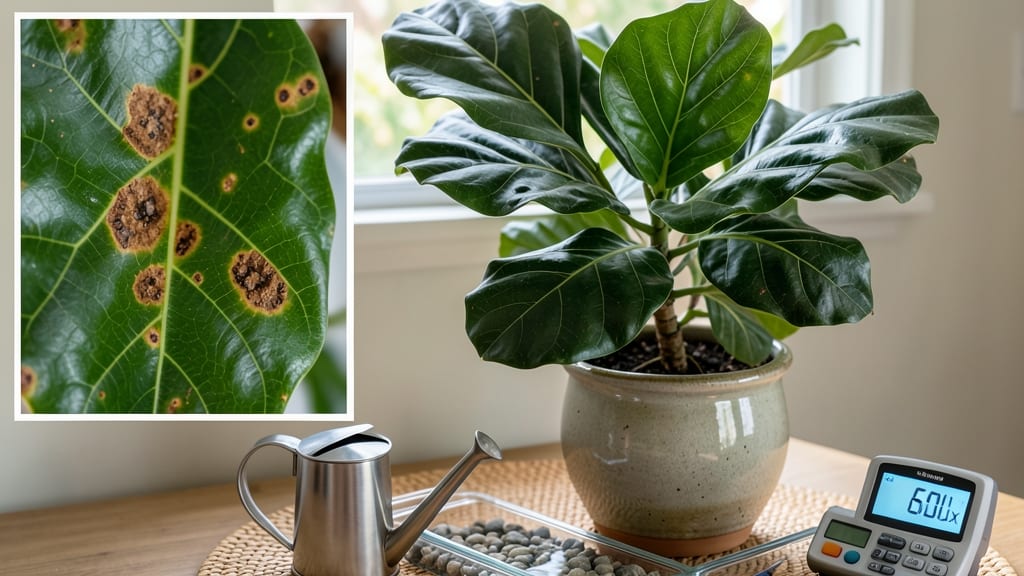
Brown spots on new fiddle leaf fig leaves mean your plant is sending an SOS—and the fix is simpler than you think. 🌿 I’ve nursed back more than a dozen fiddle leaf figs with these exact steps, whether the problem was overwatering, pests, or a hidden fungal infection lurking in the soil.
The key? Stop guessing and start diagnosing with these science-backed clues.
First, check the texture of the spots—are they dry and crispy (likely underwatering) or soft and mushy (overwatering or rot)? Then inspect the undersides of leaves for pests like spider mites or scale, which leave sticky residue.
If the spots spread fast and feel slimy, you’re dealing with a bacterial or fungal infection that needs immediate action. Most cases fix within 2-3 weeks with the right treatment.
You’ll prune away the damaged leaves (sterilize your tools first!), adjust watering to every 2-3 weeks (stick your finger in the soil—if it’s damp, wait), and treat infections with neem oil or copper fungicide.
The results? New growth within 4-6 weeks, and leaves that stay glossy and spot-free for months.
This works for any fiddle leaf fig, whether it’s a new plant or a mature one with a history of stress. The secret is catching it early—so don’t wait until the spots cover the whole leaf. Let’s get your plant back to its vibrant, thriving self.
Root Causes Behind Leaf Spots
When your fiddle leaf fig’s brand-new leaves start showing brown spots, it’s usually a cry for help from the plant—often tied to environmental stress or care oversights. Understanding the specific triggers behind these spots is key to saving your plant.
Below, we break down the most common culprits, backed by plant physiology and real-world fixes.
Fiddle leaf figs thrive in well-draining soil and hate soggy roots. When waterlogged, the plant’s roots suffocate, starving the leaves of oxygen. This triggers necrotic spots—brown, often mushy patches—as cells die from lack of nutrients and gases.
Why it happens:
- Root rot (often caused by Phytophthora or Pythium fungi) blocks water and nutrient transport, leading to leaf discoloration.
- Excess moisture in the soil dilutes essential minerals, weakening the leaf’s cellular structure.
- New leaves are more vulnerable because they’re still developing robust vascular systems.
🔍 Look for: Yellowing leaves, wilting, or a foul smell from the soil.
Fiddle leaf figs love bright, indirect light, but direct sunlight—especially through windows—can scorch leaves faster than you think. UV rays damage chlorophyll, causing crispy, brown patches that often appear on leaf edges or in sun-exposed areas.
Why it happens:
- Excessive light triggers oxidative stress in leaf cells, breaking down pigments and proteins.
- New leaves have thinner cuticles (their natural protective layer), making them more prone to sun damage.
- Heat from sunlight increases transpiration (water loss), leading to dehydration and browning.
🔍 Look for: Spots that feel dry or papery to the touch, often on one side of the leaf.
Fiddle leaf figs are tropical plants—they despise drafts, AC vents, and sudden temperature drops. When exposed to cold drafts (below 60°F/15°C) or dry air (below 40% humidity), leaves develop brown, crispy edges or spots due to cell membrane damage.
Why it happens:
- Cold air restricts water uptake, causing cells to dehydrate and turn brown.
- Low humidity leads to excessive transpiration, where leaves lose water faster than roots can supply it.
- New growth is especially sensitive because it hasn’t built up osmotic balance (the plant’s internal water regulation system).
🔍 Look for: Spots that start at leaf tips or edges, often paired with drooping.
Brown spots with yellow halos, slimy textures, or white moldy growth? Your fiddle leaf fig might be battling pathogens. Fungal infections (like leaf spot) and bacterial diseases (such as Xanthomonas) thrive in moist, warm conditions, latching onto damaged leaf tissue.
Why it happens:
- Fungi like Cercospora release toxins that kill leaf cells, creating necrotic spots.
- Bacteria clog stomata (pores), blocking gas exchange and leading to brown, water-soaked patches.
- New leaves are vulnerable because their cuticle isn’t fully hardened, making them easier targets.
🔍 Look for: Spots with raised edges, white powdery growth, or a foul odor.
Now that you know the why, the next step is fixing it—stay tuned for science-backed solutions to revive your fiddle leaf fig’s leaves! 🌿✨
Fixing Fiddle Leaf Fig Spots
Now that you know the root causes behind those pesky brown spots on your fiddle leaf fig’s new leaves, let’s roll up our sleeves and tackle them—one by one! The good news?
Most fixes are simple, science-backed, and don’t require a botany degree. Below, we’ve mapped out practical solutions for each common culprit, plus prevention tips to keep your plant thriving.
---
Fix: 1. Let the Soil Dry Out 🌱 - Stick your finger 1–2 inches into the soil. If it’s damp, wait 5–7 days before watering again. Fiddle leaf figs prefer the "dry-down" method—water only when the top 50% of the soil feels dry. - Pro Tip: Use a moisture meter for accuracy (or the "squeeze test" on potting mix).
2. Repot for Better Drainage 🏗️ - If your plant’s roots are sitting in waterlogged soil, it’s time to upgrade the pot. - Choose a terracotta or ceramic pot (breathable material) with drainage holes. - Mix in perlite or orchid bark (20–30%) to improve aeration.
3. Adjust Your Watering Routine 💧 - Water thoroughly but infrequently—aim for deep soakings every 7–10 days (adjust for humidity/climate). - Avoid misting leaves (this can trap moisture and encourage fungal issues).
Prevention: ✅ Use a self-watering pot with a reservoir if you tend to overwater. ✅ Group plants together to increase humidity naturally (but avoid soggy conditions).
---
Fix: 1. Move to Indirect Light 🌿 - Fiddle leaf figs love bright, indirect light (think: east-facing window or 6+ feet from a south-facing window). - If spots appear after a move, gradually acclimate your plant over 1–2 weeks to avoid shock.
2. Filter Harsh Sun Rays 🔆 - Use sheer curtains or a light filter to diffuse sunlight. - Rotate the pot quarter-turn weekly to ensure even growth.
3. Check for Sunburn 🔥 - If leaves feel crunchy or leathery, they’ve been sun-scorched. Trim affected areas with sterilized scissors and place the plant in a shadier spot.
Prevention: ✅ Monitor leaf color—healthy leaves should be deep green with no yellowing/browning. ✅ Avoid fluorescent lighting (it lacks the full spectrum fiddle leaf figs need).
---
Fix: 1. Isolate the Plant 🛑 - Move your fiddle leaf fig away from other plants to prevent spread.
2. Prune Infected Leaves ✂️ - Cut off spotted or mushy leaves with clean scissors (dip in rubbing alcohol first). - Dispose of clippings in the trash (not compost).
3. Apply a Fungicide 💊 - Spray with a copper-based fungicide (like Neem Oil or hydrogen peroxide solution—1 part peroxide to 4 parts water). - For bacterial issues, use a systemic antibiotic (e.g., copper fungicide with streptomycin).
4. Improve Airflow 🌬️ - Increase circulation by placing a small fan nearby (on low setting) or trimming crowded foliage.
Prevention: ✅ Wipe leaves with a damp microfiber cloth weekly to remove dust and prevent fungal growth. ✅ Avoid overhead watering—water at the soil level instead.
---
Fix: 1. Adjust the Environment 🏡 - Ideal temps: 65–75°F (18–24°C). Keep your plant away from drafts (AC vents, heaters, or cold windows). - If your home is dry, use a humidifier or place the pot on a pebble tray with water.
2. Mist Leaves (Gently!) 💦 - Use room-temperature water and mist early in the day so leaves dry quickly. - Avoid misting if you suspect fungal issues.
3. Check for Pests 🐜 - Brown spots can sometimes signal spider mites or scale. Inspect leaves for tiny webs or sticky residue. - Treat with insecticidal soap or neem oil spray.
Prevention: ✅ Group plants together to create a microclimate with higher humidity. ✅ Use a hygrometer to monitor humidity—aim for 40–60%.
---
Fix: 1. Flush the Soil 🚿 - If you’ve been over-fertilizing, leach excess salts by watering the plant 3–4 times with plain water over a week.
2. Adjust Fertilizer Use 🌿 - Use a balanced, water-soluble fertilizer (like 20-20-20) only in spring/summer, diluted to half-strength. - Never fertilize in winter (dormant period).
3. Test Soil pH 📊 - Fiddle leaf figs prefer slightly acidic soil (6.1–6.5). Use a soil pH test kit and amend with peat moss or lime if needed.
Prevention: ✅ Follow the "less is more" rule—fertilize every 4–6 weeks max. ✅ Use slow-release granules for steady nutrition without risk of burn.
--- Final Thought: Most brown spots are fixable with a little detective work! Start by identifying the cause, then adjust one thing at a time (e.g., watering first, then light). Your fiddle leaf fig will bounce back—and those new leaves will stay lush and spot-free! 🌿✨
Frequently asked questions
Why do my fiddle leaf fig's new leaves get brown spots faster than older ones?
New leaves are more vulnerable because their protective layer (the cuticle) isn't fully developed yet. They also have thinner cell walls, making them more sensitive to stress like underwatering, temperature fluctuations, or nutrient imbalances. Think of them as your plant's "babies"—they need extra care to harden off!
Can I save a fiddle leaf fig with severe brown spots covering most new leaves?
Yes, but act fast! First prune all severely spotted leaves (use sterilized scissors) to prevent spread. Then focus on fixing the root cause—whether it's watering issues, light exposure, or pests. With proper care, your plant will produce fresh, healthy growth within 4-6 weeks. The key is consistency in your fixes.
How often should I check my fiddle leaf fig's leaves for early signs of brown spots?
Inspect your plant weekly—especially new growth. Early intervention is crucial! Pay attention to leaf edges, undersides, and any changes in texture. The sooner you catch brown spots, the easier they are to treat. This simple habit can prevent small issues from becoming major problems.
Is it safe to use hydrogen peroxide on my fiddle leaf fig's brown spots?
Yes, but use it correctly! Mix 1 part 3% hydrogen peroxide with 4 parts water and spray lightly on affected areas. This acts as a natural fungicide and helps kill bacteria. Test on one leaf first, and avoid using more than once every 2 weeks—overuse can damage the leaves.
Will my fiddle leaf fig grow new leaves without spots if I fix the current problem?
Once you address the underlying issue (watering, light, pests, etc.), your plant will focus its energy on producing fresh, healthy growth. New leaves typically emerge within 4-8 weeks after you've corrected the conditions. The key is maintaining consistent care to keep those new leaves spot-free!