
Landscaping
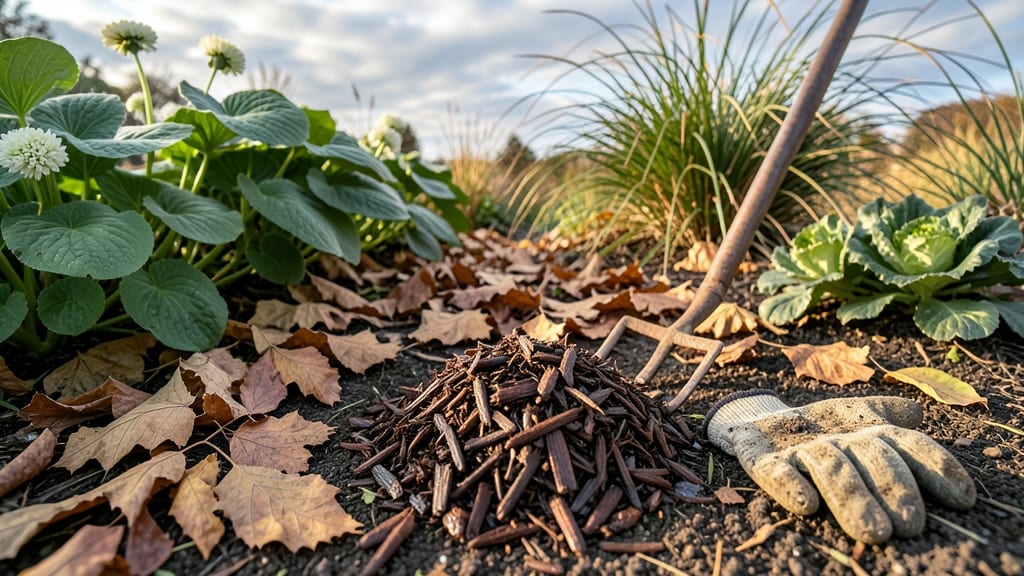
Leaf mulch looks like shredded brown leaves—soft, crumbly, and varying in size from fine particles to larger flakes—with a slightly earthy, dry scent and a texture that breaks down easily when handled. It resembles dark brown mulch but decomposes faster than wood chips or straw.
Leaf mulch often starts as whole leaves that get processed into smaller pieces, giving it that signature fluffy, uneven texture. The color ranges from light tan to deep brown, depending on the tree type—maple leaves tend to stay lighter, while oak leaves darken more as they dry.
Unlike wood chips, which hold their shape longer, leaf mulch softens quickly when damp, making it ideal for improving soil structure. 🌿 You'll notice it feels lighter in weight too, since it's mostly air and organic matter rather than dense wood fibers.
One key visual clue is how it clumps together when wet but still crumbles easily between your fingers. This property helps it blend seamlessly into garden beds without creating that thick, compacted layer you sometimes see with other mulch types.
Many gardeners prefer it because it breaks down into nutrient-rich compost over time, enriching the soil naturally.
💡 In This Article
- How to Identify Leaf Mulch vs Other Mulch Types
- Best Sources for High-Quality Leaf Mulch
How to identify leaf mulch vs other mulch types
Leaf mulch stands out from other organic mulches because of its unique lightweight, fibrous structure. When you hold a handful, you'll feel its irregular, shredded pieces—some as fine as confetti, others as large as 1/4-inch flakes.
Unlike wood chips, which have smooth, angular edges from sawdust, leaf mulch has jagged, uneven surfaces from natural leaf edges. This texture makes it break down 2-3 times faster than wood chips when exposed to moisture.
The color gives it away too. Fresh leaf mulch ranges from light tan to deep chocolate brown, depending on the tree source—maple leaves create a golden hue, while oak leaves darken to almost black as they cure.
Compare this to straw mulch, which stays straw-colored with visible seed heads, or grass clippings that look greenish and clump together. Leaf mulch also lacks the glossy sheen of composted leaves, which appear darker and more uniform in size.
Moisture retention is another key difference. Leaf mulch absorbs water like a sponge but drains quickly, preventing soggy soil. Wood chips, by contrast, hold moisture longer and can become waterlogged. When damp, leaf mulch smells earthy and slightly sweet, while straw mulch has a hay-like aroma.
This property makes it ideal for well-drained garden beds where you want nutrients to reach plant roots without suffocating them.
One common mistake is confusing leaf mulch with composted leaves, which look darker and more granular. Composted leaves have already decomposed into a soil-like texture, while fresh leaf mulch retains its shredded structure.
Another visual clue: leaf mulch often contains small twigs or leaf stems (up to 1/2-inch long) that wood chips lack. These natural imperfections are a sign of quality—it means the mulch hasn't been over-processed.
For a quick test, try this: Spread a small amount on a flat surface and gently press your thumb. Leaf mulch will crumble into fine particles within seconds, while wood chips resist breaking.
This rapid decomposition is why it's perfect for annual gardens or vegetable plots where you want quick soil enrichment. The trade-off? It won't last as long as wood chips in high-traffic areas.
Consider these key factors when choosing:
- Texture: Should feel light and airy, not dense like wood chips
- Color: Natural browns/tans, not green or black (unless composted)
- Decomposition: Breaks down in 3-6 months vs 1-2 years for wood chips
- Smell: Earthy, not musty or chemical