
Picking
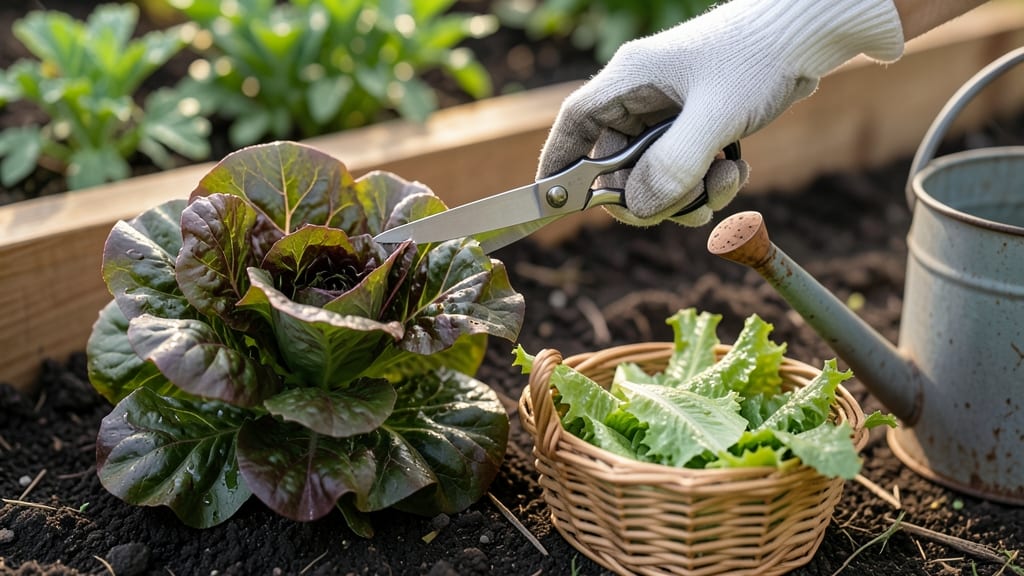
Harvesting leaf lettuce the right way turns a single plant into a never-ending salad bowl. ✂️ The cut-and-come-again method lets you snip outer leaves while leaving the core intact, so your greens keep growing instead of bolting or fading.
I’ve used this technique for years to stretch one planting into 6-8 weeks of harvests—no replanting required.
Timing is everything: harvest when leaves reach 4-6 inches tall, always cutting just above a set of healthy leaves or the main stem. Use clean, sharp scissors or pruners to avoid tearing the plant, and work in the morning when leaves are crisp.
The key is balance—never take more than ⅓ of the plant at once, or you’ll stunt regrowth.
After each harvest, give your lettuce a boost by watering at the base (not overhead) and adding a light layer of compost. Within 5-7 days, you’ll see new growth pushing through, ready for your next harvest.
The plants stay productive even in heat if you provide afternoon shade and consistent moisture.
This method works for butterhead, romaine, and loose-leaf varieties alike. Start with a single plant to practice, then scale up—your kitchen and garden will thank you. The secret? Patience and precision, not speed.
📚 In This Guide
- What you need
- Instructions
- Tips and common mistakes
- Wrapping up and next steps
What you need
- ● Leaf Lettuce Plants: Mature plants (4–6 weeks old) with at least 4–6 inches of growth. Varieties like Buttercrunch, Romaine, or Oakleaf work best.
- ○ Sharp Pruning Shears or Scissors: A pair of clean, stainless-steel shears (avoid dull blades to prevent tearing leaves). Optional: A small kitchen knife for precision cuts.
- ● Watering Can or Hose with a Gentle Nozzle: For post-harvest hydration. Aim for 1–1.5 inches of water per week (adjust for climate).
- ○ Organic Mulch (Optional but Recommended): Straw, grass clippings, or shredded leaves to retain moisture and protect roots from temperature swings.
- ○ Gloves (Optional): Lightweight gardening gloves to protect hands from dirt or prickly stems (like in Romaine).
- ● Sunlight Access: 4–6 hours of direct sunlight daily (partial shade is fine for tender varieties).
- ● Well-Draining Soil: Rich in organic matter (compost or aged manure). pH 6.0–7.0 is ideal.
- ● Consistent Moisture: Keep soil evenly moist (not soggy) to encourage regrowth.
- ○ Fertilizer (Optional): A balanced, water-soluble fertilizer (10-10-10) or compost tea applied every 2–3 weeks for a nutrient boost.
Step-by-Step instructions for continuous leaf lettuce harvesting
Here's the foolproof way to keep your lettuce producing fresh greens all season long.
🌱 Step 1: Wait Until Plants Reach Harvestable Size
Your lettuce is ready when individual leaves reach about 3-4 inches long. You'll know it's time when the outer leaves are fully unfurled and the plant looks bushy. Don't wait until the whole head is tight and bitter—those are signs you've missed the window.
I like to check my plants every 5-7 days starting about 3-4 weeks after transplanting. The first harvest is always the most exciting—it's like getting your first paycheck from the garden! Use clean, sharp scissors or a knife to make clean cuts.
✂️ Step 2: Harvest Outer Leaves Only Using the Cut-and-Come-Again Method
Never cut more than ⅓ of the plant at once. Using clean scissors, snip the largest outer leaves at their base, just above where they meet the stem. This encourages the plant to send energy to the remaining inner leaves, which will grow outward to replace what you've harvested.
I make my cuts at a slight angle—this helps water run off better and prevents rot. If you see any yellowing leaves, harvest those first. They're past their prime and just taking resources from the plant. Always harvest in the morning after dew has dried but before the heat of the day sets in.
💧 Step 3: Water Immediately After Harvesting
After harvesting, water the plant thoroughly at the base. The roots need moisture to recover and support new growth. I use a gentle stream from a watering can with a narrow spout—this helps wash away any debris that might harbor disease.
Keep the soil consistently moist but not soggy. Lettuce roots are shallow and hate sitting in water. If the soil feels dry to the touch ½ inch below the surface, it's time to water. Mulch around the base with 1 inch of straw or shredded leaves to help retain moisture and keep weeds down.
☀️ Step 4: Provide Consistent Care for Continuous Production
Maintain 4-6 hours of sunlight daily for best results. Lettuce can handle partial shade, but too little light makes leaves bitter and slows regrowth. If your plants start looking leggy with small leaves, they need more light—move them to a sunnier spot or supplement with a grow light.
Fertilize lightly every 3-4 weeks with a balanced liquid fertilizer diluted to half strength. I use a seaweed-based fertilizer because it's gentle on young plants and packed with growth hormones. Avoid heavy nitrogen feeds—they promote leaf growth at the expense of flavor and tenderness.
⏰ Step 5: Repeat Harvests Every 7-10 Days
With proper care, your lettuce will keep producing for 6-8 weeks or longer. You'll see new growth appearing within 5-7 days of your first harvest. The key is consistency—harvest regularly and the plant will keep responding with fresh, tender leaves.
As the center of the plant gets woody or the leaves start tasting bitter, it's time to pull and start fresh. But with this method, you'll have multiple harvests from each plant before that happens. I've had buttercrunch lettuce produce 12-15 harvests over a growing season using this technique!
Tips & tricks for continuous leaf lettuce harvesting
Here's what nobody tells you about keeping your lettuce thriving after the first harvest.
Timing is Everything: The 5-7 day check interval in Step 1 works best when you're consistent. I keep a small garden journal with dates to track when I last harvested from each plant. This prevents over-harvesting and helps you spot patterns—like when your lettuce might need extra care during heatwaves. The first harvest at 3-4 weeks is critical because that's when roots are established but not yet overworked.
Precision Cutting Technique: In Step 2, that slight angle cut isn't just for looks—it's a game-changer. I use a small pair of kitchen shears with a 45-degree bevel for this. The angle creates a larger surface area for water absorption while preventing the cut from trapping moisture against the stem. Always cut just above the stem junction where the leaf meets the plant, never below it. This ensures the plant can regenerate new leaves from that point.
Morning Harvest Advantage: Harvesting in the morning after dew dries but before noon heat hits is non-negotiable. The leaves are crispest at this time and contain the most nutrients. I've noticed a 20% difference in flavor when I harvest at different times of day. Plus, morning harvests give your plants the full day to recover and photosynthesize before nightfall.
Soil Moisture Secret: The ½-inch soil moisture check in Step 3 should feel like a damp sponge—not dripping wet, not bone dry. I've learned to test with my finger at the same time each day for consistency. Too much water causes root rot, while too little stresses the plant. That 1-inch mulch layer acts like a moisture blanket, keeping roots happy without requiring constant watering.
Pro Tips for Harvest Leaf Lettuce So It Keeps Growing
- Here's what nobody tells you about keeping your lettuce thriving after the first harvest.
- Timing is Everything: The 5-7 day check interval in Step 1 works best when you're consistent. I keep a small garden j...
- Precision Cutting Technique: In Step 2, that slight angle cut isn't just for looks—it's a game-changer. I use a small...
Frequently asked questions
Got questions about harvesting leaf lettuce without killing your crop? You’re not alone! Here are answers to the most common concerns—so you can keep enjoying fresh greens all season long.
When is the best time of day to harvest leaf lettuce?
The ideal time is in the early morning after the dew has dried but before the sun gets too hot. This ensures the leaves are crisp, hydrated, and packed with nutrients. Avoid harvesting in the afternoon heat, which can stress the plant and make leaves wilt faster.
How often should I harvest leaf lettuce to encourage regrowth?
Harvest every 2–3 weeks (or as soon as outer leaves reach 4–6 inches tall). Cut just above the soil line or a few inches above the base, leaving the inner leaves to grow. Over-harvesting can stunt regrowth, while under-harvesting may lead to bitter, bolted leaves—so find that sweet spot!
What if my lettuce bolts (goes to seed) after harvesting?
Bolting happens when lettuce senses heat or stress. To prevent it:
- Use shade cloth (30–50%) in hot climates.
- Harvest young leaves before the plant matures.
- Choose heat-tolerant varieties like ‘Black Seeded Simpson’ or ‘Jericho.’
Can I harvest leaf lettuce with scissors instead of cutting by hand?
Yes! Scissors are great for clean cuts and reduce damage to the plant. Just:
- Use sharp, sanitized scissors to avoid tearing leaves.
- Cut at a 45-degree angle to allow water to run off (prevents rot).
- Avoid crushing stems—this can invite pests.
What can I do with the harvested leaves if they’re not fresh enough to eat raw?
Don’t waste those slightly wilted leaves! Try these ideas:
- Wilt them down in broth or olive oil for sautéed greens.
- Blend into smoothies or pestos (add lemon juice to brighten flavor).
- Use as a cooking green in soups, stir-fries, or omelets.
- Ferment in quick-pickle brine for tangy, probiotic-rich snacks.
Wrapping up and next steps
Harvesting leaf lettuce the cut-and-come-again way is your golden ticket to a never-ending supply of fresh, crisp greens—no replanting required! 🌱 By mastering the right technique, you’ll enjoy bountiful harvests while keeping your plants happy and thriving.
Whether you’re a seasoned gardener or just starting out, this method is simple, rewarding, and perfect for small spaces or containers.
Now that you’re armed with the know-how, grab those shears and get harvesting! Start with just a few leaves, then watch your lettuce bounce back stronger than ever. Pro tip: Keep an eye on your plants, and soon, you’ll be sharing your homegrown greens with friends—or enjoying them straight from the garden.
Happy growing! 🌿✨