
Shrubs
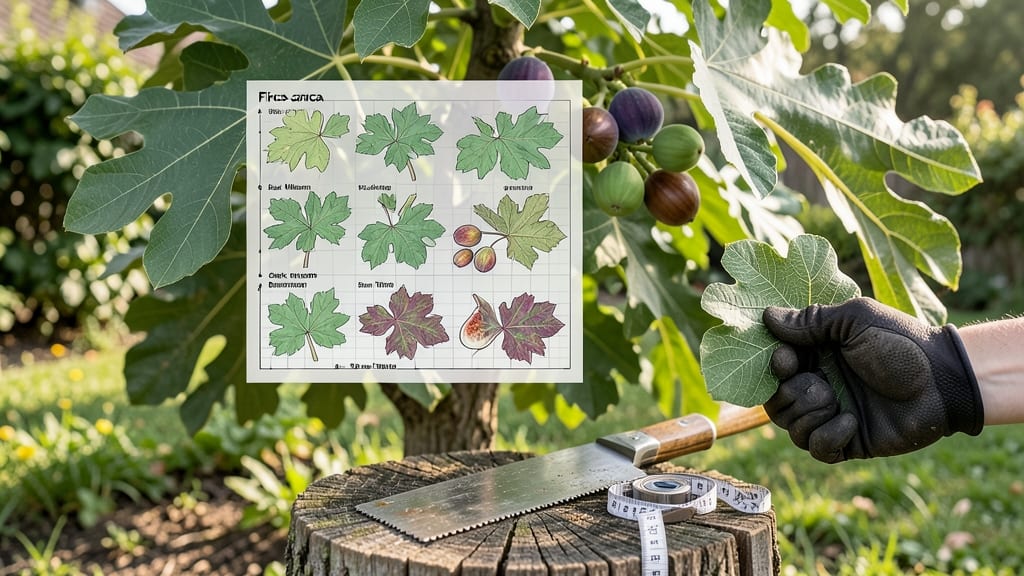
Identify fig varieties by leaf—they reveal everything about that tree before you even spot the fruit. 🌿 I’ve spent years comparing varieties, and the differences in leaf shape, texture, and edge can save you from planting the wrong fig—or missing a rare heirloom in your neighbor’s yard. A single glance at the leaf can tell you if it’s a Black Mission with its deep lobes or a Chicago Hardy with its smooth, rounded edges.
The key is paying attention to three details: leaf shape (lobed vs. rounded), edge texture (smooth vs. serrated), and size (smaller leaves on dwarf varieties). For example, Brown Turkey leaves are broad with wavy edges, while Celeste figs have delicate, almost translucent foliage.
These traits don’t change with age or season, making them foolproof for identification.
Once you recognize these patterns, you’ll spot problems early too—yellowing leaves might signal disease, while curled edges often mean pests. A healthy fig’s leaves should feel leathery, not papery, and stay vibrant green even in heat. Mastering leaf ID turns planting from a guess into a science.
Start with just three varieties to train your eye, then expand as you spot new shapes in nurseries or wild figs along roadsides. The more you look, the more you’ll notice—like how Violette de Bordeaux leaves have a faint purple tint.
It’s like learning a secret language of the fig world.
📚 In This Guide
- What you need
- Instructions
- Tips and common mistakes
- Wrapping up and next steps
What you need
- ● Fresh or dried fig leaves: At least 3–5 leaves per variety (preferably from mature trees for accuracy).
- ● Hand lens or magnifying glass: 10x magnification (for examining fine details like edge serrations or hairiness).
- ● Ruler or measuring tape: A 6-inch (15 cm) ruler for measuring leaf length/width.
- ● Notebook or smartphone: For sketching leaf shapes, noting measurements, and jotting down observations.
- ● Field guide or printed reference: A Fig Varieties Identification Guide (e.g., Figs of the World by Condit or online resources like Fig Council).
- ○ Camera (optional): A smartphone with a macro mode for high-resolution photos of leaf details.
- ● Leaf press: To preserve samples for long-term reference (or a heavy book in a pinch!).
- ● Field notebook with grid paper: For precise leaf shape sketches.
- ● UV flashlight: To check for hidden patterns or glandular dots under UV light (some varieties fluoresce!).
- ● Gloves: If handling prickly or unknown leaves (safety first!).
How to tell fig varieties apart by leaf shape
Fig trees reveal their personalities through their leaves—here's how to decode them like a pro.
🌿 Step 1: Observe Overall Leaf Shape
Start by examining the leaf's basic outline. Common fig varieties fall into three broad categories: lobed, deeply divided, or smooth-edged. Brown Turkey figs, for example, have three distinct lobes that resemble a rough triangle, while Chicago Hardy figs sport deeply divided leaves with jagged, almost finger-like projections. Mediterranean varieties like Black Mission typically show smooth, oval leaves with a gentle curve.
Hold the leaf up to a bright light or against a white background to accentuate its natural shape. The contrast helps reveal subtle differences in the leaf's architecture. If you're unsure, compare it side-by-side with reference images—many nurseries provide leaf silhouettes in their variety descriptions.
🌿 Step 2: Examine Leaf Margins and Edges
Leaf edges are where fig varieties truly reveal themselves. Look for serrated (toothed), lobed, or entire (smooth) margins. Desert King figs, for instance, have deeply serrated edges that almost resemble a saw blade, while Celestial figs feature soft, wavy margins that catch light differently. Even within the same variety, younger leaves may appear smoother, so focus on mature foliage.
Run your fingers gently along the leaf edge—roughness or smoothness can be a dead giveaway. If the margin feels jagged or spiky, it's likely a variety adapted to dry climates like the Adriatic or Vista. Smooth-edged leaves, on the other hand, often belong to varieties that thrive in more temperate zones.
🌿 Step 3: Check Vein Pattern and Texture
The vein structure of a fig leaf can be just as distinctive as its shape. Varieties like the Texas Everbearing fig have prominent, raised veins that create a textured surface, while others like the Little Miss Figgy feature delicate, almost lace-like veins. Observe how the veins branch out—some radiate from a central point, while others follow a more parallel pattern.
Leaf texture also plays a role. Some fig varieties, like the Osborn Prolific, have leathery, glossy leaves, while others, such as the Celeste, produce softer, matte foliage. Gently press a leaf between your fingers to assess its firmness—this can help narrow down possibilities, especially when comparing varieties with similar shapes.
🌿 Step 4: Compare Size and Proportions
Leaf size varies dramatically among fig varieties, and this can be a key identifier. Standard-bearing figs like the Brown Turkey often have large, broad leaves that can reach 8-12 inches long, while columnar varieties such as the Chicago Hardy produce smaller, narrower leaves (typically 4-6 inches). Even within the same tree, older leaves tend to be larger than younger ones.
Use a ruler to measure if you're unsure—this step is especially helpful when distinguishing between dwarf varieties and standard types. For example, the Little Miss Figgy has compact, rounded leaves that rarely exceed 5 inches, making it easy to spot in mixed plantings. Pay attention to the leaf's proportions, too—some varieties have longer petioles (stems) compared to their blade, while others keep the leaf closer to the branch.
✂️ Step 5: Note Growth Habit Clues
While not a leaf trait, the growth pattern of the plant can reinforce your identification. Figs with lobed or deeply divided leaves often grow in an upright, vigorous manner, while varieties with smooth, oval leaves may sprawl more. For instance, the Celestial fig, known for its delicate, wavy-edged leaves, typically grows in a compact, bushy form, whereas the Desert King, with its serrated leaves, stretches outward aggressively.
If you have access to the tree itself, observe how the leaves are arranged—some figs have alternate leaf patterns, while others may show clustered growth at branch tips. This can help cross-reference with known varieties, especially if you're working with a mixed fig orchard or a wild specimen. Keep a notebook handy to jot down observations—over time, you'll start recognizing patterns that make identification second nature.
Tips & tricks for mastering fig leaf identification
Between us, I've spent years studying fig leaves—and here's what nobody tells you about decoding their secrets.
Lighting is Everything: Natural daylight or a bright white background transforms how you see leaf details. Artificial light can wash out subtle differences between serrated and wavy edges. I keep a small LED lamp with adjustable brightness in my gardening kit—it's a game-changer for comparing leaves side-by-side. The contrast reveals vein patterns that look identical under regular lighting.
Leaf Age Matters: In Step 1, when observing overall shape, focus on mature leaves—those at least 6-8 inches long. Younger leaves often mimic adult shapes but lack defining characteristics. For example, a Brown Turkey's three-lobed pattern becomes more pronounced as the leaf ages. I've caught myself comparing immature leaves and getting completely confused about varieties.
Texture Test: The finger-press method in Step 3 is non-negotiable for distinguishing between varieties like Osborn Prolific (leathery) and Celeste (matte). But here's the secret: press near the leaf's center first. The texture often varies between the midrib and edges—some varieties have glossy centers that dull toward the margins. This variation can help you identify hybrids that don't fit standard categories.
Growth Pattern Cross-Referencing: While Step 5 mentions growth habits, here's what I learned the hard way: leaf shape and growth pattern are often genetically linked. Trees with deeply divided leaves (like Chicago Hardy) rarely produce sprawling growth—they're almost always upright. I've used this to verify identifications when leaf characteristics were ambiguous. It's like having a second clue system built into the plant's DNA.
Pro Tips for Identify Fig Varieties By Leaf
- Between us, I've spent years studying fig leaves—and here's what nobody tells you about decoding their secrets.
- Lighting is Everything: Natural daylight or a bright white background transforms how you see leaf details. Artificial...
- Leaf Age Matters: In Step 1, when observing overall shape, focus on mature leaves—those at least 6-8 inches long. You...
Frequently asked questions
Got questions about identifying fig varieties by leaf? You’re not alone!
Here are some of the most common queries—plus quick, actionable answers to help you nail those fig ID skills.
Can I identify a fig tree by its leaves alone, or do I need flowers/fruit?
Leaves are a great starting point for ID, but they’re not foolproof. While leaf shape, texture, and edges (lobed vs. smooth) narrow it down, some varieties (like Ficus carica vs. Ficus microcarpa) look similar. For 100% accuracy, check fruit shape, skin texture, or even the tree’s growth habit—especially in spring when leaves are young.
What’s the best time of year to examine fig leaves for ID?
Spring and early summer are ideal! New leaves (called "shoots") are more distinct in shape and size, making traits like lobes or serrations easier to spot. Avoid mature leaves in late summer—they can thicken or darken, masking key details. Pro tip: Snap a photo of young leaves and compare them to databases like Fig Leaf Guide.
My fig leaves look healthy, but I’m still unsure—what’s a backup method?
If leaves are ambiguous, try these:
- Rubbing test: Crush a leaf between fingers—some varieties (like Brown Turkey) release a mild figgy scent.
- Leaf veins: Count secondary veins. Mission figs often have 3–5 prominent veins per side, while Adriatic leaves may show a more net-like pattern.
- Tree bark: Young bark of Ficus carica is often smooth and grayish; banyan figs (like F. benghalensis) have rough, textured bark.
Why do my fig leaves look different from online examples?
Several factors can throw you off:
- Age: Young leaves are smaller/lobed; mature leaves may fill in and lose definition.
- Light exposure: Shady leaves can be paler or less lobed than sun-exposed ones.
- Pests/disease: Spider mites or fungal spots (like rust) can distort leaf shape. Quarantine affected branches to avoid spreading issues.
- Grafted trees: Some commercial figs (like Celeste) are grafted onto rootstocks—leaves may show traits of both varieties!
Should I use a phone app or a printed guide for ID?
Both work—it depends on your setup! Apps like PictureThis or PlantNet are handy for on-the-spot IDs, but they can misidentify figs if the lighting’s poor. For precision, try this:
Method
Best For
Limitations
Apps
Quick checks, mobile use
Needs strong Wi-Fi; may flag false positives
Printed guides
Detailed comparisons, offline use
Less interactive; requires manual cross-referencing
Local experts
Complex IDs or rare varieties
May not be available 24/7
Pro tip: Combine both! Use an app to narrow it down, then verify with a printed key or forum (like Garden.org) for second opinions.
Wrapping up and next steps
Mastering the art of identifying fig varieties by leaf opens up a world of gardening possibilities—whether you're a curious hobbyist or a seasoned grower! 🌿 By focusing on leaf shape, edges, and arrangement, you’ve got the tools to confidently distinguish between common types like Brown Turkey, Chicago Hardy, or Celeste.
Now that you’re armed with this knowledge, why not put it to use?
Your next logical step? Visit a local nursery or botanical garden and test your skills in person. Snap a few photos of unfamiliar leaves, compare them to your notes, and enjoy the thrill of hands-on identification.
Happy exploring—and may your fig adventures be as lush as the leaves you’re now ready to decode! 🌱