
Trees
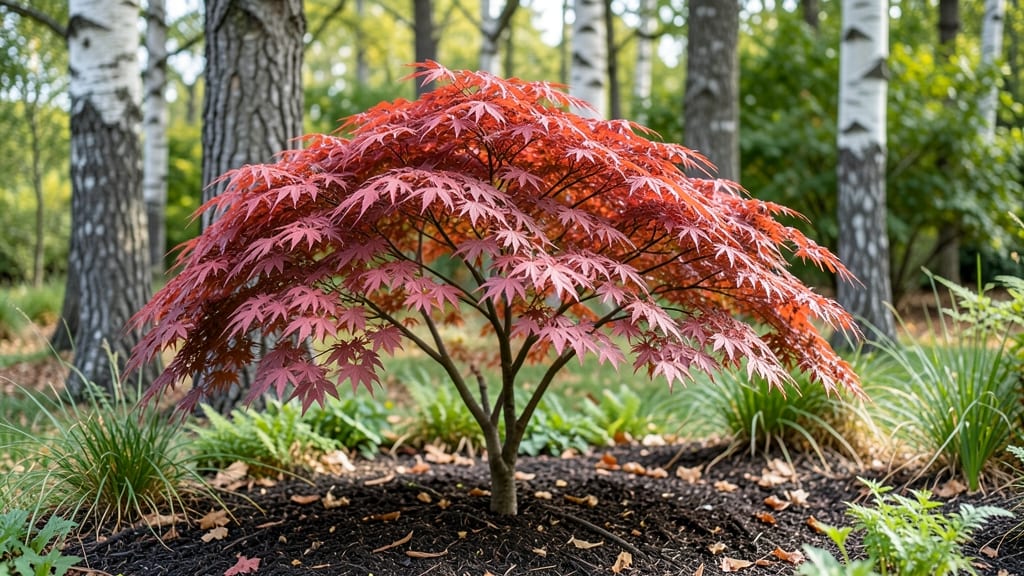
This Japanese laceleaf maple 'Crimson Queen' transforms your yard into a living art piece with its delicate, lace-like foliage that shifts from crimson to fiery orange. 🌿 I planted mine last spring, and by summer, it became the centerpiece of my shade garden—its unique texture casts dappled shadows that no other tree can match.
The secret to its stunning display lies in morning sun and afternoon shade, well-draining soil, and consistent moisture during its first year. Unlike other maples, 'Crimson Queen' thrives in zones 5-8, making it perfect for northern climates where traditional maples struggle.
Its compact size (15-20 feet) means it fits even small landscapes without overwhelming them. By autumn, you'll see why gardeners obsess over this cultivar—the crimson hues deepen into rich burgundy, creating a dramatic contrast against evergreens.
Prune in late winter to shape it, but avoid heavy cuts that remove too many lace-like branches. For maximum impact, pair it with other shade-loving perennials like hostas or ferns. The combination of textures and colors will make your garden the talk of the neighborhood—without requiring high-maintenance care.
📚 In This Guide
- What you need
- Instructions
- Tips and common mistakes
- Wrapping up and next steps
What you need
- ● Japanese Laceleaf Maple (Crimson Queen) – 1-2 mature trees (3-5 gallons in container) or 1-2 bare-root saplings (check local nurseries for seasonal availability).
- ● Well-draining potting mix – 2-3 cubic feet per tree (or native soil amended with compost for in-ground planting).
- ● Organic mulch – 2-3 inches of pine bark, cedar chips, or shredded leaves (helps retain moisture and regulate soil temp).
- ● Slow-release fertilizer – Balanced 10-10-10 or acid-loving plant formula (follow label for dosage).
- ● Watering can or hose with gentle spray nozzle – For deep, consistent hydration (avoid overhead watering to prevent fungal issues).
- ● Garden trowel or spade – For digging holes (1.5x wider than the root ball).
- ● Gloves (gardening or work gloves) – To protect hands from thorns and rough bark.
- ● Pruning shears – Sharp, bypass-style shears (for shaping and removing dead branches).
- ○ Staking kit (optional but helpful) – 3 stakes + ties (for young trees in windy areas).
- ● Soil pH test kit – Ensures acidic soil (pH 5.0–6.5) for optimal growth.
- ● A sunny to partially shaded spot with 4–6 hours of dappled sunlight daily (avoid harsh afternoon sun).
- ● Space to grow – 10–15 feet wide and tall at maturity (plan for spacing if planting multiple trees).
- ○ Protective barrier (optional) – Frost cloth for young trees in colder climates.
How to plant and pair Japanese laceleaf maple with Crimson Queen for year-round drama
Here’s how to create a striking seasonal display with these two maples—where delicate laceleaf texture meets bold Crimson Queen color.
🌱 Step 1: Select the Perfect Planting Site
Japanese laceleaf maples thrive in partial shade to full sun—at least 4-6 hours of direct sunlight daily—while Crimson Queen prefers morning sun with afternoon shade to prevent leaf scorch. I always plant them side by side in a spot where their contrasting textures pop: the laceleaf’s fine, feathery leaves against Crimson Queen’s bold, deeply lobed foliage.
Check the soil pH—both love slightly acidic to neutral (6.1-7.0). If your soil is heavy clay, amend with 3-4 inches of compost mixed into the top 12 inches. The goal is well-draining soil that holds moisture without becoming soggy. Dig a hole twice as wide as the root ball but no deeper—this encourages root spread rather than settling too low.
🪴 Step 2: Plant with Proper Spacing for Future Growth
Space the laceleaf maple 8-10 feet apart from Crimson Queen to allow their canopies to mature without crowding. Both will reach 15-20 feet tall and wide over time, so plan for their eventual size. I like to plant them 3-4 feet apart in the first year, then gradually move them apart as they grow—this mimics their natural spacing in Japanese gardens.
Place each tree in its hole, then backfill with native soil mixed with 1 part compost to encourage root establishment. Water deeply to settle the soil, then create a 4-inch-high berm around the base to direct water away from the trunk. Mulch with 2-3 inches of organic mulch (like shredded bark) but keep it 6 inches away from the trunk to prevent rot.
☀️ Step 3: Provide Seasonal Care for Peak Color
Water deeply once a week during the first growing season to establish roots, then taper to every 10-14 days once established—unless you’re in a hot, dry climate, where weekly watering may be needed. Both varieties are drought-tolerant once mature, but young trees need consistent moisture. You’ll know they’re happy when new leaves emerge with vibrant color (deep red for Crimson Queen, chartreuse for laceleaf) and no wilting.
Fertilize in early spring with a balanced, slow-release fertilizer (10-10-10) to support new growth. Avoid high-nitrogen fertilizers—they promote leafy growth at the expense of color intensity. In fall, apply a low-nitrogen, high-potassium fertilizer (5-10-10) to boost root strength and prepare for winter.
✂️ Step 4: Prune for Shape and Health
Prune in late winter or early spring before new growth begins. Remove dead, diseased, or crossing branches first, then shape the tree by thinning out 10-15% of the canopy to improve airflow. Both laceleaf and Crimson Queen respond well to pruning, but avoid heavy cuts—these maples are sensitive to over-pruning. I like to keep the laceleaf’s natural, airy form while giving Crimson Queen a slightly more structured silhouette.
Watch for aphids or spider mites, which can stress the trees. A strong spray of water usually dislodges them, but for severe infestations, use neem oil as a natural treatment. If leaves develop yellow or brown edges, it’s often a sign of overwatering or nutrient deficiency—adjust your care routine accordingly.
🌿 Step 5: Enjoy Year-Round Interest
The real magic happens in fall, when Crimson Queen’s leaves turn deep crimson, while laceleaf’s foliage shifts to golden yellow. To extend the display, plant evergreen shrubs like boxwood or dwarf conifers nearby for contrast. In winter, the laceleaf’s exfoliating bark and Crimson Queen’s striking branches add texture to the landscape.
Here’s the thing—these two maples don’t just complement each other; they create a dynamic conversation in the garden. The laceleaf’s delicate leaves soften the Crimson Queen’s bold structure, while the Crimson Queen’s vibrant color makes the laceleaf’s texture stand out even more. With the right care, this duo will be the centerpiece of your garden for decades.
Tips & tricks for stunning Japanese maple pairings
Here’s what I’ve learned after planting these showstopper maples in my own garden—details that make all the difference between good and spectacular.
Sunlight Strategy: The 4-6 hours of direct sunlight for laceleaf is non-negotiable, but I’ve found Crimson Queen actually thrives with just 3-4 hours of morning sun if your afternoons are particularly hot. Watch for leaf scorch on Crimson Queen—if you see crispy edges, move it slightly deeper into shade during peak summer hours. The laceleaf’s delicate foliage will thank you too by maintaining its signature feathery texture all season.
Soil Science: That 3-4 inches of compost mixed into the top 12 inches isn’t just about drainage—it’s about creating a microclimate where roots can establish quickly. I always add a handful of worm castings to the mix for extra microbial activity. For heavy clay soils, consider adding perlite to improve aeration without changing the pH significantly. The goal is soil that feels like a moist sponge rather than concrete.
Planting Spacing Hack: The initial 3-4 feet spacing between young trees might seem generous, but trust me—it prevents root competition that can stunt growth. I’ve seen gardeners plant them closer to save space, only to have both trees struggle to reach their full potential. Think of it as an investment in their future canopies. When transplanting mature trees, I always water them deeply for 3 days beforehand to reduce transplant shock.
Fertilizer Timing: The early spring 10-10-10 application is crucial, but I’ve found that adding a slow-release organic fertilizer like fish emulsion in late summer gives both varieties a second growth boost. The key is to avoid anything high in nitrogen after mid-summer—it encourages tender new growth that won’t survive winter’s cold snaps. For established trees, I switch to a 5-10-10 blend in fall to strengthen roots for winter.
Pro Tips for Japanese Laceleaf Maple Crimson Queen
- Here’s what I’ve learned after planting these showstopper maples in my own garden—details that make all the difference between good and spectacular.
- Sunlight Strategy: The 4-6 hours of direct sunlight for laceleaf is non-negotiable, but I’ve found Crimson Queen actually thrives with just 3-4 hours of morning sun if your afternoons are particularly hot.
- Soil Science: That 3-4 inches of compost mixed into the top 12 inches isn’t just about drainage—it’s about creating a microclimate where roots can establish quickly.
Frequently asked questions
about the Japanese Laceleaf Maple (Crimson Queen)—because even the most stunning trees come with questions! Here are some of the top queries from gardeners and landscapers.How fast does the Crimson Queen Japanese Laceleaf Maple grow?
The Crimson Queen grows at a moderate rate, typically adding 12–24 inches per year under ideal conditions. In its first decade, it reaches 6–10 feet tall, with mature specimens maxing out around 15–25 feet. Patience pays off—its slow growth ensures long-term stability and stunning seasonal displays!
Can the Crimson Queen survive harsh winters?
This variety is highly cold-hardy, thriving in USDA Zones 5–8. Its lace-like foliage and compact form make it resilient to freezing temps (down to -20°F). Just ensure it’s planted in well-draining soil to prevent root rot, and mulch around the base for extra winter protection.
Why aren’t my Crimson Queen leaves turning red?
If your maple’s leaves are staying green or yellowing instead of blushing red, check these common culprits:
- Insufficient sunlight: Crimson Queen needs full sun (6+ hours/day) for vibrant fall colors.
- Over-fertilization: Too much nitrogen keeps leaves lush but dulls fall hues.
- Stress or disease: Yellowing could signal aphids or fungal issues—inspect leaves and prune affected branches.
Give it 6–8 weeks of cooler temps (below 60°F) to trigger that show-stopping crimson!
What’s a good alternative if I want a smaller maple?
If space is limited, consider these compact maple varieties with equally dramatic foliage:
- Bloodgood Japanese Maple: Deep red leaves, 15–20 ft tall, Zone 5–8.
- Emperor I Japanese Maple: Upright growth, 20–30 ft tall, but stunning purple-red fall color.
- Dwarf Crimson Queen (e.g., ‘Shishigashira’): Dwarf varieties stay under 6 ft tall—perfect for containers!
For containers, opt for ‘Shishigashira’ or ‘Seiryu’—both handle pot life beautifully!
How do I prune my Crimson Queen for the best shape?
Prune in late winter or early spring (before new growth) to:
- Remove dead/diseased branches first—use sterilized tools to prevent spread.
- Thin out crowded areas for airflow (aim for an open, airy canopy).
- Avoid heavy pruning—this maple responds poorly to drastic cuts. Focus on shaping, not size reduction.
For a weeping effect, gently guide branches downward as they grow. Never prune in fall—it can stimulate late-season growth vulnerable to frost!
Wrapping up and next steps
The Japanese Laceleaf Maple and Crimson Queen pairing is a masterclass in seasonal beauty—offering year-round interest with their delicate lace-like foliage, fiery autumn hues, and elegant winter silhouettes. Whether you’re a seasoned gardener or a new plant parent, these trees bring drama, texture, and charm to any landscape. 🌿✨
Ready to transform your outdoor space? Start by researching your local climate and soil conditions, then sketch a layout that highlights their contrasting forms. Take the first step today—your future garden will thank you!