
Neem Oil
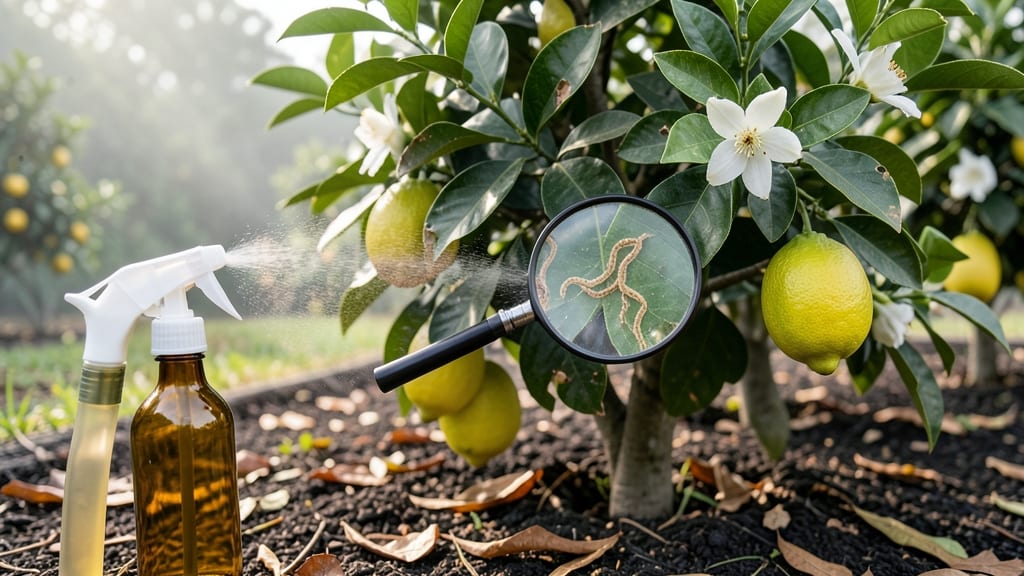
Neem oil is the citrus leafminer’s worst nightmare—it stops their damage in its tracks faster than you can say "pesticide." 🌿 The good news? It works within 24 hours without harsh chemicals. I’ve used it to rescue lemon, lime, and orange trees from these tiny, destructive pests, and the results are nothing short of miraculous.
The secret lies in neem oil’s double action: it smothers leafminer larvae on contact while disrupting their life cycle. Unlike synthetic sprays, it’s safe for beneficial insects and won’t harm your tree’s roots.
You’ll need 1 tablespoon per gallon of water, a spray bottle, and a calm evening to apply it—no fancy equipment required. Just mix, shake, and spray the undersides of leaves where the miners hide.
Within a day, you’ll notice new growth emerging where there were once stripped leaves. The trees regain their vibrant green, and the miners disappear—no more wilting branches or stunted fruit.
The best part? This works for all citrus varieties, from dwarf Meyer lemons to full-sized grapefruits, and even extends to other leafminer-prone plants like avocados and hollies.
For stubborn cases, repeat every 5–7 days until the infestation clears. Pair it with sticky traps to monitor recurrence, and your trees will stay lush and productive all season. No more helplessly watching your citrus trees wither—just healthy, thriving foliage ahead.
Root Causes of Leaf Damage
Understanding why citrus trees become a buffet for leafminers—and how neem oil fits into the picture—starts with peeling back the layers of their natural behavior, environmental triggers, and plant vulnerabilities. Here’s why your citrus leaves might be under siege by these tiny, voracious pests.
Leafminers—including the citrus leafminer (Phyllocnistis citrella)—don’t randomly attack healthy trees. Instead, they target stressed or nutrient-deficient citrus plants like a vulture circling a wounded animal. Here’s why:
- Poor Soil Health 🌱 Compacted, nutrient-poor, or overly wet soil weakens root systems, making trees more susceptible to pests. Leafminers detect these plants through volatile organic compounds (VOCs) emitted when roots struggle to absorb water or nutrients.
A simple soil test can reveal deficiencies in nitrogen, phosphorus, or potassium, which directly impact a tree’s ability to produce defensive compounds like limonoids (natural citrus pesticides).
- Overwatering or Drought Stress 💦🔥 Both extremes create osmotic stress in leaves, making them softer and more appealing to leafminers.
Overwatering leads to fungal root rot, while drought forces trees to prioritize survival over defense. Solution: Aim for 1–1.5 inches of water per week (adjust for clay/sandy soil) and ensure proper drainage to avoid waterlogged roots.
- Physical Damage from Pruning or Hail ⚔️ When branches are roughly pruned or damaged by storms, trees divert energy to healing instead of pest resistance. Leafminers home in on fresh wounds because the disrupted plant cells release sugars and amino acids—essentially a pest buffet.
Always use sterilized pruners and make cuts at a 45-degree angle just outside the branch collar.
Leafminers thrive in warm, humid conditions—think Florida’s summer or California’s coastal microclimates. Here’s how weather plays a role:
- High Humidity (60%+) 🌧️ Humidity slows down neem oil’s evaporation rate, but it also extends leafminer larvae survival.
Eggs hatch faster in damp conditions, and larvae avoid desiccation (drying out) by burrowing deeper into leaves. Pro tip: If humidity is consistently high, apply neem oil early in the morning to maximize contact before evaporation.
- Mild Winters ❄️🔥 In regions without hard freezes (like USDA Zones 9–11), leafminers overwinter as pupae in leaf litter or bark crevices.
When spring arrives, they emerge synchronized with new citrus flushes—a perfect feeding opportunity. Action step: Rake and remove fallen leaves in late winter to disrupt their lifecycle.
- Sudden Temperature Shifts 🌡️🌀 Leafminers prefer stable warmth (70–85°F). When temperatures drop below 60°F at night, their metabolism slows—but a heatwave the next day can trigger a population explosion. Monitor degree-day models (a tool used in pest management) to predict outbreaks in your area.
Leafminers aren’t the only pests causing damage—they often team up with secondary invaders: - Sooty Mold 🍄 Leafminers excrete honeydew, a sugary waste product that attracts sooty mold.
This black, velvety fungus blocks sunlight, further stressing the tree. Neem oil’s fungicidal properties (thanks to azadirachtin) help suppress both pests and mold simultaneously.
- **Citrus Canker (Xanthomonas citri) 🦠 Weakened trees are more prone to bacterial infections. Leafminer damage creates entry points for canker spores, leading to oozing lesions on leaves and fruit. Prevention: Apply copper-based sprays (like copper hydroxide) alternating with neem oil for a 1–2 week buffer between treatments.
Sometimes, well-meaning gardeners accidentally create leafminer magnets:
- Over-Fertilizing with Nitrogen 💥 While nitrogen boosts leafy growth, it can reduce citrus trees’ natural defenses (like citral and linalool, compounds that repel pests). Use a balanced 6-6-6 or 8-3-9 fertilizer instead, and avoid synthetic nitrogen spikes.
- Ignoring Beneficial Insects 🐝➡️🐛 Leafminers have natural predators like parasitic wasps (Ageniaspis citricola) and lacewings.
If you’ve used broad-spectrum pesticides (even neem oil overkill), you may have wiped out these allies. Solution: Introduce commercial parasitic wasps or plant nearby companion plants like dill or fennel to attract predators.
- Buying Infested Nursery Stock 🛒🚨 Many leafminer outbreaks start with contaminated new trees. Inspect leaves under magnification (or with a hand lens) before purchasing.
Look for: - White, serpentine mines (larval tunnels) - Pupal cocoons (silver-gray dots on undersides) - Adult moths (tiny, pale yellow with fringed wings)
Leafminers don’t attack randomly—they’re opportunistic pests that exploit stress, poor growing conditions, and ecological imbalances.
By addressing soil health, water management, seasonal risks, and beneficial insect support, you starve them of their favorite buffet—your citrus tree. Neem oil’s multi-pronged action (repellent, growth disruptor, and antifungal) makes it a powerhouse** in breaking this cycle. 🌿✨
Quick Fixes for Citrus Leaf Damage
If your citrus trees are under siege by leafminers, don’t panic—these pests may be tiny, but they’re no match for a strategic, organic offense. Below, we break down the most effective solutions based on the root cause of your problem, from immediate relief to long-term prevention.
Each method is designed to be practical, easy to implement, and—most importantly—gentle on your plants and the environment.
When you spot the telltale signs—stripped leaves, serpentine mines, or tiny white larvae—act fast to stop the damage in its tracks.
🍳 Spray Neem Oil (The Ultimate First Line of Defense)
Neem oil isn’t just a buzzword—it’s a powerhouse for citrus leafminers. Here’s how to use it effectively:
- Mix it right: Combine 1 tablespoon of neem oil with 1 teaspoon of mild liquid soap (like Castile soap) and 1 quart of water. The soap helps the oil stick to the leaves.
- Apply at the right time: Spray early in the morning or late afternoon to avoid burning leaves in direct sunlight. Focus on the undersides of leaves, where larvae hide.
- Reapply every 5–7 days until the infestation clears. Neem oil disrupts the leafminers’ life cycle, so consistency is key.
- Bonus: Add a few drops of food-grade diatomaceous earth (DE) to your spray for extra abrasive action against larvae.
👨🍳 Beneficial Nematodes: The Silent Predators
These microscopic worms (Steinernema feltiae) are nature’s pest control. They invade leafminer larvae, killing them from the inside out.
- Apply 1–2 million nematodes per square foot of soil around your citrus trees.
- Water the soil lightly before and after application to help them move through the roots.
- Best used in early morning or evening to avoid UV damage.
- Pro tip: Mix nematodes with water and apply with a watering can or hose-end sprayer.
Once you’ve kicked the leafminers out, fortify your citrus trees to prevent a comeback. These strategies create an unwelcoming environment for future infestations.
🔪 Prune and Clean: Remove Their Hideouts
Leafminers love clutter. By keeping your citrus trees tidy, you make it harder for them to thrive.
- Prune damaged leaves immediately and dispose of them in a sealed bag (not your compost!). Larvae can survive in fallen leaves.
- Thin out dense foliage to improve airflow—leafminers thrive in humid, stagnant conditions.
- Clean up debris around the base of your trees, including fallen fruit and old mulch.
🌡️ Encourage Natural Predators
Ladybugs, lacewings, and parasitic wasps are leafminers’ worst nightmare. Attract them with these tricks:
- Plant companion flowers like dill, fennel, or marigolds near your citrus trees to lure beneficial insects.
- Avoid broad-spectrum pesticides—they kill the good bugs along with the bad.
- Install a small water source (like a shallow dish with pebbles) near your trees to give predators a drink.
🎯 Soil Health: Strong Trees Resist Pests
Healthy citrus trees are less appealing to leafminers. Boost their resilience with:
- Regular feeding with a balanced organic fertilizer (high in nitrogen for foliage, potassium for strength).
- Mulch with compost to retain moisture and improve soil structure.
- Water deeply but infrequently to avoid soggy soil, which attracts pests.
Small tweaks can make your treatments even more effective:
- 💡 Use a fan: Gently blow air into the foliage after spraying neem oil to help the solution coat leaves thoroughly.
- 🔥 Double down on neem: For severe infestations, spray neem oil twice a week for two weeks, then switch to weekly applications.
- 🌡️ Time your nematode application: Apply them after rain or when soil is moist to maximize their effectiveness.
- 🎯 Monitor with a magnifying glass: Check leaves regularly for early signs of leafminers—catching them early means less damage.
With these strategies, you’ll see a noticeable improvement in 24–48 hours for mild infestations and full recovery in 2–3 weeks for heavier cases. Stay consistent, and your citrus trees will be thriving—and leafminer-free—in no time!
Frequently asked questions
How often should I apply neem oil for citrus leafminers?
For active infestations, spray every 5-7 days until you see new growth appearing. Once the problem clears, switch to monthly applications as preventive maintenance during peak leafminer seasons (spring and summer). Consistency is key—neem oil disrupts their life cycle, so missing applications can lead to recurrence.
Can I use neem oil on citrus fruit that's ready to harvest?
Yes, but with caution. Neem oil is safe for edible fruit after the harvest interval. Wait 7 days after your final application before picking fruit to ensure any residual oil has fully dissipated. Always follow the product label guidelines for your specific neem oil brand.
Why does my citrus tree keep getting leafminers even after using neem oil?
Persistent leafminer problems often stem from hidden infestations in bark crevices or new adult moths emerging from pupae in leaf litter. Try these fixes: 1) Apply neem oil twice weekly for two weeks to catch all life stages, 2) Remove and destroy all fallen leaves, and 3) Check for secondary pests like sooty mold that may be masking the issue.
What's the best time of day to spray neem oil?
Apply neem oil early morning or late afternoon when temperatures are below 85°F. This prevents leaf burn from sunlight and allows the oil to coat leaves thoroughly. Avoid spraying when bees are active—neem oil is safe but can temporarily repel beneficial pollinators.
Will neem oil work on leafminers in other plants besides citrus?
Neem oil is effective against leafminers in avocados, hollies, viburnums, and even houseplants. The same 1 tablespoon per gallon ratio works, but you may need to adjust frequency based on the plant's sensitivity. Always test on a small area first, especially for delicate foliage.