
Light Requirements
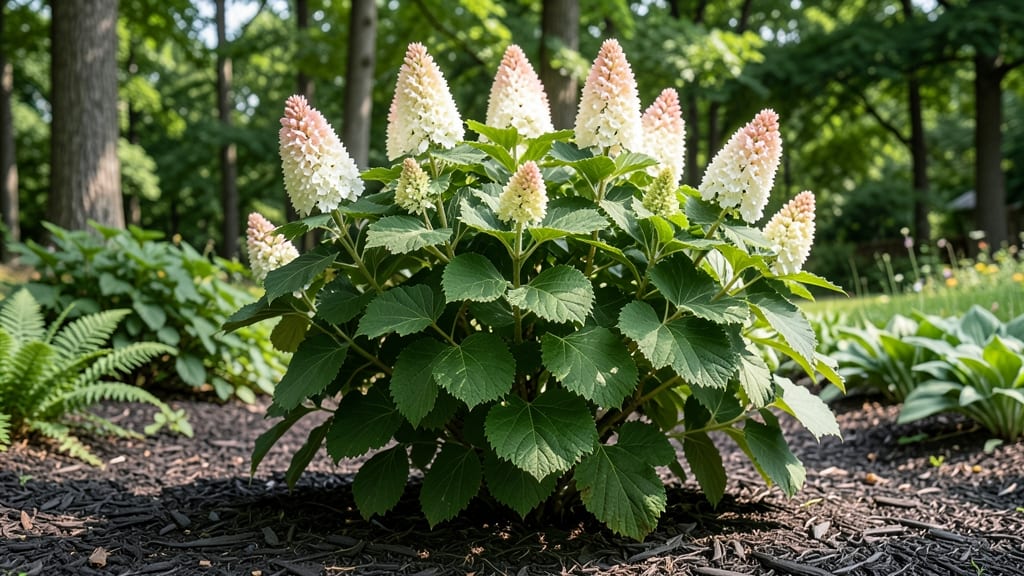
To keep your oak leaf hydrangea thriving, understanding the oak leaf hydrangea light requirements is key—it needs 3 to 6 hours of morning sun and afternoon shade, as too much direct light can turn those gorgeous leaves into crispy snacks.
Picture this: You’ve spent months nurturing your hydrangea, only to watch its leaves bleach out or curl under the midday sun. That’s not just bad luck—it’s a light mismatch, and the fix is simpler than you think.
This shrub loves bright, indirect light, making it perfect for spots like east-facing gardens or under tall trees where dappled shade keeps things comfortable. But here’s the catch: too little light means fewer blooms, while too much can scorch the foliage you’re proud of.
Below, I’ll break down the best light zones, how to spot problems early, and seasonal tweaks to keep your oak leaf hydrangea looking its best year-round.

Optimal sunlight zones for oak leaf hydrangeas: morning sun vs. afternoon shade
Oak leaf hydrangeas (Hydrangea quercifolia) thrive in partial shade, but their morning sun tolerance and afternoon shade needs create a unique lighting puzzle. Unlike other hydrangeas, they crave gentle morning sunlight to fuel growth while avoiding intense afternoon rays that can scorch their delicate foliage.
Mastering this balance ensures those signature oak-shaped leaves stay vibrant and blooms remain abundant.
The key lies in understanding your USDA climate zone (5-9) and local microclimates. Urban areas with heat islands may need extra afternoon shade, while rural zones with cooler breezes can handle slightly more sun.
Let’s break down how to position your plant for success, whether you’re in hot Zone 9 or cooler Zone 5.
In USDA Zones 5-6, your oak leaf hydrangea can handle slightly more morning sun—up to 5 hours—thanks to cooler temperatures. However, always ensure full afternoon shade after 2 PM to prevent leaf burn.
I’ve seen these plants thrive near east-facing foundations where morning light bathes the leaves but afternoon shade from nearby trees kicks in naturally.
For Zones 7-8, reduce morning sun to 3-4 hours and transition to shade by 1 PM. The heat builds faster here, so if your yard lacks natural shade, shade cloth (30-50%) becomes your best friend.
I once had a client in Zone 8 who placed hers under a dappled oak tree—the perfect spot for filtered light all day.
Zone 9+ gardeners, be extra cautious—these hydrangeas struggle in intense afternoon sun. Limit morning exposure to 2-3 hours and provide full shade after noon. If your patio only gets south-facing light, consider container growing with afternoon shade from a pergola or lattice. The leaf scorch risk is real here, and once it starts, recovery is slow.
Microclimates play a huge role too. Urban gardens with concrete and asphalt reflect heat, so even if your plant gets "partial shade," it might be too hot. Test your spot by placing a thermometer near the ground—if temps exceed 85°F (29°C) in afternoon, add shade cloth.
Rural areas with breezes and organic mulch can handle slightly more sun.
Pro tip: Gradual acclimation is key if moving your plant. If you’re transitioning from shade to more light, do it over 2-3 weeks to avoid shock. I’ve seen hydrangeas go from pale and leggy to vibrant and bushy just by adjusting their light exposure slowly.
Start with 1 extra hour of morning sun per week and monitor the leaves for stress signs.
Remember, leaf color changes are your best indicator. Healthy oak leaf hydrangeas develop deep green leaves with stunning red-purple fall hues. If yours stays pale green, it’s getting too much sun; if leaves turn yellow or crispy, it’s overheating.
Adjust accordingly, and you’ll have a showstopping shrub for years to come. 🌿
Signs your oak leaf hydrangea isn’t getting the right light (and how to fix it)
Your oak leaf hydrangea might be silently screaming for help if its leaves are looking stressed. Leaf scorch along the edges or pale, washed-out foliage are classic signs your plant isn’t getting the perfect balance of morning sun and afternoon shade.
Even sparse blooms or yellowing leaves can point to light issues—often fixable with simple adjustments.
I’ve seen this happen more than once in my own garden, especially with young plants that haven’t yet established their ideal microclimate. The key is understanding how too much direct sun (especially afternoon rays) can damage delicate leaves, while too little light leads to leggy growth and weak stems.
Let’s troubleshoot together.
Start by examining your plant’s leaf color and texture. Healthy oak leaf hydrangea foliage should be deep green with a slightly leathery texture. If you’re seeing yellowing between veins, this often signals too much shade—your plant isn’t getting enough bright indirect light to photosynthesize properly.
For containers on patios, rotate them weekly so all sides get even light exposure.
Another red flag? Sparse or no blooms despite proper fertilizing. Oak leaf hydrangeas need at least 3 hours of morning sun to set buds.
If your plant is tucked under a dense tree canopy or in a north-facing spot, try moving it gradually (over 2-3 weeks) to a sunnier location. Sudden changes can shock the plant—think of it like helping a friend adjust to a new neighborhood.
For leaf scorch repairs, prune away damaged foliage with clean, sharp shears to encourage new growth. Then, apply a light mulch layer (2-3 inches) of organic matter to retain moisture.
If your plant is in full sun all day, install shade cloth (like Agribon 30%) and monitor for improvement within 2-3 weeks. Pro tip: Water deeply in the morning to reduce stress from heat.
Remember, oak leaf hydrangeas are adaptable but need consistency. If you’re unsure about your yard’s light conditions, observe the area between 10 AM and 2 PM—this is when afternoon sun becomes harsh.
A simple light meter app (like Light Meter by Azoft) can help you track exact light levels for precise adjustments. With the right light, your hydrangea will reward you with showy blooms and stunning foliage all season long.