
Aphids
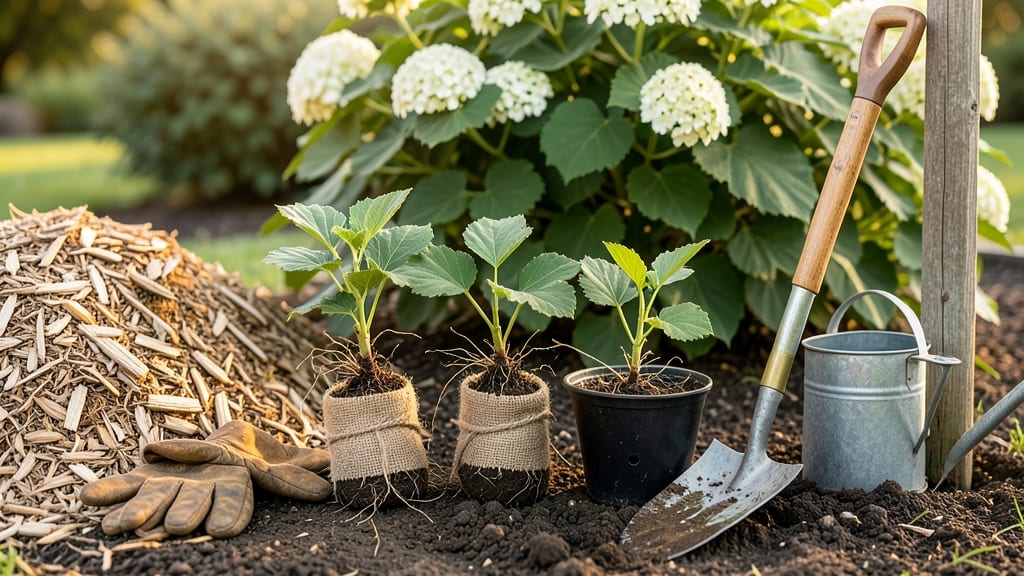
Planting oakleaf hydrangeas transforms your garden into a seasonal masterpiece—deep red foliage in fall, fragrant blooms in summer, and winter interest that lasts. 🌿 The key to success lies in matching your planting time to your hardiness zone, because these beauties need the right number of chill hours to thrive.
I’ve planted mine in Zone 6, and the difference between spring blooms and a winter-killed plant comes down to timing, soil, and a little patience.
First, check your chill-hour zone—most oakleaf hydrangeas need between 300 and 600 chill hours—then plant in early spring or early fall when soil temperatures are cool but not frozen.
Dig a hole twice as wide as the root ball but only as deep, then mix in compost to improve drainage. These plants love sun but tolerate partial shade, so a spot with morning light and afternoon breeze works perfectly.
Space them 5-6 feet apart to give their roots room to spread.
After planting, water deeply to settle the soil and keep it moist for the first few weeks—this helps roots establish before summer heat sets in. Mulch around the base to retain moisture and protect roots from temperature swings.
The first year is all about building a strong foundation; by spring, you’ll see new growth that signals your hydrangea is ready to reward you with years of stunning foliage and blooms.
Common mistakes include planting too deep, overwatering, or ignoring the chill-hour requirement. If your plant struggles, it might need more winter protection or a sunnier spot. Oakleaf hydrangeas are low-maintenance once established, but that first year sets the stage for everything that follows.
With the right care, yours will become the showstopper of your garden—season after season.
📚 In This Guide
- What you need
- Instructions
- Tips and common mistakes
- Wrapping up and next steps
What you need
- ● Oakleaf hydrangea plants: 1–3 (bare-root or container-grown, depending on your space and desired fullness). Choose varieties like 'Snow Queen' or 'Pee Wee' for compact growth.
- ● Well-draining potting mix or garden soil: 5–10 gallons (amend with 2–3 parts compost per 1 part perlite or sand if your soil is heavy clay).
- ● Organic mulch: 2–3 inches (shredded bark, pine straw, or wood chips) to retain moisture and regulate soil temperature.
- ● Slow-release fertilizer: 10–15–10 or a balanced 5–10–5 formula (follow label rates for application).
- ● Watering can or hose with a gentle spray nozzle: 2–3 gallons per plant for initial watering.
- ● Garden gloves and trowel: For handling soil and planting without fuss.
- ● Measuring tape or ruler: To mark planting depth (root ball should sit 1–2 inches above soil level).
- ● Pruners (sterilized): For trimming dead or damaged stems post-planting.
- ○ pH test kit (optional but helpful): Oakleaf hydrangeas thrive in acidic to neutral soil (pH 5.0–6.5).
- ○ Cage or stakes (optional): For young plants in windy areas (3–4 ft tall).
- ● Location: Partial shade to full sun (minimum 4–6 hours of sunlight daily). Avoid harsh afternoon sun in hot climates.
- ● Climate zone: USDA Zones 5–9 (verify chill hours for your variety—oakleafs need 300–700+ chill hours for optimal blooms).
- ● Planting time: Fall (after first frost) or early spring (avoid extreme heat or cold).
- ● Soil prep: Loosen soil 12–18 inches deep to improve drainage.
How to plant oakleaf hydrangea for reliable seasonal color
Here's how to get those stunning fall foliage blooms—using chill hours to match your climate.
🌱 Step 1: Choose the Right Variety for Your Chill Hours
Oakleaf hydrangeas need 300-600 chill hours (temperatures between 32-45°F) to bloom reliably. Check your local chill-hour zone—varieties like 'Snow Queen' thrive in 400-600 hours, while 'PeeGee' does well with 300-400 hours. If you're in a low-chill area, opt for newer varieties bred for fewer hours, like 'Alice' or 'Margaret Oakley.'
I always verify chill hours by checking my local cooperative extension service website. The difference between 500 and 600 hours can mean the difference between vibrant blooms and sparse flowers. If your area sits on the border, consider planting two varieties to hedge your bets—one for early blooms, one for late.
☀️ Step 2: Pick the Perfect Planting Spot with Sun and Shelter
Oakleaf hydrangeas love morning sun and afternoon shade, especially in hotter climates. A location with 4-6 hours of direct sun protects the leaves from scorching while ensuring enough energy for blooms. I plant mine near the foundation of my house where the afternoon shade from the roof kicks in around 2 PM.
They also appreciate some winter wind protection. A fence, wall, or cluster of evergreens on the north side helps prevent winter burn. Watch for leaves curling or browning in winter—this is your signal the spot gets too much cold wind. Mulch heavily (3-4 inches) around the base to insulate roots during temperature swings.
🪴 Step 3: Dig and Amend the Soil for Optimal Growth
Dig a hole twice as wide as the root ball but only as deep—planting too deep suffocates the roots. Oakleaf hydrangeas prefer well-draining, slightly acidic soil (pH 5.5-6.2). If your soil is heavy clay, mix in 2-3 inches of compost and a handful of peat moss into the bottom of the hole. I always test my soil first—hydrangeas are fussy about pH, and adjusting it now saves headaches later.
Gently loosen the roots of container-grown plants before placing them in the hole. Fill around the root ball with native soil, pressing lightly to remove air pockets. Water deeply to settle everything—you'll see the soil sink about 1 inch. This ensures the plant sits at the correct depth without settling too low over time.
💧 Step 4: Water and Mulch for First-Year Establishment
Water deeply twice a week for the first month, then taper to once a week once established. Oakleaf hydrangeas have shallow roots, so 1-2 inches of water per week keeps them happy. I use a soaker hose to water at the base—avoid overhead watering, which can lead to fungal issues. You'll know you're doing it right when the soil stays evenly moist but not soggy.
Apply 3-4 inches of mulch (wood chips or shredded bark) around the base, keeping it 2 inches away from the stem. This conserves moisture, regulates soil temperature, and suppresses weeds. Replenish mulch annually—it breaks down faster than you think. In the first year, focus on root growth over blooms. Prune only to remove dead wood; let the plant establish its structure naturally.
⏰ Step 5: Monitor Chill Hours and Adjust Care Seasonally
Track your chill hours using a chill-hour calculator or local weather data. If you're in a borderline zone, consider delaying pruning until you're sure the plant has met its chill requirement. I wait until late winter (after the last hard frost) to prune, when new growth is just starting to swell. This ensures the plant has enough energy for the season.
In summer, fertilize lightly with a balanced 10-10-10 formula in early spring and mid-summer. Oakleaf hydrangeas are moderate feeders—too much nitrogen leads to lush foliage but fewer blooms. Watch for yellowing leaves in late summer; this often signals iron deficiency. If it happens, apply chelated iron according to package instructions. With the right chill hours and care, you'll have vibrant blooms from summer to fall—plus those stunning oak-like leaves in autumn.**
Tips & tricks for perfect oakleaf hydrangea planting
Let me share the game-changing details that'll help your oakleaf hydrangeas thrive—because getting those vibrant fall blooms starts with the right approach.
Chill-Hour Precision: When selecting varieties, I always double-check chill hours using my local cooperative extension service's data. The difference between 500 and 600 hours can mean the difference between spectacular blooms and sparse flowers. If you're in a borderline zone, consider planting two varieties—one for early blooms and one for late—to hedge your bets. This strategy has saved my oakleaf hydrangeas from disappointment in years past.
Soil pH is Non-Negotiable: Oakleaf hydrangeas are particular about soil acidity (pH 5.5-6.2). I test my soil before planting and amend it if needed—this is especially critical if your soil is naturally alkaline. For heavy clay soils, mixing in 2-3 inches of compost and a handful of peat moss into the planting hole creates the perfect environment. Trust me, this small step prevents years of frustration with poor blooming.
Watering Wisdom: Those first 30 days are critical for root establishment. I water deeply twice a week using a soaker hose to deliver 1-2 inches of water directly to the root zone. The key is keeping the soil evenly moist but not soggy—overwatering can suffocate roots. This consistent approach prevents the common issue of transplant shock that I've seen in many beginner gardeners.
Winter Protection Matters: Heavy mulching (3-4 inches) around the base insulates roots during temperature swings. I also add a layer of evergreens on the north side for wind protection. This combination has prevented winter burn in my plants during harsh winters. Don't skip this step—it's what keeps your hydrangeas healthy for years to come.
Pro Tips for Planting Oakleaf Hydrangea
- Let me share the game-changing details that'll help your oakleaf hydrangeas thrive—because getting those vibrant fall...
- Chill-Hour Precision: When selecting varieties, I always double-check chill hours using my local cooperative extensio...
- Soil pH is Non-Negotiable: Oakleaf hydrangeas are particular about soil acidity (pH 5.5-6.2). I test my soil before p...
Frequently asked questions
about planting oakleaf hydrangeas—because every gardener deserves clarity! Here are answers to the most common questions to help you grow this stunning shrub with confidence.What’s the best time of year to plant oakleaf hydrangeas?
Plant them in early spring or fall (4–6 weeks before the first frost) for optimal root establishment. Avoid extreme heat or cold—spring lets roots grow before summer stress, while fall gives them time to settle before winter dormancy. Pro tip: If planting in summer, water deeply every 2–3 days to prevent transplant shock!
How do I adjust for my hardiness zone (e.g., Zone 5 vs. Zone 8)?
Oakleaf hydrangeas thrive in Zones 5–9, but chill hours matter! Check your zone’s chill-hour chart—most varieties need 300–1,000 hours below 45°F. For cooler zones (5–6), choose ‘Snow Queen’ or ‘Pee Wee’; warmer zones (8–9) can handle ‘Alice’ or ‘Little Sweetheart’. Mulch heavily in Zones 5–6 to protect roots in winter!
Are oakleaf hydrangeas prone to pests, and how do I prevent them?
Yes! Aphids, lacewings, and powdery mildew are common. Prevent pests by:
- Spraying leaves with neem oil (early season).
- Avoiding overhead watering (reduces mildew).
- Introducing ladybugs for natural aphid control.
Can I grow oakleaf hydrangeas in containers, and what’s the best soil mix?
Use a well-draining potting mix with peat moss, perlite, and compost (ratio: 2:1:1). Containers need at least 15-gallon capacity and daily watering in summer (they dry out faster). Add hydrangea-specific fertilizer in spring for vibrant blooms!
Why aren’t my oakleaf hydrangeas blooming?
Blooms may skip a year due to stress, over-pruning, or insufficient sunlight (they need partial shade). Troubleshoot:
- Check sunlight—6+ hours of dappled shade is ideal.
- Avoid pruning after early summer (new blooms form on old wood!).
- Test soil pH—acidic (5.0–6.0) soil boosts color.
Wrapping up and next steps
Planting oakleaf hydrangeas is a rewarding way to add vibrant color, texture, and year-round interest to your garden—especially when you match them to your zone’s chill hours! 🌿 With the right soil, sunlight, and timing, these beauties thrive and dazzle with their stunning foliage and blooms.
Ready to transform your landscape? Start by checking your USDA zone and using our chill-hour chart to pick the perfect variety. Then, grab your gloves and get planting—your future garden will thank you! 🌸