
Watering
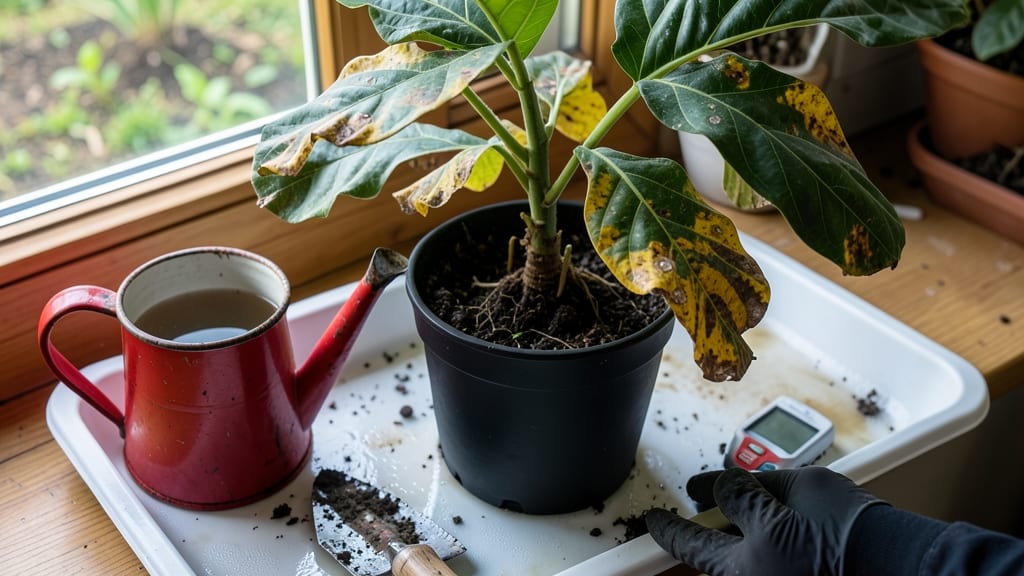
Your overwatered, unhealthy fiddle leaf fig isn’t beyond saving—it’s just begging for a little TLC. 🌿 I’ve nursed more than my share of soggy, root-bound fiddle leaf figs back to health, and the fix is simpler than you’d think.
The key is stopping the water torture, giving roots room to breathe, and letting the plant tell you when it's thirsty again.
First, check the soil: if it smells sour or feels mushy two inches down, you've got root rot. Dump the plant into a clean bucket, trim any black, mushy roots with sterilized scissors, and repot in fresh, well-draining mix.
Fiddle leaf figs need a chunky blend—think 60% potting soil, 30% perlite, and 10% orchid bark—to prevent future soggy soil.
Now comes the hard part: patience. Water only when the top 2-3 inches of soil are bone-dry, and use a pot with drainage holes. Mist the leaves occasionally to mimic the humidity of its native rainforest home, but don't let water pool in saucers.
Within 4-6 weeks, you'll see new growth pushing through, and those droopy leaves will perk up like they're getting their first cup of coffee.
Here's the secret weapon: a moisture meter. Stick it in the soil before watering—anything below 2 on the scale means wait another day. Once you establish this rhythm, your fiddle leaf fig will stay lush and healthy for years.
Trust me, it's the difference between a sad, sad plant and one that steals the show in your living room.
Root Causes Of Overwatering Damage
Your fiddle leaf fig isn’t just wilting—it’s suffering from chronic waterlogging, a silent killer that disrupts its very survival mechanisms. When roots sit in soggy soil for too long, a cascade of physiological stress begins, turning lush green leaves into sad, droopy messes.
Let’s break down the real reasons why this happens—and how to stop it.
Fiddle leaf figs despise soggy feet, yet many growers unknowingly plant them in heavy, compacted soil that acts like a sponge, holding onto moisture instead of letting it drain. Here’s why this is a disaster:
- Clay or loam-heavy mixes: These soils repel water instead of absorbing it, creating a waterlogged layer at the roots. Think of it like a muddy boot—your plant’s roots can’t "breathe" because oxygen can’t reach them.
- Lack of perlite/pumice: Amendments like perlite or coarse sand create air pockets, but skipping them turns soil into a suffocating blanket. Without these, water pools around roots, triggering anaerobic conditions (zero oxygen).
- No raised pot base: If your pot sits in a saucer without drainage holes and you water from the top, excess water pools at the bottom, drowning the roots from the inside out.
💡 Pro Tip: Test your soil’s drainage by filling a cup with water, adding a handful of your potting mix, and timing how long it takes to drain. If it’s slower than 10 minutes, your soil is too dense.
Most plant owners assume "more water = happier plant," but fiddle leaf figs are drought-tolerant tropicals—they evolved to handle dry spells, not soggy ones. Overwatering often stems from:
- Ignoring the "finger test": Sticking your finger 1–2 inches into the soil is the gold standard. If it’s damp, wait. Many overwaterers check the surface (which dries fast) and assume the roots are thirsty.
- Watering on a fixed schedule: Indoor humidity, temperature, and pot size change how fast soil dries. A weekly watering routine in summer might turn deadly in winter when evaporation slows.
- Using ice cubes or misting: These methods add minimal moisture but create a false sense of hydration. Fiddle leaf figs need deep watering—not sips.
✨ Science Alert: Roots need oxygen to respire. When soil stays wet for >48 hours, roots switch to fermentation (like yeast in bread), producing ethanol—a toxic byproduct that burns root cells.
A pot that’s too large is a water trap. Here’s why:
| Pot Size Issue | Why It’s Dangerous |
|---|---|
| Oversized containers (e.g., 12" for a 6" plant) | Excess soil stays wet for weeks because roots can’t absorb all the water before it evaporates. |
| No drainage holes | Water pools at the bottom, creating a permanent anaerobic zone where roots suffocate. |
| Terracotta pots without saucers | While porous, terracotta wicks moisture—if placed on a non-absorbent surface (like a wooden table), water seeps out but roots stay saturated. |
🔥 Fix It: Upgrade to a pot only 1–2 inches wider than the root ball. If repotting, choose a fast-draining mix (e.g., 50% potting soil, 30% perlite, 20% orchid bark).
Fiddle leaf figs thrive in 60–75°F with 40–50% humidity. When conditions stray from this:
- Low humidity (e.g., <30%): Leaves transpire (release water) faster, tricking you into overwatering to "compensate." But the roots can’t keep up, leading to osmotic stress.
- Cold drafts (e.g., near AC vents): Cool air slows root activity, so water lingers longer in the soil. Roots in the 50s°F range can’t absorb nutrients efficiently, causing nutrient burn.
- Direct sunlight after watering: Hot sun + wet leaves = leaf scorch. While not a root issue, it signals poor water management, leading to compensatory overwatering.
🎯 Action Step: Move your plant away from vents/AC units and use a hygrometer to monitor humidity. Aim for 50%+—a pebble tray with water (not touching the pot) helps.
How to Revive Your Fiddle Leaf Fig
Your fiddle leaf fig is drooping, yellowing, or sporting sad, mushy leaves? Don’t panic—with the right care, you can nurse it back to health! The key is acting fast and addressing the root cause (literally).
Below, we’ve mapped out step-by-step fixes for the most common overwatering issues, plus prevention tips to keep your plant thriving long-term. Let’s turn those wilted leaves into lush, happy foliage! 🌿✨
If your fiddle leaf fig’s soil is soggy, roots may be rotting. Here’s how to save it:
🔥 Step 1: Stop Watering Immediately
- Pause all watering for at least 1–2 weeks. Let the soil dry out completely before touching it again.
- Check moisture by sticking your finger 1–2 inches deep—if it’s damp, wait longer.
🍳 Step 2: Repot in Fresh, Well-Draining Soil
- Remove the plant gently from its pot.
Shake off old soil to inspect roots. - Trim dead roots with sterilized scissors (healthy roots are firm and white; rotten ones are brown/mushy). - Repot in a clean container with fresh, fast-draining soil mix (e.g., 50% potting soil + 50% perlite or orchid bark).
👨🍳 Step 3: Improve Drainage
- Add a layer of gravel or pebbles at the pot’s bottom to prevent future waterlogging.
- Choose a pot with drainage holes—if yours lacks them, drill some or switch pots.
⏰ Step 4: Monitor & Adjust Watering
- Water only when the top 2–3 inches of soil are bone-dry (usually every 2–3 weeks in winter, weekly in summer).
- Use the “soak-and-dry” method: Water thoroughly until it drains from the bottom, then empty the saucer.
Yellowing or wilting leaves often signal overwatering. Try this:
🌡️ Step 1: Assess Leaf Condition
- Yellow leaves with crisp edges? Likely overwatered + nutrient deficiency.
- Soft, mushy leaves? Root rot is spreading—act fast (see above).
- Dry, brown tips? Could be underwatering or low humidity—check soil moisture first.
💡 Step 2: Flush Out Excess Salts
Overwatering can leave harmful salts in the soil. Flush it with:
- Room-temperature water (avoid cold, which shocks roots).
- Repeat 2–3 times until water runs clear from the drainage hole.
🎯 Step 3: Boost Humidity & Airflow
Fiddle leaf figs love humidity! Try:
- Misting leaves lightly (morning misting avoids fungal issues).
- Placing a tray of water + pebbles near the plant (not touching the pot).
- Grouping plants together to raise ambient humidity.
✨ Step 4: Fertilize Gently
- Wait 4–6 weeks after repotting before fertilizing.
- Use a balanced, diluted liquid fertilizer (half-strength) every 2–3 months in spring/summer.
Once your fiddle leaf fig is on the mend, follow these habits to avoid future overwatering:
💡 Pro Tip: The “Finger Test”
Stick your finger into the soil—if it’s damp past 1 inch, wait. If it’s dry, it’s time to water.
🌡️ Adjust for Seasons
- Winter: Water every 3–4 weeks (growth slows).
- Summer: Water weekly (but check soil first—heat dries soil faster).
🍃 Choose the Right Pot & Soil
- Pot: Terracotta (breathable) or ceramic with drainage holes.
- Soil: Mix 50% potting soil + 50% perlite/orchid bark for aeration.
🚿 Avoid Common Mistakes
- Never let your plant sit in saucers of water—empty saucers after watering.
- Avoid ice cube watering (can shock roots).
- Don’t water on a schedule—always check soil first!
With these fixes, your fiddle leaf fig should bounce back in 4–8 weeks (new growth is a great sign!). Stay patient, adjust your watering habits, and soon you’ll have a lush, leafy friend that’s the star of your space. 🌟
Frequently asked questions
How do I know if my fiddle leaf fig is overwatered vs. underwatered?
Check the soil and leaves: Overwatered fiddle leaf figs have yellow, mushy leaves that may fall off easily, while underwatered ones show crispy brown edges and dry, papery leaves. Stick your finger 2 inches deep—if damp, you're overwatering; if bone-dry, it's thirsty.
Can I save my fiddle leaf fig if the roots are completely rotted?
You might still save it! Trim all black/mushy roots with sterilized scissors, then repot in fresh, chunky soil mix (50% potting soil + 50% perlite). If you find mostly healthy roots, it'll recover in 4-6 weeks with proper care. If 80%+ are rotten, propagation from healthy stems may be your best bet.
Why does my fiddle leaf fig droop after watering even when it's overwatered?
This happens because soggy soil suffocates roots, preventing them from absorbing water properly. The plant wilts as a survival mechanism to reduce water loss. Stop watering immediately, let soil dry completely, and repot in well-draining mix to restore proper hydration balance.
How often should I water my fiddle leaf fig after fixing overwatering issues?
Wait until the top 2-3 inches of soil are completely dry—usually every 2-3 weeks in winter and weekly in summer. Use the finger test: If soil feels damp below 1 inch, wait another day. Always water thoroughly until it drains from the bottom.
Will my fiddle leaf fig grow back if all the leaves turn yellow and fall off?
Yes! New growth will emerge from the stem within 4-8 weeks if you address the root cause. The plant stores energy in its stem, so don't panic if it looks completely bare—just keep it in bright, indirect light and maintain proper watering habits.